Overview
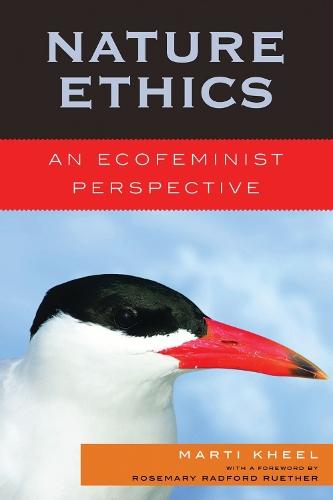
In Nature Ethics: An Ecofeminist Perspective, Marti Kheel explores the underlying worldview of “nature ethics,” offering an alternative ecofeminist perspective. She focuses on four prominent representatives of holist philosophy: two early conservationists (Theodore Roosevelt and Aldo Leopold) and two contemporary philosophers (Holmes Rolston III, and transpersonal ecologist Warwick Fox). Kheel argues that in directing their moral allegiance to abstract constructs (e.g. species, the ecosystem, or the transpersonal Self) these influential nature theorists represent a masculinist orientation that devalues concern for individual animals. Seeking to heal the divisions among the seemingly disparate movements and philosophies of feminism, animal advocacy, environmental ethics, and holistic health, Kheel proposes an ecofeminist philosophy that underscores the importance of empathy and care for individual beings as well as larger wholes.
Full Product Details
Author: Marti Kheel ,
Rosemary Radford Ruether
Publisher: Bloomsbury Publishing Plc
Imprint: Rowman & Littlefield
Dimensions:
Width: 16.30cm
, Height: 3.00cm
, Length: 24.00cm
Weight: 0.653kg
ISBN: 9780742552005
ISBN 10: 0742552004
Pages: 354
Publication Date: 14 December 2007
Audience:
General/trade
,
Adult education
,
College/higher education
,
General
,
Further / Higher Education
Format: Hardback
Publisher's Status: Active
Availability: Manufactured on demand

We will order this item for you from a manufactured on demand supplier.
Reviews
Nature Ethics is a major contribution to ecofeminist philosophy, animal liberation, and environmental ethics. Marti Kheel provides an invaluable critique of the ecological position that accepts violence toward individual beings while professing love and respect for the larger natural world.--Carol J. Adams
Why do so many environmentalists proclaim their love of nature but romanticize hunting and eat meat? Nature Ethics offers significant insight. There is very little that Kheel does not explore; reading Nature Ethics is like taking a fine course at a university. I would buy this book for the section on 'Vegan Practice alone.' Hats off to Marti Kheel and this wonderful book! -- Jeffrey Moussaieff Masson, author of The Face on Your Plate: The Truth about Food [This is a] comprehensive and fair-minded account of the contrasting positions, particularly with respect to animals, between ecofeminist nature ethics and the celebrated holistic views of Theodore Roosevelt, Aldo Leopold, Holmes Rolston III, and Warwick Fox. Anyone interested in women’s studies, animal welfare, hunting, vegetarianism, or environmental ethics will find this impressive book helpful and challenging. -- Peter Wenz Nature Ethics is a major contribution to ecofeminist philosophy, animal liberation, and environmental ethics. Marti Kheel provides an invaluable critique of the ecological position that accepts violence toward individual beings while professing love and respect for the larger natural world. -- Carol J. Adams, author of The Sexual Politics of Meat Kheel’s book is a ground-breaking contribution to the literature and a must-read for anyone concerned with the links between environmental ethics, animal liberation and feminist critique of male cultural bias. -- Rosemary Radford Ruether, Claremont School of Theology A major figure in ecofeminism, Kheel's original thinking about nature ethics culminates in this sweeping volume. She offers vital insights into the destructive consequences of a detached masculine self-identity, and a path toward the development of a genuinely inclusive nature ethic that respects all living beings. -- Greta Gaard, University of Wisconsin–River Falls This precise focus and the rigorous way in which she challenges ecophilosophies by scrutinising their attitudes towards individual animals brings the author’s inherent logic out into the open by applying it to individual action. Thus she is able to confront holist philosophers with an ethics of nature from an ecofeminist perspective. I have high regard for the transparency and the truly dialogical spirit in which Kheel carefully, and in a very accommodating way, puts forward her criticism and invites the reader to follow her line of argument, with its clear structure and precise naming of her standpoint and assumptions. Her challenging core thesis that the treatment of individual animals should be the benchmark for any nature ethic and her revelation of the underlying masculinist identity that permeates current concepts make the book a gainful read for feminist scholars, environmental philosophers at the graduate level, as well as activists interested in better understanding the traditions they bring forward. * Agriculture and Human Values *
[This is a] comprehensive and fair-minded account of the contrasting positions, particularly with respect to animals, between ecofeminist nature ethics and the celebrated holistic views of Theodore Roosevelt, Aldo Leopold, Holmes Rolston III, and Warwick Fox. Anyone interested in women s studies, animal welfare, hunting, vegetarianism, or environmental ethics will find this impressive book helpful and challenging.--Wenz, Peter
Why do so many environmentalists proclaim their love of nature but romanticize hunting and eat meat? Nature Ethics offers significant insight. There is very little that Kheel does not explore; reading Nature Ethics is like taking a fine course at a university. I would buy this book for the section on 'Vegan Practice alone.' Hats off to Marti Kheel and this wonderful book! -- Masson, Jeffrey Moussaieff [This is a] comprehensive and fair-minded account of the contrasting positions, particularly with respect to animals, between ecofeminist nature ethics and the celebrated holistic views of Theodore Roosevelt, Aldo Leopold, Holmes Rolston III, and Warwick Fox. Anyone interested in women's studies, animal welfare, hunting, vegetarianism, or environmental ethics will find this impressive book helpful and challenging. -- Wenz, Peter Nature Ethics is a major contribution to ecofeminist philosophy, animal liberation, and environmental ethics. Marti Kheel provides an invaluable critique of the ecological position that accepts violence toward individual beings while professing love and respect for the larger natural world. -- Carol J. Adams Kheel's book is a ground-breaking contribution to the literature and a must-read for anyone concerned with the links between environmental ethics, animal liberation and feminist critique of male cultural bias. -- Ruether, Rosemary Radford A major figure in ecofeminism, Kheel's original thinking about nature ethics culminates in this sweeping volume. She offers vital insights into the destructive consequences of a detached masculine self-identity, and a path toward the development of a genuinely inclusive nature ethic that respects all living beings. -- Gaard, Greta This precise focus and the rigorous way in which she challenges ecophilosophies by scrutinising their attitudes towards individual animals brings the author's inherent logic out into the open by applying it to individual action. Thus she is able to confront holist philosophers with an ethics of nature from an ecofeminist perspective. I have high regard for the transparency and the truly dialogical spirit in which Kheel carefully, and in a very accommodating way, puts forward her criticism and invites the reader to follow her line of argument, with its clear structure and precise naming of her standpoint and assumptions. Her challenging core thesis that the treatment of individual animals should be the benchmark for any nature ethic and her revelation of the underlying masculinist identity that permeates current concepts make the book a gainful read for feminist scholars, environmental philosophers at the graduate level, as well as activists interested in better understanding the traditions they bring forward. Agriculture and Human Values 20110623
Author Information
Marti Kheel is a visiting scholar at the Graduate Theological Union. She is a leading scholar and activist in ecofeminism, environmental ethics and animal advocacy. Her articles have been widely published in anthologies, such as Environmental Ethics; Reweaving the World: The Emergence of Ecofeminism; Ecofeminism: Women, Animals and Nature; Animals and Women: Feminist Theoretical Explorations; and Food for Thought: The Debate over Eating Meat. Her personal website is http://juxtaprose.com/client/martikheel/build/.