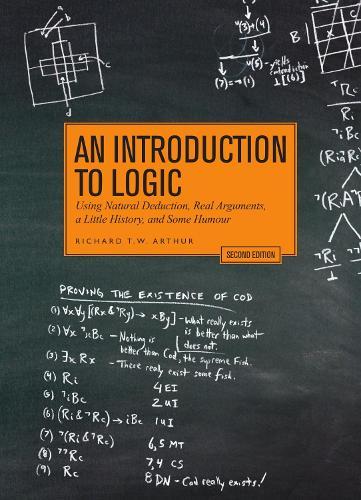
Full Product Details
Author: Richard T.W. Arthur
Publisher: Broadview Press Ltd
Imprint: Broadview Press Ltd
Edition: 2nd edition
Dimensions:
Width: 16.50cm
, Height: 2.10cm
, Length: 22.90cm
Weight: 0.643kg
ISBN: 9781554813322
ISBN 10: 1554813328
Pages: 456
Publication Date: 30 November 2016
Audience:
Professional and scholarly
,
Professional & Vocational
Format: Paperback
Publisher's Status: Active
Availability: Available To Order

We have confirmation that this item is in stock with the supplier. It will be ordered in for you and dispatched immediately.
Reviews
Richard Arthur's book offers a fresh new perspective on the pedagogy of introductory logic instruction and its underlying philosophy. Its approach makes informal logic and critical thinking mesh smoothly and intuitively with formal logic, thus clarifying the relevance of formal logic to the assessment of natural argument. My experience of teaching from the first edition was very positive; the book genuinely makes a majority of students build an appetite for logic. With its many conceptual, technical, and pedagogical improvements, the second edition should prove to be a sound choice as an introductory logic text. -- Nicolas Fillion, Simon Fraser University Praise for the first edition: This excellent text covers all the standard topics and more. Its real strength lies in the clarity and humour of exposition and in the richness of examples and exercises. The illustrations are invariably interesting, since often they are related to current events or the history of philosophy and science or are drawn from Monty Python. The last of these provides several memorable fallacies. Arthur's ... is one of the finest introductions to logic available today. -- James Robert Brown, University of Toronto
Richard Arthur's book offers a fresh new perspective on the pedagogy of introductory logic instruction and its underlying philosophy. Its approach makes informal logic and critical thinking mesh smoothly and intuitively with formal logic, thus clarifying the relevance of formal logic to the assessment of natural argument. My experience of teaching from the first edition was very positive; the book genuinely makes a majority of students build an appetite for logic. With its many conceptual, technical, and pedagogical improvements, the second edition should prove to be a sound choice as an introductory logic text. -- Nicolas Fillion, Simon Fraser University Praise for the first edition: This excellent text covers all the standard topics and more. Its real strength lies in the clarity and humour of exposition and in the richness of examples and exercises. The illustrations are invariably interesting, since often they are related to current events or the history of philosophy and science or are drawn from Monty Python. The last of these provides several memorable fallacies. Arthur's ... is one of the finest introductions to logic available today. -- James Robert Brown, University of Toronto Arthur's book offers a fresh new perspective on the pedagogy of introductory logic instruction and its underlying philosophy. Its approach makes informal logic and critical thinking mesh smoothly and intuitively with formal logic, thus clarifying the relevance of formal logic to the assessment of natural argument. My experience of teaching from the first edition was very positive; the book genuinely makes a majority of students build an appetite for logic. With its many conceptual, technical, and pedagogical improvements, the second edition should prove to be a sound choice as an introductory logic text. -- Nicolas Fillion, Simon Fraser University Praise for the first edition: This excellent text covers all the standard topics and more. Its real strength lies in the clarity and humour of exposition and in the richness of examples and exercises. The illustrations are invariably interesting, since often they are related to current events or the history of philosophy and science or are drawn from Monty Python. The last of these provides several memorable fallacies. Arthur's ... is one of the finest introductions to logic available today. -- James Robert Brown, University of Toronto Praise for the first edition: By and large, this is an excellent addition to the store of introductory logic texts. Arthur's approach skillfully weaves a thread between formal and informal approaches in such a way that an instructor may emphasize the latter or the former according to preference. Along the way, students practice translating natural language arguments, and in the process learn a bit about the history of philosophy and logic, all of this with an occasional laugh. The result is a text that many instructors will find compelling. -- Nicholas Fillion and Bradley Zurcher, Dialogue This excellent text covers all the standard topics and more. Its real strength lies in the clarity and humour of exposition and in the richness of examples and exercises. The illustrations are invariably interesting, since often they are related to current events or the history of philosophy and science or are drawn from Monty Python. The last of these provides several memorable fallacies. Arthur's ... is one of the finest introductions to logic available today. -- James Robert Brown, University of Toronto Praise for the first edition: By and large, this is an excellent addition to the store of introductory logic texts. Arthur's approach skillfully weaves a thread between formal and informal approaches in such a way that an instructor may emphasize the latter or the former according to preference. Along the way, students practice translating natural language arguments, and in the process learn a bit about the history of philosophy and logic, all of this with an occasional laugh. The result is a text that many instructors will find compelling. -- Nicholas Fillion and Bradley Zurcher, Dialogue This excellent text covers all the standard topics and more. Its real strength lies in the clarity and humour of exposition and in the richness of examples and exercises. The illustrations are invariably interesting, since often they are related to current events or the history of philosophy and science or are drawn from Monty Python. The last of these provides several memorable fallacies. Arthur's Natural Deduction is one of the finest introductions to logic available today. -- James Robert Brown, University of Toronto Richard Arthur's engagingly written Natural Deduction introduces symbolic logic as something that grows naturally out of everyday reasoning. The treatment of category logic in this book, based on an elegant notation created by Lewis Carroll, is original and insightful. I also like Arthur's suggestion that there is a link between logic and humour: the same mental muscles that enable one to see the point of a joke must also be those that enable one to see a logical connection. His exercises are ingenious and thought-provoking. This unique book is superb and I recommend it highly. -- Kent A. Peacock, University of Lethbridge
Richard Arthur's book offers a fresh new perspective on the pedagogy of introductory logic instruction and its underlying philosophy. Its approach makes informal logic and critical thinking mesh smoothly and intuitively with formal logic, thus clarifying the relevance of formal logic to the assessment of natural argument. My experience of teaching from the first edition was very positive; the book genuinely makes a majority of students build an appetite for logic. With its many conceptual, technical, and pedagogical improvements, the second edition should prove to be a sound choice as an introductory logic text. -- <strong>Nicolas Fillion, Simon Fraser University</strong> </p> <strong>Praise for the first edition: </strong> </p> This excellent text covers all the standard topics and more. Its real strength lies in the clarity and humour of exposition and in the richness of examples and exercises. The illustrations are invariably interesting, since often they are related to current events or the history of philosophy and science or are drawn from Monty Python. The last of these provides several memorable fallacies. Arthur's ... is one of the finest introductions to logic available today. -- <strong>James Robert Brown, University of Toronto</strong> </p>
Arthur's book offers a fresh new perspective on the pedagogy of introductory logic instruction and its underlying philosophy. Its approach makes informal logic and critical thinking mesh smoothly and intuitively with formal logic, thus clarifying the relevance of formal logic to the assessment of natural argument. My experience of teaching from the first edition was very positive; the book genuinely makes a majority of students build an appetite for logic. With its many conceptual, technical, and pedagogical improvements, the second edition should prove to be a sound choice as an introductory logic text. -- <strong>Nicolas Fillion, Simon Fraser University</strong> </p> <strong>Praise for the first edition: </strong> </p> This excellent text covers all the standard topics and more. Its real strength lies in the clarity and humour of exposition and in the richness of examples and exercises. The illustrations are invariably interesting, since often they are related to current events or the history of philosophy and science or are drawn from Monty Python. The last of these provides several memorable fallacies. Arthur's ... is one of the finest introductions to logic available today. -- <strong>James Robert Brown, University of Toronto</strong> </p>
Richard Arthur's book offers a fresh new perspective on the pedagogy of introductory logic instruction and its underlying philosophy. Its approach makes informal logic and critical thinking mesh smoothly and intuitively with formal logic, thus clarifying the relevance of formal logic to the assessment of natural argument. My experience of teaching from the first edition was very positive; the book genuinely makes a majority of students build an appetite for logic. With its many conceptual, technical, and pedagogical improvements, the second edition should prove to be a sound choice as an introductory logic text. -- Nicolas Fillion, Simon Fraser University Praise for the first edition: This excellent text covers all the standard topics and more. Its real strength lies in the clarity and humour of exposition and in the richness of examples and exercises. The illustrations are invariably interesting, since often they are related to current events or the history of philosophy and science or are drawn from Monty Python. The last of these provides several memorable fallacies. Arthur's ... is one of the finest introductions to logic available today. -- James Robert Brown, University of Toronto Arthur's book offers a fresh new perspective on the pedagogy of introductory logic instruction and its underlying philosophy. Its approach makes informal logic and critical thinking mesh smoothly and intuitively with formal logic, thus clarifying the relevance of formal logic to the assessment of natural argument. My experience of teaching from the first edition was very positive; the book genuinely makes a majority of students build an appetite for logic. With its many conceptual, technical, and pedagogical improvements, the second edition should prove to be a sound choice as an introductory logic text. -- Nicolas Fillion, Simon Fraser University Praise for the first edition: This excellent text covers all the standard topics and more. Its real strength lies in the clarity and humour of exposition and in the richness of examples and exercises. The illustrations are invariably interesting, since often they are related to current events or the history of philosophy and science or are drawn from Monty Python. The last of these provides several memorable fallacies. Arthur's ... is one of the finest introductions to logic available today. -- James Robert Brown, University of Toronto Praise for the first edition: By and large, this is an excellent addition to the store of introductory logic texts. Arthur's approach skillfully weaves a thread between formal and informal approaches in such a way that an instructor may emphasize the latter or the former according to preference. Along the way, students practice translating natural language arguments, and in the process learn a bit about the history of philosophy and logic, all of this with an occasional laugh. The result is a text that many instructors will find compelling. -- Nicholas Fillion and Bradley Zurcher, Dialogue This excellent text covers all the standard topics and more. Its real strength lies in the clarity and humour of exposition and in the richness of examples and exercises. The illustrations are invariably interesting, since often they are related to current events or the history of philosophy and science or are drawn from Monty Python. The last of these provides several memorable fallacies. Arthur's ... is one of the finest introductions to logic available today. -- James Robert Brown, University of Toronto Praise for the first edition: By and large, this is an excellent addition to the store of introductory logic texts. Arthur's approach skillfully weaves a thread between formal and informal approaches in such a way that an instructor may emphasize the latter or the former according to preference. Along the way, students practice translating natural language arguments, and in the process learn a bit about the history of philosophy and logic, all of this with an occasional laugh. The result is a text that many instructors will find compelling. -- Nicholas Fillion and Bradley Zurcher, Dialogue This excellent text covers all the standard topics and more. Its real strength lies in the clarity and humour of exposition and in the richness of examples and exercises. The illustrations are invariably interesting, since often they are related to current events or the history of philosophy and science or are drawn from Monty Python. The last of these provides several memorable fallacies. Arthur's Natural Deduction is one of the finest introductions to logic available today. -- James Robert Brown, University of Toronto Richard Arthur's engagingly written Natural Deduction introduces symbolic logic as something that grows naturally out of everyday reasoning. The treatment of category logic in this book, based on an elegant notation created by Lewis Carroll, is original and insightful. I also like Arthur's suggestion that there is a link between logic and humour: the same mental muscles that enable one to see the point of a joke must also be those that enable one to see a logical connection. His exercises are ingenious and thought-provoking. This unique book is superb and I recommend it highly. -- Kent A. Peacock, University of Lethbridge
Richard Arthur's book offers a fresh new perspective on the pedagogy of introductory logic instruction and its underlying philosophy. Its approach makes informal logic and critical thinking mesh smoothly and intuitively with formal logic, thus clarifying the relevance of formal logic to the assessment of natural argument. My experience of teaching from the first edition was very positive; the book genuinely makes a majority of students build an appetite for logic. With its many conceptual, technical, and pedagogical improvements, the second edition should prove to be a sound choice as an introductory logic text. -- Nicolas Fillion, Simon Fraser University Praise for the first edition: This excellent text covers all the standard topics and more. Its real strength lies in the clarity and humour of exposition and in the richness of examples and exercises. The illustrations are invariably interesting, since often they are related to current events or the history of philosophy and science or are drawn from Monty Python. The last of these provides several memorable fallacies. Arthur's ... is one of the finest introductions to logic available today. -- James Robert Brown, University of Toronto
<strong>Praise for the first edition: </strong> </p> By and large, this is an excellent addition to the store of introductory logic texts. Arthur's approach skillfully weaves a thread between formal and informal approaches in such a way that an instructor may emphasize the latter or the former according to preference. Along the way, students practice translating natural language arguments, and in the process learn a bit about the history of philosophy and logic, all of this with an occasional laugh. The result is a text that many instructors will find compelling. -- <strong>Nicholas Fillion and Bradley Zurcher, <em>Dialogue</em> </strong> </p> This excellent text covers all the standard topics and more. Its real strength lies in the clarity and humour of exposition and in the richness of examples and exercises. The illustrations are invariably interesting, since often they are related to current events or the history of philosophy and science or are drawn from Monty Python. The last of these provides several memorable fallacies. Arthur's <em>Natural Deduction</em> is one of the finest introductions to logic available today. -- <strong>James Robert Brown, University of Toronto</strong> </p> Richard Arthur's engagingly written <em>Natural Deduction</em> introduces symbolic logic as something that grows naturally out of everyday reasoning. The treatment of category logic in this book, based on an elegant notation created by Lewis Carroll, is original and insightful. I also like Arthur's suggestion that there is a link between logic and humour: the same mental muscles that enable one to see the point of a joke must also be those that enable one to see a logical connection. His exercises are ingenious and thought-provoking. This unique book is superb and I recommend it highly. -- <strong>Kent A. Peacock, University of Lethbridge</strong> </p>
Praise for the first edition: By and large, this is an excellent addition to the store of introductory logic texts. Arthur's approach skillfully weaves a thread between formal and informal approaches in such a way that an instructor may emphasize the latter or the former according to preference. Along the way, students practice translating natural language arguments, and in the process learn a bit about the history of philosophy and logic, all of this with an occasional laugh. The result is a text that many instructors will find compelling. -- Nicholas Fillion and Bradley Zurcher, Dialogue This excellent text covers all the standard topics and more. Its real strength lies in the clarity and humour of exposition and in the richness of examples and exercises. The illustrations are invariably interesting, since often they are related to current events or the history of philosophy and science or are drawn from Monty Python. The last of these provides several memorable fallacies. Arthur's Natural Deduction is one of the finest introductions to logic available today. -- James Robert Brown, University of Toronto Richard Arthur's engagingly written Natural Deduction introduces symbolic logic as something that grows naturally out of everyday reasoning. The treatment of category logic in this book, based on an elegant notation created by Lewis Carroll, is original and insightful. I also like Arthur's suggestion that there is a link between logic and humour: the same mental muscles that enable one to see the point of a joke must also be those that enable one to see a logical connection. His exercises are ingenious and thought-provoking. This unique book is superb and I recommend it highly. -- Kent A. Peacock, University of Lethbridge
Author Information
Richard T.W. Arthur is Professor of Philosophy at McMaster University.