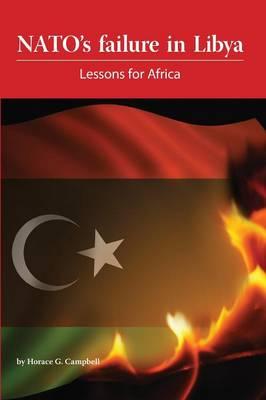
NATO's Failure in Libya: Lessons for Africa

Author:   Horace Campbell
Publisher:   Africa Institute of South Africa
ISBN:  

9780798303439


Pages:   184
Publication Date:   15 May 2013
Format:   Paperback
Availability:   Available To Order   Availability explained
We have confirmation that this item is in stock with the supplier. It will be ordered in for you and dispatched immediately.

Our Price $77.63 Quantity:  
Add to Cart

Share |

NATO's Failure in Libya: Lessons for Africa


Overview

When the Tunisian and Egyptian uprisings erupted in Africa, in the first two months of the year 2011, with the chant, 'the people want to bring down the regime', there was hope all over the continent that these rebellions were part of a wider African Awakening. President Ben Ali of Tunisia was forced to step down and fled to Saudi Arabia. Within a month of Ben Ali's departure, Hosni Mubarak of Egypt was removed from power by the people, who mobilised a massive revolutionary movement in the country. Four days after the ousting of Mubarak, sections of the Libyan people rebelled in Benghazi. Within days, this uprising was militarised, with armed resistance countered by declarations from the Libyan leadership vowing to use raw state power to root out the rebellion. The first Libyan demonstrations occurred on February 15, 2011, but by February 21 there were reports that innocent civilians were in imminent danger of being massacred by the army. This information was embellished by reports of the political leadership branding the rebellious forces as 'rats'. The United States (US), Britain and France took the lead to rush through a resolution in the United Nations (UN) Security Council, invoking the principle of the 'responsibility to protect'. This concept of responsibility to protect had been embraced and supported by many governments in the aftermath of the genocidal episodes in Rwanda, Bosnia and Kosovo. The UN Security Council Resolution 1973 of 2011 was loosely worded, with the formulation 'all necessary measures' tacked on to ensure wide latitude for those societies and political leaders who orchestrated the North Atlantic Treaty Organization (NATO) intervention in Libya. In the following nine months, the implementation of this UN resolution exposed the real objectives of the leaders of the US, France and Britain. With the Western media fuelling a propaganda campaign in the traditions of 'manufacturing consent', this Security Council authorisation was stretched from a clear and limited civilian protection mandate into a military campaign for regime change and the execution of the President of Libya, Muammar Gaddafi.

Full Product Details

Author:   Horace Campbell
Publisher:   Africa Institute of South Africa
Imprint:   Africa Institute of South Africa
Dimensions:   Width: 15.60cm , Height: 1.00cm , Length: 23.40cm
Weight:   0.292kg
ISBN:  

9780798303439


ISBN 10:   0798303433
Pages:   184
Publication Date:   15 May 2013
Audience:   General/trade ,  General
Format:   Paperback
Publisher's Status:   Active
Availability:   Available To Order   Availability explained
We have confirmation that this item is in stock with the supplier. It will be ordered in for you and dispatched immediately.

Table of Contents

Reviews

Author Information

Tab Content 6

Author Website:  

Countries Available

All regions
Latest Reading Guide

NOV RG 20252


Shopping Cart
Your cart is empty
Shopping cart
Mailing List