Overview
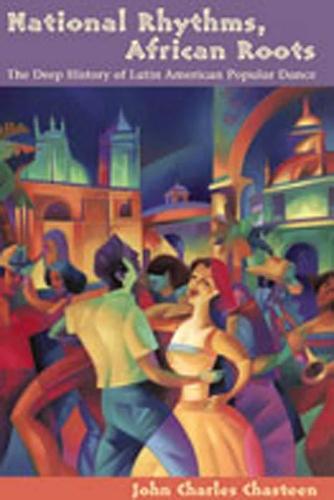
When John Charles Chasteen learned that Simon Bolivar, the Liberator, danced on a banquet table to celebrate Latin American independence in 1824, he tried to visualise the scene. How, he wondered, did the Liberator dance? Did he bounce stiffly in his dress uniform? Or did he move his hips? In other words, how high had African dance influences reached in Latin American societies? A vast social gap separated Bolivar from people of African descent; however, Chasteen's research shows that popular culture could bridge the gap. Fast-paced and often funny, this book explores the history of Latin American popular dance before the twentieth century. Chasteen first focuses on Havana, Buenos Aires, and Rio de Janeiro, where dances featuring a 'transgressive close embrace' (forerunners of today's salsa, tango, and samba) emerged by 1900. Then, digging deeper in time, Chasteen uncovers the historical experiences that moulded Latin American popular dance, including carnival celebrations, the social lives of slaves, European fashions, and, oddly enough, religious processions. The relationship between Latin American dance and nationalism, it turns out, is very deep, indeed.
Full Product Details
Author: John Charles Chasteen
Publisher: University of New Mexico Press
Imprint: University of New Mexico Press
Dimensions:
Width: 15.40cm
, Height: 1.70cm
, Length: 22.80cm
Weight: 0.452kg
ISBN: 9780826329417
ISBN 10: 0826329411
Pages: 257
Publication Date: 30 January 2004
Audience:
General/trade
,
General
Format: Paperback
Publisher's Status: Active
Availability: Temporarily unavailable

The supplier advises that this item is temporarily unavailable. It will be ordered for you and placed on backorder. Once it does come back in stock, we will ship it out to you.
Reviews
Chasteen has found the genome of today's salsa, tango, samba, and rumba, and his Nobel for world dance research is sure to follow.
Chasteen makes a valuable contribution to the dearth of literature on dance and helps elevate the status of dance studies in academia by prioritizing its social and cultural significance. Throughout National Rhythms, African Roots Chasten not only offers historical description, he paints vivid pictures of what the bar, social hall or undergound room looked like. . . an engaging history book. The author's lucid prose and the inherent attractions of the subject make this book ideal for use in undergraduate courses. The solid research and careful interpretation will engage a more advanced scholarly audience as well. Chasteen has found the genome of today's salsa, tango, samba, and rumba, and his Nobel for world dance research is sure to follow.
Author Information
John Charles Chasteen is professor of history at the University of North Carolina, Chapel Hill.