Overview
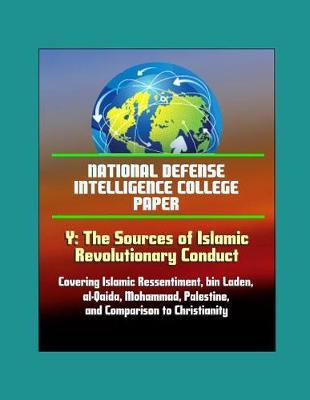
This unique and informative paper was produced by the National Intelligence University / National Defense Intelligence College. Topics and subjects include: Islamic ressentiment, Osama bin Laden, al-Qaida, Mussawi, Mohammad, Palestine, the Enlightenment, Socrates, Wilsonian idealism, Sayyid Qutb, Fitra, Qur'anic doctrine, Soteriology, Jihad, the creation of Israel, Suez Crisis, Ummah, 9/11, Terrorism, Salafism, Sunni, Shia, Shariah. Contents: Part I: Our Intellectual Pedigree - The Search for Strategic Insight * Part II: On Islam and Christendom - Comparisons and Imperatives * Part III: In the Mind of the Faithful - Identity, Trauma, Ressentiment, and Transnational Islamic Revival * Part IV: In the Mind of the Enemy - The Revolutionary Islamic Vanguard * Conclusion. The United States has been conditioned to believe that it faces a threat of terrorism, that Islam is a religion of peace, and that Islam as religion has been hijacked and perverted by fundamentalist radicals. Furthermore, it seems to be conventional wisdom that the conditions for so-called terrorism will be ameliorated by a renewed emphasis on education, more equitable resource distribution, and an infusion of democratic values. Yet nowhere has the following question been satisfactorily answered: Why were 19 Muslim hijackers driven to kill themselves and thousands of innocent civilians . . . when many of the hijackers were educated in the West, owned profitable business enterprises, and had access to modern Western resources and conveniences? Furthermore . . . why the repeated chant of Allahu akbar . . . and even more fundamentally, what is Islam? These are deeply metaphysical questions. They are at once religious and anthropological, and require that one critically examine culturally foreign systems of thought. The probing generated by this type of analysis tends to assault the current Zeitgeist, which above all else, credits itself as tolerant and universally accepting of all things and all ideas. This, in turn, begs the following question: How can a society like that of the United States, one conditioned by these philosophies of the secular age, be brought to consider fundamental questions of a religious nature? It can do so by first rediscovering its own intellectual pedigrees and coming to terms with its own foundations. It does so, secondly, by penetrating the religious ideology of the enemy in an attempt to decipher the answer to why the religion of peace seems to perpetually produce passionate warriors for Allah. This is a work of fundamental strategic importance. It will serve as a starting point in understanding of the nature of the enemy we face in the war on Islamo-fascism. Habits of thought developed during the ideological wars of the 20th century are not sufficient cognitive models for prosecution of the current conflict. Deeply ingrained Western assumptions on the nature of religion must be reexamined in the light of the current challenge. Stephen Lambert here provides us with a strategic plan for correcting this deficiency. Just as we needed a deep understanding of Communist ideology for victory in the Cold War, so we must now face up to the task of investigating the philosophical and religious underpinnings of our current adversaries. This will require reevaluation of assumptions long cherished by Americans, such as the idea that all religions are the same in their essentials, or at least sufficiently similar that deep study is not required. The United States has never fought a religious war, and the very idea makes us cringe. We prefer to assume that religion is essentially a private matter, and that its various manifestations are uniformly compatible with peace and freedom. Unfortunately, our adversaries utterly reject this view. We now confront a religious, political, and social belief system that at its core resists Western understanding of pluralism, tolerance, and individual freedom.
Full Product Details
Author: Department Of Defense ,
National Defense Intelligence College ,
National Intelligence University
Publisher: Independently Published
Imprint: Independently Published
Dimensions:
Width: 21.60cm
, Height: 0.90cm
, Length: 27.90cm
Weight: 0.399kg
ISBN: 9781982921620
ISBN 10: 1982921625
Pages: 166
Publication Date: 17 May 2018
Audience:
General/trade
,
General
Format: Paperback
Publisher's Status: Active
Availability: Available To Order

We have confirmation that this item is in stock with the supplier. It will be ordered in for you and dispatched immediately.