Overview
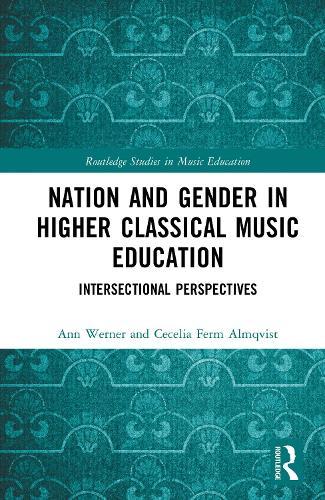
This book asks how nation and gender shapes higher classical music education in Europe today. Building on transnational research in three European higher music education institutions, Estonian Academy of Music and Theatre, the Liszt Ferenc Academy of Music, and the Sibelius Academy, University of the Arts Helsinki, the book analyses policy, interviews, teaching situations and concerts in classical music performance programs. With a starting point in feminist intersectional and postcolonial theory the book focuses on how nationalised and gendered ideas and materialities influence higher classical music education in the borderlands of Eastern and Western Europe. The analysis of the intersection of nation and gender has never been studied closely in higher classical music education before. The book’s unique contribution includes theorising musical families as place-based ideas of both musical and musician ideals, and how these ideas benefit some students more than others. The six empirical chapters of the book analyses websites, policy documents, interviews and participant observations from fieldwork at three higher music education institutions in Estonia, Finland and Hungary. Drawing on feminist and cultural theory the similarities as well as differences between institutions and instrument departments are discussed. The book is suited for teachers and students working in higher classical music education and for researchers seeking to understand higher music education in political polarised times of Europe. Functioning as an introduction to how to critically analyse the practises of higher classical music education the book provides tools for theoretically oriented students in music education and musicology and for those students and teachers working within classical music performance programs.
Full Product Details
Author: Ann Werner ,
Cecelia Ferm Almqvist
Publisher: Taylor & Francis Ltd
Imprint: Routledge
ISBN: 9781032844992
ISBN 10: 103284499
Pages: 144
Publication Date: 13 May 2026
Audience:
College/higher education
,
Professional and scholarly
,
Tertiary & Higher Education
,
Professional & Vocational
Format: Hardback
Publisher's Status: Forthcoming
Availability: Not yet available

This item is yet to be released. You can pre-order this item and we will dispatch it to you upon its release.
Author Information
Ann Werner, PhD in culture studies, professor in musicology, is employed at Uppsala University, Sweden. Werner has published her work in highly ranked journals such as Popular Music, Popular Communication and RSME. Her research interests are music, gender and media drawing on feminist and cultural theory. She has previously mainly researched popular music, widening her interest to the institutions of classical music. Cecilia Ferm Almqvist, PhD in music education, professor in education and music education, is employed at Södertörn University, Sweden. Ferm Almqvist has published her work in highly ranked music education journals, such as IJME, RSME, MER, and PMER. Her research interests are in studies of democracy, inclusion and equality in educational situations where artistic expressions are involved.