Overview
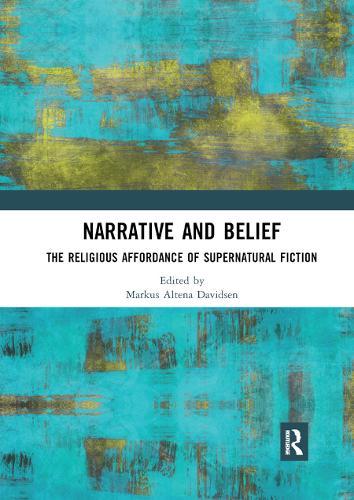
The Lord of the Rings, Star Wars, and certain other works of fantasy and science fiction have inspired some of their readers and viewers to believe that the superhuman powers of the story-worlds, such as Gandalf and the Force, exist also in the real world. We can say that such fictional narratives possess ‘religious affordance’, for they contain certain textual features that afford or make possible a religious, rather than just a fictional, use of the text. This book aims to identify those features of the text that make it possible for a fictional narrative to inspire belief in the supernatural beings of the story, or even to facilitate ritual interaction with these beings. The contributions analyse the religious affordance and actual use of a wide range of texts, spanning from Harry Potter and Star Wars, over The Lord of the Rings and late 19th-century Scandinavian fantasy, to the Christian Gospels. Although we focus on the religious affordance of fictional texts, we also spell out implications for the study of religious narratives in general, and for the narrativist study of religion. This book was originally published as a special issue of the journal Religion.
Full Product Details
Author: Markus Altena Davidsen (Leiden University, The Netherlands)
Publisher: Taylor & Francis Ltd
Imprint: Routledge
Weight: 0.250kg
ISBN: 9780367892128
ISBN 10: 036789212
Pages: 126
Publication Date: 13 December 2019
Audience:
College/higher education
,
Tertiary & Higher Education
,
Undergraduate
Format: Paperback
Publisher's Status: Active
Availability: In Print

This item will be ordered in for you from one of our suppliers. Upon receipt, we will promptly dispatch it out to you. For in store availability, please contact us.
Reviews
Whether or not religion scholars are interested in fantasy literature, the analysis of affordances in this volume has a number of exciting theoretical implications for the field. I found these insights applicable to horror texts such as The Exorcist, which a number of historians have connected to the resurgence of exorcism and deliverance ministry in the 1970s. There are also important implications for the study of conspiracy theories and what political scientist Michael Barkun called fact-fiction reversals, in which conspiracy theorists claim that nominally fictional stories are actually true. More broadly, the authors demonstrate that narrative is an incredibly important, yet surprisingly understudied dimension of religious studies. We will likely be reading about affordances again in the future. Joseph P. Laycock, Texas State University
""Whether or not religion scholars are interested in fantasy literature, the analysis of affordances in this volume has a number of exciting theoretical implications for the field. I found these insights applicable to horror texts such as The Exorcist, which a number of historians have connected to the resurgence of exorcism and deliverance ministry in the 1970s. There are also important implications for the study of conspiracy theories and what political scientist Michael Barkun called “fact-fiction reversals,” in which conspiracy theorists claim that nominally fictional stories are actually true. More broadly, the authors demonstrate that narrative is an incredibly important, yet surprisingly understudied dimension of religious studies. We will likely be reading about affordances again in the future."" Joseph P. Laycock, Texas State University
Whether or not religion scholars are interested in fantasy literature, the analysis of affordances in this volume has a number of exciting theoretical implications for the field. I found these insights applicable to horror texts such as The Exorcist, which a number of historians have connected to the resurgence of exorcism and deliverance ministry in the 1970s. There are also important implications for the study of conspiracy theories and what political scientist Michael Barkun called fact-fiction reversals, in which conspiracy theorists claim that nominally fictional stories are actually true. More broadly, the authors demonstrate that narrative is an incredibly important, yet surprisingly understudied dimension of religious studies. We will likely be reading about affordances again in the future. Joseph P. Laycock, Texas State University
"""Whether or not religion scholars are interested in fantasy literature, the analysis of affordances in this volume has a number of exciting theoretical implications for the field. I found these insights applicable to horror texts such as The Exorcist, which a number of historians have connected to the resurgence of exorcism and deliverance ministry in the 1970s. There are also important implications for the study of conspiracy theories and what political scientist Michael Barkun called “fact-fiction reversals,” in which conspiracy theorists claim that nominally fictional stories are actually true. More broadly, the authors demonstrate that narrative is an incredibly important, yet surprisingly understudied dimension of religious studies. We will likely be reading about affordances again in the future."" Joseph P. Laycock, Texas State University"
Author Information
Markus Altena Davidsen is University Lecturer in the Sociology of Religion at Leiden University, The Netherlands. For his doctoral dissertation, ‘The Spiritual Tolkien Milieu: A Study of Fiction-based Religion’ (2014), he received the Gerardus van der Leeuw Dissertation Award from the Dutch Association for the Study of Religion.