Overview
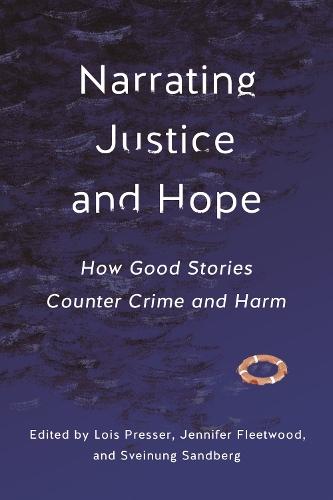
The power of storytelling in troubling times Violence, pain and punishment dominate portrayals of social problems but the reality is more complex. In the world of actual people and experience, other, more hopeful stories are told in relation to crime and harm: narratives of justice, cooperation, kindness, and redemption. Narrating Justice and Hope examines the rich potential for narratives to do good in the context of interpersonal harm and the devastating social conditions of the present moment–including climate crisis, political polarization, and interconnected systems of inequality. Featuring a stellar list of contributors from across the globe, this volume asks: How do people produce good stories in the context of these harms? What types of narratives will create lasting social change? What does it take to tell good stories? Each chapter examines subjects ranging from the success stories of formerly incarcerated people, women speaking out about sexual violence, and young climate activists. Throughout Narrating Justice and Hope, stories and storytelling thwart trouble, foster healing and connection, and envision better futures. The collection also grapples with critical issues including the nature of good, the performative nature of storytelling, and the hazards of exploiting subjugated people's stories. With chapters from a number of well-known scholars, this volume will be an important contribution for sociology, criminology, and legal scholars.
Full Product Details
Author: Lois Presser ,
Jennifer Fleetwood ,
Sveinung Sandberg ,
Shadd Maruna
Publisher: New York University Press
Imprint: New York University Press
Weight: 0.467kg
ISBN: 9781479824502
ISBN 10: 147982450
Pages: 280
Publication Date: 04 February 2025
Audience:
Professional and scholarly
,
Professional & Vocational
Format: Paperback
Publisher's Status: Active
Availability: Manufactured on demand

We will order this item for you from a manufactured on demand supplier.
Reviews
""This remarkable collection of academic essays and analyses gives me great hope…With a world (barely) emerging from a global pandemic, shaken by seemingly endless wars, ravaged by the climate catastrophe, and (especially) immobilized by social and political divisions, the timing, literally, could not be better for this exquisite collection exploring the power of ‘good stories’ to unite communities, to sustain social movements, and to inspire social change.”"" * Shadd Maruna, from the preface * ""Stories of justice and hope in the context of crime? You’ve got to be kidding. But here they are, built from brave turns of meaning and a narrative inspiration the topic has long deserved. Striking a welcome balance, this book will be a winner in the persistent race over the textuality of violence, death, and imprisonment."" * Jaber F. Gubrium, author most recently of Crafting Ethnographic Fieldwork: Sites, Selves, and Social Worlds * ""Listening to people telling stories about their lives has long been among the tools of qualitative social research. This has, however, often been a one way process in which the storyteller remains a passive 'data source' for the evaluation of theories and concepts which remain entirely the monopoly of the researcher. This very useful collection illustrates how the expanding role of 'narrative' methods in social science - here focused on sociology, criminology and politics - helps to break out of such limitations."" * John Lea, author of Privatising Justice: The Security Industry, War, and Crime Control * ""Narrating Justice and Hope takes us beyond clichés about the healing power of stories and shows how stories actually do heal. The chapters are grounded in thorough ethnographic research and justify the overused praise of being inspirational. They can inspire scholars by their style of narrative research, they can inspire workers in social care to renew their commitment to their clients' capacity for change through storytelling, and they can inspire people who have been oppressed, and maybe also culpable, to find value in their lives and experiences. This book deserves widespread use as a model for future writing on narrative, justice, and hope, and also for therapeutic intervention through storytelling to achieve those goals."" * Arthur W. Frank Author of The Wounded Storyteller and Letting Stories Breathe *
""Listening to people telling stories about their lives has long been among the tools of qualitative social research. This has, however, often been a one way process in which the storyteller remains a passive 'data source' for the evaluation of theories and concepts which remain entirely the monopoly of the researcher. This very useful collection illustrates how the expanding role of 'narrative' methods in social science - here focused on sociology, criminology and politics - helps to break out of such limitations.""-- ""John Lea, author of Privatising Justice: The Security Industry, War, and Crime Control"" ""Stories of justice and hope in the context of crime? You've got to be kidding. But here they are, built from brave turns of meaning and a narrative inspiration the topic has long deserved. Striking a welcome balance, this book will be a winner in the persistent race over the textuality of violence, death, and imprisonment.""-- ""Jaber F. Gubrium, author most recently of Crafting Ethnographic Fieldwork: Sites, Selves, and Social Worlds"" ""This remarkable collection of academic essays and analyses gives me great hope...With a world (barely) emerging from a global pandemic, shaken by seemingly endless wars, ravaged by the climate catastrophe, and (especially) immobilized by social and political divisions, the timing, literally, could not be better for this exquisite collection exploring the power of 'good stories' to unite communities, to sustain social movements, and to inspire social change.""""-- ""Shadd Maruna, from the preface""
This remarkable collection of academic essays and analyses gives me great hope…With a world (barely) emerging from a global pandemic, shaken by seemingly endless wars, ravaged by the climate catastrophe, and (especially) immobilized by social and political divisions, the timing, literally, could not be better for this exquisite collection exploring the power of 'good stories' to unite communities, to sustain social movements, and to inspire social change."" (Shadd Maruna, from the preface) Stories of justice and hope in the context of crime? You've got to be kidding. But here they are, built from brave turns of meaning and a narrative inspiration the topic has long deserved. Striking a welcome balance, this book will be a winner in the persistent race over the textuality of violence, death, and imprisonment. (Jaber F. Gubrium, author most recently of Crafting Ethnographic Fieldwork: Sites, Selves, and Social Worlds) Listening to people telling stories about their lives has long been among the tools of qualitative social research. This has, however, often been a one way process in which the storyteller remains a passive 'data source' for the evaluation of theories and concepts which remain entirely the monopoly of the researcher. This very useful collection illustrates how the expanding role of 'narrative' methods in social science - here focused on sociology, criminology and politics - helps to break out of such limitations. (John Lea, author of Privatising Justice: The Security Industry, War, and Crime Control) Narrating Justice and Hope takes us beyond clichés about the healing power of stories and shows how stories actually do heal. The chapters are grounded in thorough ethnographic research and justify the overused praise of being inspirational. They can inspire scholars by their style of narrative research, they can inspire workers in social care to renew their commitment to their clients' capacity for change through storytelling, and they can inspire people who have been oppressed, and maybe also culpable, to find value in their lives and experiences. This book deserves widespread use as a model for future writing on narrative, justice, and hope, and also for therapeutic intervention through storytelling to achieve those goals. (Arthur W. Frank Author of The Wounded Storyteller and Letting Stories Breathe)
Author Information
Lois Presser (Editor) Lois Presser is Professor of Sociology at the University of Tennessee. She is the author or co-editor of seven books including Unsaid: Analyzing Harmful Silences, Inside Story: How Narrative Drive Mass Harm, and Narrative Criminology with Sveinung Sandberg. Jennifer Fleetwood (Editor) Jennifer Fleetwood is Senior Lecturer in Criminology at Goldsmiths, University of London. She is the author of Drug Mules: Women in the International Cocaine Trade. She edited The Emerald Handbook of Narrative Criminology with Lois Presser, Thomas Ugelvik and Sveinung Sandberg. Sveinung Sandberg (Editor) Sveinung Sandberg is Professor of Criminology at the University of Oslo, Norway. He is the coauthor or co-editor of six books, including Street Capital: Black Cannabis Dealers in a White Welfare State and Narrative Criminology with Lois Presser.