Overview
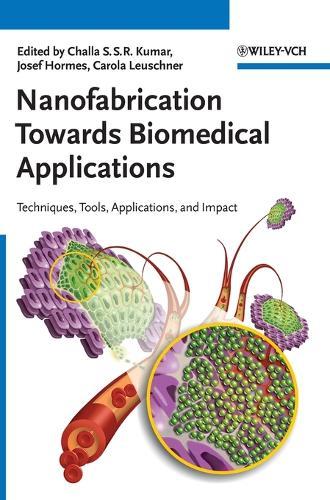
This book focuses on the materials, synthetic methods, tools and techniques being developed in the nanoregime towards the life sciences -- in particular biology, biotechnology and medicine. Readers from materials science, engineering, chemistry, biology and medical backgrounds will find detailed accounts of the design and synthesis of nanomaterials and the tools and techniques involved in their production for applications in biology, biotechnology and medicine.
Full Product Details
Author: Challa S. S. R. Kumar (Center for Advanced Microstructures & Devices, Louisiana State University, Baton Rouge, USA) ,
Josef Hormes (Center for Advanced Microstructures & Devices, Louisiana State University, Baton Rouge, USA) ,
Carola Leuschner (Pennington Biomedical Research Center, Louisiana State University, Baton Rouge, USA)
Publisher: Wiley-VCH Verlag GmbH
Imprint: Blackwell Verlag GmbH
Dimensions:
Width: 17.80cm
, Height: 2.70cm
, Length: 24.70cm
Weight: 0.964kg
ISBN: 9783527311156
ISBN 10: 3527311157
Pages: 442
Publication Date: 15 February 2005
Audience:
Professional and scholarly
,
Professional & Vocational
Format: Hardback
Publisher's Status: Out of Print
Availability: Out of stock

Reviews
a rich source of information for graduate students and researchers. The editors and authors shall be congratulated for a wonderful piece of work. ( Materials and Manufacturing Processes, September/October 2006) covers some of the most salient aspects of this technology as it relates to biological applications (Annals of Biomedical Engineering, June 2006) Overall, the editors and authors have done a good job, resulting in a book that can be read with interest by the broad scientific community. This book deserves a respected place on the desk of the student, the professor, and the engineer, who will all benefit equally from reading it. (Angewandte Chemie I.E.) The book will definitely be of interest not only to readers with biological and medical backgrounds but also to material scientists, engineers, chemists, and physicists. The last two chapters are highly recommended for the general public and even politicians who are interested in looking at global changes arising from the implementation of nano- and biotechnology. (Small) ...this is an excellent and useful reference book about biomedical nanotechnology. (Advanced Materials)
a rich source of information for graduate students and researchers. The editors and authors shall be congratulated for a wonderful piece of work. ( Materials and Manufacturing Processes, September/October 2006) covers some of the most salient aspects of this technology as it relates to biological applications (Annals of Biomedical Engineering, June 2006) Overall, the editors and authors have done a good job, resulting in a book that can be read with interest by the broad scientific community. This book deserves a respected place on the desk of the student, the professor, and the engineer, who will all benefit equally from reading it. (Angewandte Chemie I.E.) The book will definitely be of interest not only to readers with biological and medical backgrounds but also to material scientists, engineers, chemists, and physicists. The last two chapters are highly recommended for the general public and even politicians who are interested in looking at global changes arising from the implementation of nano- and biotechnology. (Small) ...this is an excellent and useful reference book about biomedical nanotechnology. (Advanced Materials)
...a rich source of information for graduate students and researchers. The editors and authors shall be congratulated for a wonderful piece of work. (Materials and Manufacturing Processes, September/October 2006) ...covers some of the most salient aspects of this technology as it relates to biological applications... (Annals of Biomedical Engineering, June 2006) Overall, the editors and authors have done a good job, resulting in a book that can be read with interest by the broad scientific community. This book deserves a respected place on the desk of the student, the professor, and the engineer, who will all benefit equally from reading it. (Angewandte Chemie I.E.) The book will definitely be of interest not only to readers with biological and medical backgrounds but also to material scientists, engineers, chemists, and physicists. The last two chapters are highly recommended for the general public and even politicians who are interested in looking at global changes arising from the implementation of nano- and biotechnology. (Small) ...this is an excellent and useful reference book about biomedical nanotechnology. (Advanced Materials)
Author Information
Challa Kumar is currently the Group Leader of Nanofabrication at the Center for Advanced Microstructures and Devices (CAMD), Baton Rouge, USA. His research interests are in developing novel synthetic methods for functional nanomaterials and innovative therapeutic, diagnostic and sensor tools based on nanotechnology. He has eight years of industrial R&D experience working for ICI plc and UB Ltd prior to joining CAMD in 2001. He has worked at the Max Planck Institute for Biochemistry in Munich, Germany, as a post doctoral fellow and at the Max Planck Institute for Kohlenforschung, Mülheim, Germany, as an invited scientist. He obtained his Ph.D. degree in synthetic organic chemistry from Sri Sathya Sai Institute of Higher Learning, Prashanti Nilayam, India. Josef Hormes is currently the Director of the Center for Advanced Microstructures and Devices (CAMD) and Professor of Physics at Louisiana State University. Prior to joining CAMD in 1999, he was Director of the Synchrotron Radiation Facility at Bonn University, Germany, for over 15 years. He was also a visiting professor at the Imperial College, London, UK, and the Institute of Physics in Stockholm, Sweden. He has been actively involved in 'nano' research especially in the application of X-ray absorption spectroscopic tools for characterization of nanomaterials. He has more than 180 peer-reviewed publications, and obtained his doctoral degree and habilitation in Physics from Bonn University, Germany. Carola Leuschner is currently Assistant Professor in the Department of Reproductive Biotechnology at Pennington Biomedical Research Center (PBRC), Baton Rouge, USA. Her research interests are in the field of drug development for cancer with emphasis on breast, prostate and ovarian cancer, eradication of metastases and multi-drug resistant cancers in vitro and in vivo. Prior to joining PBRC, she was an Instructor in the Department of Diet and Heart Disease, Louisiana State University. Dr. Leuschner had her postdoctoral training in the Department of Technical Microbiology of Hamburg University, and prior to that, obtained her Ph.D. degree in Biochemistry from the University of Hannover, both Germany.