Overview
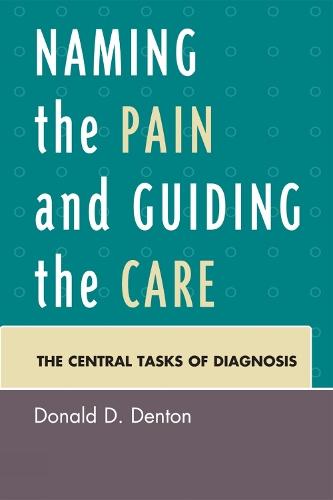
Naming the Pain and Guiding the Care takes seriously the need for a humane and common sense way of talking about human suffering. This book bridges the language of counseling professionals with the ordinary experience of people trying to help one another. Psychiatrists, psychologists, pastoral counselors, social workers, and licensed professional counselors will find that this book integrates diagnostic categories with the resources of religion and theology. Students in general psychology classes and graduate students focused on gaining professional competence will find this book a helpful adjunct to introductory volumes and specialist volumes on diagnosis, religious counseling, and the use of spiritual resources. Individuals who have an interest in learning more about the topics of guilt, betrayal, and dread will find new ways of understanding these wounds on the human heart and life.
Full Product Details
Author: Donald D. Denton, Jr.
Publisher: University Press of America
Imprint: University Press of America
Dimensions:
Width: 15.40cm
, Height: 2.90cm
, Length: 23.00cm
Weight: 0.458kg
ISBN: 9780761841821
ISBN 10: 0761841822
Pages: 308
Publication Date: 11 September 2008
Audience:
General/trade
,
General
Format: Paperback
Publisher's Status: Active
Availability: In Print

This item will be ordered in for you from one of our suppliers. Upon receipt, we will promptly dispatch it out to you. For in store availability, please contact us.
Reviews
Even the most conservative of mental health diagnosticians ought to find Denton's volume an eye-opener, if only to take very, very, very seriously Axis IV of the Diagnostic and Statistical Manual of Mental Disorders. Whether a clinician be secular or religious, he or she should find Naming the Pain and Guiding the Care, rich and potentially expansive material to take into account in many diagnostic categories, including the V-code 62.89, Religious or Spiritual Problem. A must-read for those who desire to acknowledge the person-culture dynamic.--Orlo C. Strunk, Jr., Ph. D.
Denton's book is a modern masterpiece. It is, in some ways, at the mainspring of modern diagnoses. It places diagnoses and patient care within a cultural context. In particular, Denton is most concerned with the spiritual context of mental health disorders. He suggests that spiritual diagnoses could be centered on blame, betrayal, and defilement as dimensions, or even axes, on which disorders-that must be interpreted in light of the web of meaning in which people experience them-can be better understood. He takes spirituality seriously, and poses a serious challenge to the next generation of the DSM (DSM-V), also to consider spirituality in more nuanced detail than merely making a nod and a wink at its importance. This book should be read by anyone engaged in understanding mental health diagnoses and treatment in cultural context. -- Everett L. Worthington, Ph. D., Professor of Psychology, Virginia Commonwealth University, Richmond, Virginia. Even the most conservative of mental health diagnosticians ought to find Denton's volume an eye-opener, if only to take very, very, very seriously Axis IV of the Diagnostic and Statistical Manual of Mental Disorders. Whether a clinician be secular or religious, he or she should find Naming the Pain and Guiding the Care, rich and potentially expansive material to take into account in many diagnostic categories, including the V-code 62.89, Religious or Spiritual Problem. A must-read for those who desire to acknowledge the person-culture dynamic. -- Orlo C. Strunk, Jr., Ph. D., Professor Emeritus of Psychology of Religion & Pastoral Psychology, Boston University; Managing Editor, The Journal of Pasto Naming the Pain and Guiding the Care not only builds on his first volume, Religious Diagnoses in a Secular Society, but advances the field both conceptually and pragmatically, a rare and notable accomplishment indeed. . . . one has to say that the spiritual and religious experiences of a human being, touch the most sensitive cord of the science vs. humanism dichotomy. The book ends with a suggestion and a challenge: Will there be any intentional integration of the spiritual or religious diagnoses within the official lexicon of diagnosis? -- Renato D. Alacron, M. D., Chairman, Department of Psychiatry and Psychology, Mayo Clinic, Rochester, Minnesota. Pastoral counselors / psychotherapists will find in Don Denton's second volume on diagnosis a responsible, readable and realistic approach to diagnosing the whole person, taking the bio-psycho-social spiritual forces into account. Although this is something that has been implicit in the formation and education of pastoral counselors, it too often has been truncated in the face of managed care and the demands of short-term treatment. This volume ought to find a place in correcting much of the superficial treatment approaches that characterize much of what passes for mental health care in the 21st century. -- Orlo C. Strunk, Jr., Ph. D, Professor Emeritus of Psychology of Religion & Pastoral Psychology, Boston University; Managing Editor, The Journal of Pasto Naming the Pain and Guiding the Care is an important text within the world of pastoral theology. It assists in building a bridge between human and sacred sciences. It offers a diagnostic schema that is grounded in pastoral theology and resonant with the deep themes that reside at the core of our humanity. Given these qualities, my thought is that the text would be of great benefit to pastoral clinicians, parish clergy, spiritual directors, emergency measure personnel, clinical pastoral educators, and theological schools. Another group for whom the book would be of us are secular psychotherapists who are sensitive to the spiritual themes that arise during a therapeutic process, and who are interested in expanding their theoretical perspective . . . Denton has produced a significant resource, one that begins and ends with an emphasis on the moral demands that are placed on those willing to accurately respond to the experience of pain. * The Journal Of Pastoral Care and Counseling, Spring/Summer 2009 * A truly comprehensive diagnostic approach, Denton's thesis enriches and makes meaningful the shibboleth that clinicians take into account culture forces in arriving at an authentic diagnosis of real people in a real world. Naming the Pain and Guiding the Care ought to be in every clinician's library and on the required reading list of every professor who teaches courses in diagnosis and psychopathology. -- Orlo C. Strunk, Jr., Ph. D., Professor Emeritus of Psychology of Religion & Pastoral Psychology, Boston University; Managing Editor, The Journal of Pastoral I wanted to tell you how much your book Naming the Pain and Guiding the Care has helped me. I'm in the process of preparing to teach Diagnosis and Treatment Planning. Thank you for your thoughtfulness in working through these spiritual issues which need attention. -- Ned Stewart, Professor and Lecturer, Thailand Baptist Theological Seminary
Denton's book is a modern masterpiece. It is, in some ways, at the mainspring of modern diagnoses. It places diagnoses and patient care within a cultural context. In particular, Denton is most concerned with the spiritual context of mental health disorders. He suggests that spiritual diagnoses could be centered on blame, betrayal, and defilement as dimensions, or even axes, on which disorders—that must be interpreted in light of the web of meaning in which people experience them—can be better understood. He takes spirituality seriously, and poses a serious challenge to the next generation of the DSM (DSM-V), also to consider spirituality in more nuanced detail than merely making a nod and a wink at its importance. This book should be read by anyone engaged in understanding mental health diagnoses and treatment in cultural context. -- Everett L. Worthington, Ph. D., Professor of Psychology, Virginia Commonwealth University, Richmond, Virginia. Even the most conservative of mental health diagnosticians ought to find Denton's volume an eye-opener, if only to take very, very, very seriously Axis IV of the Diagnostic and Statistical Manual of Mental Disorders. Whether a clinician be secular or religious, he or she should find Naming the Pain and Guiding the Care, rich and potentially expansive material to take into account in many diagnostic categories, including the V-code 62.89, Religious or Spiritual Problem. A must-read for those who desire to acknowledge the person-culture dynamic. -- Orlo C. Strunk, Jr., Ph. D., Professor Emeritus of Psychology of Religion & Pastoral Psychology, Boston University; Managing Editor, The Journal of Pasto Naming the Pain and Guiding the Care not only builds on his first volume, Religious Diagnoses in a Secular Society, but advances the field both conceptually and pragmatically, a rare and notable accomplishment indeed. . . . one has to say that the spiritual and religious experiences of a human being, touch the most sensitive cord of the science vs. humanism dichotomy. The book ends with a suggestion and a challenge: Will there be any intentional integration of the spiritual or religious diagnoses within the official lexicon of diagnosis? -- Renato D. Alacron, M. D., Chairman, Department of Psychiatry and Psychology, Mayo Clinic, Rochester, Minnesota. Pastoral counselors / psychotherapists will find in Don Denton's second volume on diagnosis a responsible, readable and realistic approach to diagnosing the whole person, taking the bio-psycho-social spiritual forces into account. Although this is something that has been implicit in the formation and education of pastoral counselors, it too often has been truncated in the face of managed care and the demands of short-term treatment. This volume ought to find a place in correcting much of the superficial treatment approaches that characterize much of what passes for mental health care in the 21st century. -- Orlo C. Strunk, Jr., Ph. D, Professor Emeritus of Psychology of Religion & Pastoral Psychology, Boston University; Managing Editor, The Journal of Pasto Naming the Pain and Guiding the Care is an important text within the world of pastoral theology. It assists in building a bridge between human and sacred sciences. It offers a diagnostic schema that is grounded in pastoral theology and resonant with the deep themes that reside at the core of our humanity. Given these qualities, my thought is that the text would be of great benefit to pastoral clinicians, parish clergy, spiritual directors, emergency measure personnel, clinical pastoral educators, and theological schools. Another group for whom the book would be of us are secular psychotherapists who are sensitive to the spiritual themes that arise during a therapeutic process, and who are interested in expanding their theoretical perspective . . . Denton has produced a significant resource, one that begins and ends with an emphasis on the moral demands that are placed on those willing to accurately respond to the experience of pain. * The Journal Of Pastoral Care and Counseling, Spring/Summer 2009 * A truly comprehensive diagnostic approach, Denton's thesis enriches and makes meaningful the shibboleth that clinicians take into account culture forces in arriving at an authentic diagnosis of real people in a real world. Naming the Pain and Guiding the Care ought to be in every clinician's library and on the required reading list of every professor who teaches courses in diagnosis and psychopathology. -- Orlo C. Strunk, Jr., Ph. D., Professor Emeritus of Psychology of Religion & Pastoral Psychology, Boston University; Managing Editor, The Journal of Pastoral I wanted to tell you how much your book Naming the Pain and Guiding the Care has helped me. I'm in the process of preparing to teach Diagnosis and Treatment Planning. Thank you for your thoughtfulness in working through these spiritual issues which need attention. -- Ned Stewart, Professor and Lecturer, Thailand Baptist Theological Seminary
Author Information
Donald D. Denton, Ph.D., is Coordinator of Assessments and Publications at Virginia Institute of Pastoral Care. A Licensed Professional Counselor and Licensed Marriage and Family Therapist, he is also a Fellow in the American Association of Pastoral Counselors.