Overview
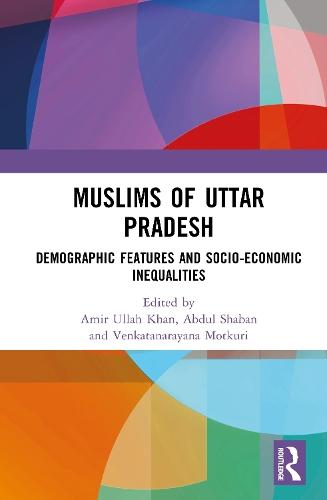
This book provides a comprehensive look into the development challenges and critical socio-economic issues of the Muslim communities in Uttar Pradesh—India’s most populous state and home to one of its largest Muslim populations. Well-known for its syncretic culture, benevolent kings and nawabs, Uttar Pradesh has also been a region that has historically experienced significant religious politics and communal violence. This book moves beyond these sectoral approaches and attempts to present a holistic, detailed, and contemporary perspective on the development of Muslims in the state. It traces the complex sectarian, caste-based, occupational, and regional diversities within the Muslim population in Uttar Pradesh and investigates the intersections of identity, social stratification, and development. Drawing on detailed empirical research, the volume explores critical issues such as educational and occupational mobility, health disparities, livelihood patterns, migration, and access to financial services. It highlights the persistent inequalities faced by Muslims in the state and examines how historical and contemporary processes including sectarian divides, caste hierarchies, political marginalisation, and policy shortcomings have shaped their current realities. This book, along with its companion volume Development Challenges of Muslims in Uttar Pradesh, will be of interest to students and researchers of politics, development studies, anthropology, human geography, sociology, and minority studies. It will also be of relevance to those in development administration, civil society organizations, and the general reader interested in development and deprivation in the state or Hindu-Muslim politics.
Full Product Details
Author: Amir Ullah Khan (MCRHRDI of the Government of Telangana, India) ,
Abdul Shaban ,
Venkatanarayana Motkuri
Publisher: Taylor & Francis Ltd
Imprint: Routledge India
Weight: 0.930kg
ISBN: 9781032761596
ISBN 10: 1032761598
Pages: 392
Publication Date: 29 September 2025
Audience:
College/higher education
,
Professional and scholarly
,
Postgraduate, Research & Scholarly
,
Professional & Vocational
Format: Hardback
Publisher's Status: Active
Availability: Not yet available

This item is yet to be released. You can pre-order this item and we will dispatch it to you upon its release.
Author Information
Amir Ullah Khan is Research Director at the Centre for Development Policy and Practice and Visiting Professor at the Indian School of Business. Abdul Shaban is Professor and Chairperson of the Centre for Public Policy, Habitat and Human Development, School of Development Studies, Tata Institute of Social Sciences (TISS), Mumbai, India. Venkatnarayana Motkuri is Associate Professor of research cell on education (RSEPPG) at the Centre for Economic and Social Studies (CESS), Hyderabad, India.