Overview
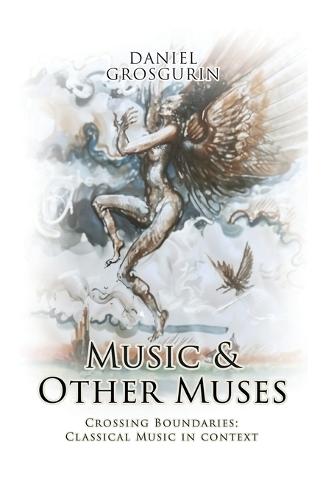
This book explores the parallels between music and respectively language, theater, dance and sport from the point of view of instrumental performance. It is aimed principally at musicians, professionals and amateurs, as well as readers interested in the above fields and their interrelationships. The purpose of its publishing is to open up the horizon towards parallel disciplines and thus explore how inspiration for musical performance can be drawn from other art forms. Leonard Bernstein declared: ""Perhaps the principal thing I absorbed from Harvard was a sense of interdisciplinary values-that the best way to 'know' a thing is in the context of another discipline."" (The Unanswered Question, 3) This proposition forms the basis of the book's investigations, which draw on printed material as well as ""live"" exchanges which took place in the past few years in Geneva, Switz. The choice of English reflects the wish for the book to be widespread, in Europe as well as in the U.S. and beyond. The author has been active principally as a college cello professor and performer in Germany, Switzerland and France, occasionally also in Spain, Italy, Portugal, Japan, Korea and the U.S. Four parallel domains were selected, with full awareness that others, particularly in the Fine Arts, could have been equally compelling candidates: - Language: musicians, writers, and scientists have long explored the parallels between music and language. Describing the layers of the human mind responsible for creating and articulating music and language, Leonard Bernstein initiated extensive research on their similarities. Speech possesses a musical quality that distinguishes various idioms, an artistic dimension in poetry and a structural aspect in rhetoric. Since the human brain perceives music's structure similarly to that of language, these parallels offer musicians insight into how their presentation resonates with listeners. - Theater: at its core, theater is storytelling, featuring situations and characters found also in opera and in the background of instrumental music. Much of the latter can be perceived as a narrative, even when not explicitly defined as such. It proceeds by introducing characters and transforming them as the ""plot"" unfolds. Instrumental music can also simply evoke a succession of impressionistic, poetic images. Performers who activate their imagination, like actors do, deliver more touching performances. Notable inspirations here come from authors like Constantin Stanislavsky or Peter Brook. - Dance: Music also describes human motion and inspires dance. Playing a musical instrument entails intricate physical movements demanding substantial energy. Since a large part of instrumental music was composed for dance, understanding its origins, rhythmic characteristics, and context is very helpful. The creativity of ballet gestures can also inspire performers in music. - Sport: Playing a musical instrument involves significant physical and mental components. Particularly in mastering stage fright, doubts, and related psychological aspects, sports can provide valuable insights.
Full Product Details
Author: Daniel Grosgurin
Publisher: Panda Publishing Agency UK
Imprint: Panda Publishing Agency UK
Dimensions:
Width: 15.20cm
, Height: 1.30cm
, Length: 22.90cm
Weight: 0.340kg
ISBN: 9781807025526
ISBN 10: 1807025527
Pages: 184
Publication Date: 23 December 2025
Audience:
General/trade
,
General
Format: Paperback
Publisher's Status: Active
Availability: Available To Order

We have confirmation that this item is in stock with the supplier. It will be ordered in for you and dispatched immediately.