Overview
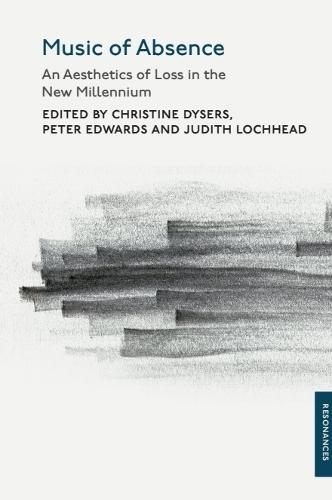
This collection of essays studies how music of the twenty-first century resonates with sentiments of despondency and loss in the context of the multiple existential crises of the time: climate change, political violence, financial crises, racial inequities and technological acceleration. Investigating musical expressions of absence across a wide variety of genres and philosophical approaches, the collection aims to stimulate an interdisciplinary conversation about music as an alternative mode of thinking at a time when established frames of reasoning are called into question. Themed sections engage with the multiplicity of emergent meanings that absence alludes to, opening new lines of inquiry into how music enacts new forms of being in the world and creates pathways to better futures.
Full Product Details
Author: Dr Christine Dysers ,
Dr Peter Edwards ,
Professor Judith Lochhead
Publisher: Edinburgh University Press
Imprint: Edinburgh University Press
ISBN: 9781399555807
ISBN 10: 1399555804
Pages: 304
Publication Date: 31 May 2026
Audience:
Professional and scholarly
,
Professional & Vocational
Format: Hardback
Publisher's Status: Forthcoming
Availability: Not yet available

This item is yet to be released. You can pre-order this item and we will dispatch it to you upon its release.
Reviews
This remarkable volume balances classical philosophical meditations on absence—from Aristotle to Byung-Chul Han—with the living realities of contemporary musical practice. Its essays move fluidly between metaphysics and embodied listening, revealing how sound itself can think through loss, memory, and renewal. I’m deeply honored that one of my own works was included in this dialogue—a rare experience of seeing one’s music situated within such a luminous framework of intellect, affect, and presence. -- Ken Ueno, UC Berkeley
Author Information
Christine Dysers is Assistant Professor of Music at Aalborg University. Her research focuses on music after 1989, with a particular emphasis on repetitive aesthetics and the notion of the uncanny. Christine holds a PhD in music from City, University of London and is a Fellow of the Higher Education Academy (FHEA). In 2021, she was appointed as a Fulbright Visiting Scholar in the Department of Music at Columbia University. She has published in peer-reviewed journals such as Perspectives of New Music, Twentieth-Century Music, TEMPO, and Musik & Ästhetik and has contributed to collections across several musicological disciplines. She is the author of Critical Guides to Contemporary Composers: Bernhard Lang (Intellect, 2023). Peter Edwards is Professor of Musicology at the University of Oslo. He has published in journals including Music Analysis and Music & Letters, as well as in edited volumes, exploring topics at the intersection of music philosophy and aesthetics, music analysis, cultural studies and critical musicology. His work spans themes from musical slapstick to music and death, engaging with a wide array of contemporary musical expressions and compositional practices. His monograph György Ligeti’s Le Grand Macabre: Postmodernism, Musico-Dramatic Form and the Grotesque (Routledge, 2016) examines Ligeti’s creative process, the sketches for the opera, and the significance of the opera in the wider context of modern and postmodern aesthetics. Peter is also a composer and guitarist. Judith Lochhead is Professor of Critical Music Studies at Stony Brook University, New York. Lochhead’s research focuses on music of the present from analytical, historical, critical, and ethnographic perspectives. Lochhead’s recent co-edited book is Sound and Affect: Voice, Music, World (Chicago, 2021), with Eduardo Mendieta and Stephen Decatur Smith. Some recent publications include: ‘Émilie du Châtelet, Kaija Saariaho and Heroes of the 21st Century,’ The Heroic in Music, eds. Beate Kutsche and Katherine Butler (Boydell and Brewer, 2022); ‘Multiplicities, Truth, Ethics: A Queering Analysis of Chaya Czernowin’s Anea Crystal’, Queer Music Theory, Gavin Lee, ed. (Oxford, 2023); ‘Timbre Realities: A Phenomenological Study of Liza Lim’s Extinction Events and Dawn Chorus’, Oxford Handbook of the Phenomenology of Music, de Souza, Steege, Wiskus, eds. (Oxford, 2023); ‘Canonic Machines’, Repetition and Progressive Variation in Gubaidulina’s Fourth String Quartet’, Jeffrey Swinkin, ed. (Oxford, 2025); and ‘Undisciplined’, SMT Colloquy, Music Theory Spectrum (2023).