Overview
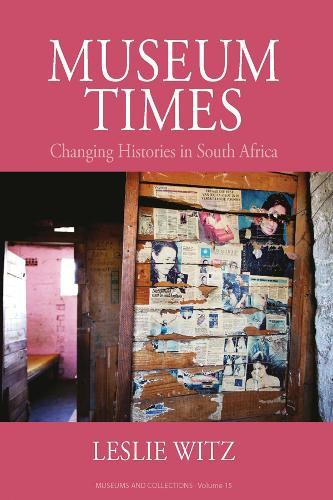
Museums flourished in post-apartheid South Africa. In older museums, there were renovations on the go, and at least fifty new museums opened. Most sought to depict violence and suffering under apartheid and the growth of resistance. These unlikely journeys are tracked as museums became a primary setting for contesting histories. From the renowned Robben Island Museum to the almost unknown Lwandle Migrant Labour Museum, the author demonstrates how an institution concerned with the conservation of the past is simultaneously a site for changing history.
Full Product Details
Author: Leslie Witz
Publisher: Berghahn Books
Imprint: Berghahn Books
ISBN: 9781836954149
ISBN 10: 183695414
Pages: 300
Publication Date: 01 March 2026
Audience:
Professional and scholarly
,
Professional & Vocational
Format: Paperback
Publisher's Status: Forthcoming
Availability: Not yet available

This item is yet to be released. You can pre-order this item and we will dispatch it to you upon its release.
Reviews
“The choice of museums covers very well the developments of museums in post-apartheid South Africa. The author is an engaged storyteller who balances detail, fact, reflection, and analysis. His close and intimate knowledge of the museum sector here is second to none, making this a worthwhile read for anyone seeking a robust analysis of the changing African museum world.” • Museum Worlds “This is a very rich book – unsurprisingly given what Witz himself remarks is the ‘excess of museum making’ in South Africa after 1994 – and is occasionally overwhelming. Witz, a leading figure in public history based for three decades at the University of the Western Cape (UWC), has an impressive command of the museum literature and the proliferating and shifting museum terrain.” • South African Journal of Science “This is a significant book. It addresses the dilemmas that museums face as they seek to both conserve the past and transform to meet the needs of new generations and changing sociopolitical environments…it is probably the most meaningful volume on South Africa’s post-apartheid museum moment” • Trevor Getz, San Francisco State University “Museum Times is an important addition to the study of museums in South Africa. It offers the first sweeping assessment of museums, twenty years after apartheid’s end. At the same time, it gives us individual case studies that are both quirky and metonymic for larger processes. Part history, part memoir, the blurred genre offers insights that will be of interest to a wide audience.” • Sara Byala, The University of Pennsylvania
Author Information
Leslie Witz is a professor in the Department of History at the University of the Western Cape in South Africa. He teaches African history and public history, and his research focuses on how different histories are created and represented in the public domain. Publications include Apartheid’s Festival; Hostels, Homes Museum (with Noëleen Murray); and Unsettled History (with Ciraj Rassool and Gary Minkley).