|
|
|||
|
||||
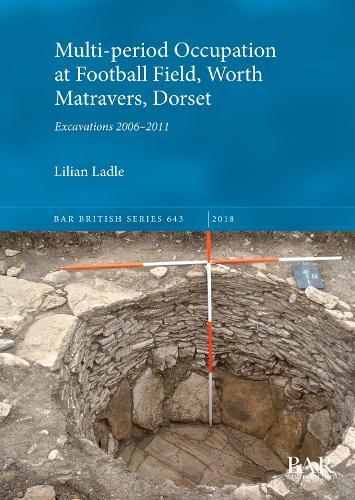
OverviewThis book presents the detailed results of excavations at a small multi-period site in south-east Dorset. The site provided evidence for an Early Neolithic enclosure, a timber-framed, Late Bronze Age roundhouse, Late Bronze Age/Early Iron Age middening activities, Iron Age and Roman settlement and a post-Roman inhumation cemetery. The midden and its associated features and finds are of particular significance, with evidence for deposition and accumulation over several centuries. Other important features include: a Late Iron Age stone-lined pit containing over 100 near-complete pots and a substantial quantity of animal bone, suggesting a large-scale communal gathering and feasting activity; a Roman barn, used as a shale workshop and as a burial place for infants; a 6th- to 8th-century AD cemetery of single, double and triple graves, illuminating the nature of change in burial practices in Dorset at this time; and significant pottery and animal bone assemblages, particularly from the Late Bronze Age/Early Iron Age and Late Iron Age. Full Product DetailsAuthor: Lilian LadlePublisher: BAR Publishing Imprint: BAR Publishing Weight: 1.400kg ISBN: 9781407316741ISBN 10: 1407316745 Pages: 351 Publication Date: 30 October 2018 Audience: Professional and scholarly , Professional & Vocational Format: Paperback Publisher's Status: Active Availability: Available To Order We have confirmation that this item is in stock with the supplier. It will be ordered in for you and dispatched immediately. Table of ContentsList of Figures List of Tables Summary Résumé Zusammenfassung 1. Environment and Project Background Location Landscape, Geology, Environment and Climate Change Andrew Morgan and Robert Kenyon Project Background Summary of Phasing Radiocarbon Dating 2. The Neolithic, Early, Middle and Late Bronze Age Periods Neolithic Enclosure Ditch The Stone Alignment Other Early Bronze Age Features Middle Bronze Age Activity Late Bronze Age Activity Conclusions 3. The Late Bronze Age/Early Iron Age Transition Introduction The Cobbled Surface The Midden Deposit The Features Form and Type of Pits Cultural Deposits Postholes Structural Elements Associated with a Possible Post-Built Roundhouse (House 2) Settings of Packed Limestone Conclusions 4. The Middle and Late Iron Age Middle Iron Age Activity Late Iron Age Activity The Roundhouses Pits and Scoops Deposits Burial 318 Conclusions 5. The Romano-British Period Introduction The Building Features Associated with the Building Burials Associated with the Building Pits and Deposits Other Features Conclusions 6. The Post-Roman Burials Introduction Adult Burial from Site 1 The Post-Roman Cemetery Later Features Conclusions 7. Flaked Stone, Worked Stone and Kimmeridge Shale Flaked Stone Peter S. Bellamy and R.M.A. Trevarthen Worked Stone Peter S. Bellamy and R.M.A. Trevarthen The Kimmeridge Shale Sue Cullinane and Lilian Ladle (with contributions from Emma Firth) 8. The Early Prehistoric Pottery Introduction Methods and Aims Fabric and Form Codes Neolithic and Early Bronze Age Pottery Late Neolithic/Early Bronze Age Pottery Beaker Pottery from Other Features Middle Bronze Age Pottery Late Bronze Age Pottery Conclusions 9 The Late Bronze Age/Early Iron Age Pottery Introduction Radiocarbon Dating Fabric and Form The Pottery Assemblage Assemblage from the Midden Layers The Assemblage Cultural Associations Vessel Types at Football Field Vessels in Use at Football Field Discussion Conclusion Comparative Analyses of the Main Decorative Surface Treatments Found on the All Cannings Cross Ware Assemblage from Football Field Jane Randall? 10. The Middle Iron Age, Late Iron Age and Roman Pottery Middle Iron Age Pottery Lilian Ladle Late Iron Age and Roman Pottery Malcolm Lyne 11. Finds Of Metal, Slag, Glass, Fired Clay and Worked Bone Iron Age and Roman Coins Mark Corney Bronze Age Metalwork Brendan O'Connor, with contributions by Trevor Cowie Middle-Late Iron Age, Roman, Medieval and Post-Medieval Objects of Copper Alloy Mark Corney and Lilian Ladle The Post-Roman Buckle David A. Hinton A Note on the Mineral-Preserved Textile Adhering to the Buckle Penelope Walton Rogers Objects of Lead Lilian Ladle Objects of Iron Lilian Ladle Fuel Ash Slag Emma Firth Prehistoric Glass The Glass Object Lilian Ladle Archaeological and Scientific Aspects of the Football Field Glass Ring Julian Henderson The Roman and Later Glass Mark Corney Daub and Fired Clay Emma Firth Spindle Whorls and Modified Pottery Objects Lilian Ladle Briquetage Emma Firth A 17th Century Clay Tobacco Pipe Robert Lancaster Worked Bone and Antler Clare Randall 12. Radiocarbon Dating and Bayesian Modelling of the Post-Roman Cemetery Anthony Krus Methodological Approach Stable Isotopes and Marine Correction Post-Roman Cemetery Samples and the Model Conclusions 13. The Human Remains Clare Randall Introduction Methodology The Prehistoric Human Remains Romano-British Infant Remains Discussion The Post-Roman Period The Post-Roman Cemetery Results Discussion Conclusions 14. The Faunal Remains Clare Randall Introduction Methodology Results Preservation and Taphonomy Late Neolithic/Early Bronze Age Late Bronze Age Late Bronze Age/Early Iron Age Features Late Bronze Age/Early Iron Age Midden Middle Iron Age Pit 1182 Late Iron Age Romano-British Period The Mixed Midden Post-Roman Grave 425 Wild Species Conclusions 15. The Environmental Remains Introduction Palaeo-environmental Assessment Mike Allen The Charred Plant Remains Laura Evans (identification), Lilian Ladle and Clare Randall (discussion) Wood Charcoal Dana Challinor Land Mollusca Mike Allen The Marine Molluscs Mike and Lilian Ladle Fish Clare Randall 16. Interpretation and Discussion Introduction Neolithic and Early Bronze Age Middle and Late Bronze Age Late Bronze Age/Early Iron Age Transition Middle Iron Age Late Iron Age Roman Period Post-Roman Period Late Saxon Worth Matravers Conclusions Archiving and Potential Future Work BibliographyReviews'This is a very significant contribution to our understanding of an important site. . The LBE/EIA pottery assemblage and the LIA pottery assemblage are major groups which provide well dated and detailed information which is of considerable significance to British and European scholars.' Professor Niall Sharples, Cardiff University 'The presentation of the results of this excavation adds greatly to understanding of the archaeology of the site itself and of a wider area. . Elements of the report will be of value to specialists investigating more national or even international topics.' Steve Wallis, Senior Archaeologist, Dorset County Council 'This is a very significant contribution to our understanding of an important site. . The LBE/EIA pottery assemblage and the LIA pottery assemblage are major groups which provide well dated and detailed information which is of considerable significance to British and European scholars.' Professor Niall Sharples, Cardiff University 'The presentation of the results of this excavation adds greatly to understanding of the archaeology of the site itself and of a wider area. . Elements of the report will be of value to specialists investigating more national or even international topics.' Steve Wallis, Senior Archaeologist, Dorset County Council Author InformationLilian Ladle is an independent field archaeologist and a Visiting Fellow at the Centre for Archaeology and Anthropology, Bournemouth University. She directed a 13-year project on the multi-period site at Bestwall Quarry, Wareham and is currently directing the Druce Farm Roman Villa excavations near Dorchester. She was awarded the MBE in 2008 for services to archaeology. With contributions by M. Allen, P.S. Bellamy, D. Challinor, M. Corney, T. Cowie, S. Cullinane, L. Evans, E. Firth, J. Henderson, D.A. Hinton, R. Kenyon, A. Krus, R. Lancaster, M. Ladle, M. Lyne, A. Morgan, B. O'Connor, C. Randall, J. Randall?, R.M.A. Trevarthen, P. Walton Rogers Illustrations by J. Bartlet, M. Corney, G. Naylor Tab Content 6Author Website:Countries AvailableAll regions |
||||