Overview
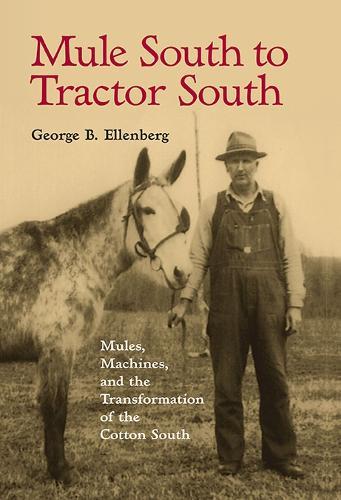
The author describes the adoption of the mule as the major agricultural resource in the American South and its later displacement by the mechanical tractor. After describing the surprising slowness of southern farmers to realise the superiority of the mule over the horse for agricultural labour, Ellenberg strives to capture the symbiosis that emerged between animal and man to illuminate why and how the mule became a standard feature in Southern folk culture. Having been slow to adopt the mule, southern farmers were then reluctant to set it aside in favour of the tractor. Ellenberg describes the transformation as the tractor gradually displaced the mule and the role of the U.S. Department of Agriculture in this process. The work not only becomes a survey of the development of southern agriculture as revealed through an examination of this premier work animal but also follows the emergence of the animal as a cultural icon, as it figures in southern literature, folklore, and music.
Full Product Details
Author: George B. Ellenberg
Publisher: The University of Alabama Press
Imprint: The University of Alabama Press
Dimensions:
Width: 15.20cm
, Height: 2.00cm
, Length: 22.80cm
Weight: 0.358kg
ISBN: 9780817357726
ISBN 10: 0817357726
Pages: 240
Publication Date: 30 March 2014
Audience:
Professional and scholarly
,
Professional & Vocational
Format: Paperback
Publisher's Status: Active
Availability: In Print

This item will be ordered in for you from one of our suppliers. Upon receipt, we will promptly dispatch it out to you. For in store availability, please contact us.
Reviews
George Ellenberg has written an excellent study of the adaption and transformation of southern agriculture from the days of mule power to tractor power. . . . This is more than a study of economic transformation; it is also one of social and cultural change. --R. Douglas Hurt, author of The Rural South Since World War II In examining the figurative and literal power of the draft mule within the historical narrative of the South from 1860 forward, the author demonstrates that the very ubiquity of the mule indeed camouflaged its importance to the region. . . . Artfully crafted and well written, Mule South to Tractor South calls upon a range of sources in providing a distinct contribution to the field of southern and agriculture history. -- North Carolina Historical Review His insightful accounts of what working with mules was really like gives readers an appreciation of both the backbreaking labor that defined southern agriculture for generations and the unique relationship between man and beast that the arrangement required. -- Journal of Mississippi History
His insightful accounts of what working with mules was really like gives readers an appreciation of both the backbreaking labor that defined southern agriculture for generations and the unique relationship between man and beast that the arrangement required. -- Journal of Mississippi History
Author Information
George B. Ellenberg is Associate Dean of Arts and Sciences and Associate Professor of History at the University of West Florida, USA.