Awards
- Winner of Albert Hourani Book Award 2007
- Winner of Award for Excellence in the Study of Religion in Analytical-Descriptive Studies 2008
- Winner of Award for Excellence in the Study of Religion in Analytical-Descriptive Studies 2017
- Winner of Award for Excellence in the Study of Religion in Analytical-Descriptive Studies, American Academy of Religion 2008
- Winner of John Nicholas Brown Prize 2011
- Winner of Ralph Waldo Emerson Award 2008
- Winner of Ralph Waldo Emerson Award 2017
Overview
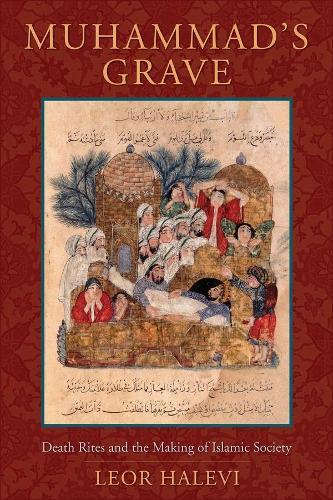
In his probing study of the role of death rites in the making of Islamic society, Leor Halevi imaginatively plays prescriptive texts against material culture and advances new ways of interpreting highly contested sources. His original research reveals that religious scholars of the early Islamic period produced codes of funerary law not only to define the handling of a Muslim corpse but also to transform everyday urban practices. Relying on oral traditions, these scholars established new social patterns in the cities of Arabia, Mesopotamia, and the eastern Mediterranean. They distinguished Islamic rites from Christian, Jewish, and Zoroastrian rites and changed the way men and women interacted publicly and privately. In each chapter Halevi explores a different layer of human interaction, following the movement of the corpse from the deathbed to the grave. In the process he analyzes the real and imaginary relationships between husbands and wives, prayer leaders and mourners, and even dreamers and the dead. He describes how Muslims wailed for the deceased, prepared corpses for burial, marched in funerary processions, and prayed for the dead, highlighting the specific economic and political factors involved in these rituals as well as key religious and sexual divisions. Offering a unique perspective on the making of Islamic social and religious ideals during this early period, Halevi forges a fascinating link between the development of funerary rites and the efforts of an emerging religion to carve out its own, distinct identity. Muhammad's Grave is a groundbreaking history of the rise of Islam and the roots of contemporary Muslim attitudes toward the body and society.
Full Product Details
Author: Leor Halevi
Publisher: Columbia University Press
Imprint: Columbia University Press
Dimensions:
Width: 15.20cm
, Height: 3.00cm
, Length: 22.90cm
Weight: 0.709kg
ISBN: 9780231137423
ISBN 10: 0231137427
Pages: 416
Publication Date: 08 May 2007
Audience:
Professional and scholarly
,
Professional & Vocational
Format: Hardback
Publisher's Status: Active
Availability: Manufactured on demand

We will order this item for you from a manufactured on demand supplier.
Language: English
Reviews
Innovative... A welcome addition to undergraduate and graduate curricula, and an important source book for scholars. -- Kathryn Kueny, Journal of the Economic and Social History of the Orient A welcome contribution... Muhammad's Grave does more than fill the gap. -- Ian Straughn, American Anthropologist A truly impressive display of textual scholarship fused with historical anthropology and lit up by enthusiasm. -- Barnaby Rogerson, Times Literary Supplement The definitive history of its subject before modern times. -- Speculum Halevi's book is highly recommended -- al-Qantara a masterful, well-written work filled with original research. -- Middle East Quarterly This book will be highly valued by anyone who works on early Islam and the process through which a distinctively Islamic community came about. -- Martyn Smith, International Journal of Middle East Studies An erudite and engaging study. -- Marion Katz, Islamic Law and Society An important contribution to our understanding of the crafting of social ritual in early Islamic society. -- Christine D. Baker, Journal of World History Indeed, the work has been judged a scholarly gem, winning three prizes, surely a spectacular accomplishment for a first book. -- Khalid Yahya Blankinship, American Historical Review An important advance in our understanding of the early Muslim world. -- Thomas Sizgorich, Journal of American Academy of Religion [An] original and highly readable study. -- Review of Middle East Studies
Innovative... A welcome addition to undergraduate and graduate curricula, and an important source book for scholars. -- Kathryn Kueny, Journal of the Economic and Social History of the Orient A welcome contribution... Muhammad's Grave does more than fill the gap. -- Ian Straughn, American Anthropologist A truly impressive display of textual scholarship fused with historical anthropology and lit up by enthusiasm. -- Barnaby Rogerson, Times Literary Supplement The definitive history of its subject before modern times. -- Speculum Halevi's book is highly recommended -- al-Qantara a masterful, well-written work filled with original research. -- Middle East Quarterly This book will be highly valued by anyone who works on early Islam and the process through which a distinctively Islamic community came about. -- Martyn Smith, International Journal of Middle East Studies An erudite and engaging study. -- Marion Katz, Islamic Law and Society An important contribution to our understanding of the crafting of social ritual in early Islamic society. -- Christine D. Baker, Journal of World History Indeed, the work has been judged a scholarly gem, winning three prizes, surely a spectacular accomplishment for a first book. -- Khalid Yahya Blankinship, American Historical Review An important advance in our understanding of the early Muslim world. -- Thomas Sizgorich, Journal of American Academy of Religion
Author Information
Leor Halevi is a graduate of Princeton, Yale, and Harvard Universities and is currently an assistant professor of history at Texas A& M University. His work has won numerous distinctions, including fellowships from the Library of Congress and the American Council of Learned Societies as well as the Kerr Award for Best Dissertation in the Humanities from the Middle Eastern Studies Association. His publications have appeared in Past & Present, History of Religions, and the Journal of the History of Ideas.