Overview
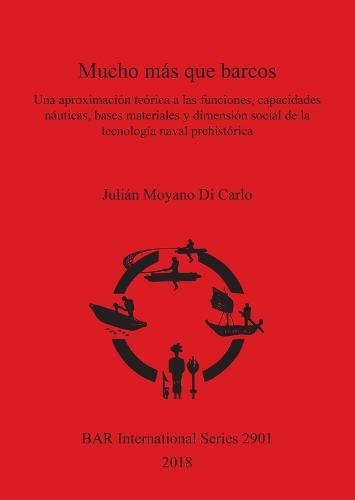
Este trabajo pretende convertirse en un modelo teórico que sirva de sustento a un proyecto de investigación futuro sobre tecnología naval prehistórica. Para ello se realiza un desarrollo del proyecto arquitectónico de la construcción naval en la prehistoria a través del análisis de sus cuatro condicionantes básicos: condicionantes socioeconómicos, condicionantes náuticos, condicionantes materiales, condicionantes simbólicos y quizás también un quinto en lo que refiere a la herencia tecnológica y cultural. Se llega a la conclusión de que dichos condicionantes no pueden ser analizados por separados y que son parte consustancial del proyecto arquitectónico. Así también, se propone que a causa de esta realidad los artilugios náuticos se constituyeron como un elemento clave de los procesos de evolución sociocultural y, por lo tanto, jugaron un papel importante en el desarrollo de la complejidad social a lo largo de la prehistoria. This book aims to lay down the theoretical framework that will serve as the basis for a future research project on prehistoric watercraft technology. In order to achieve this, an account of the development of the architectural project of naval construction in prehistory is carried out through an analysis of its four basic constraints: socioeconomic constraints, nautical constraints, material constraints, symbolic constraints and perhaps also a fifth, consisting of technological and cultural heritage. It is concluded that these constraints cannot be analysed separately and that they are an inherent part of the architectural project. Likewise, it is proposed that, because of this reality, boats and ships were a key element of sociocultural evolution and, therefore, played an important role in the development of social complexity throughout prehistory.
Full Product Details
Author: Julián Moyano Di Carlo
Publisher: BAR Publishing
Imprint: BAR Publishing
Weight: 0.491kg
ISBN: 9781407316543
ISBN 10: 1407316540
Pages: 123
Publication Date: 29 June 2018
Audience:
Professional and scholarly
,
Professional & Vocational
Format: Paperback
Publisher's Status: Active
Availability: Available To Order

We have confirmation that this item is in stock with the supplier. It will be ordered in for you and dispatched immediately.
Language: Spanish
Reviews
'An original and necessary work, [demonstrating] careful argumentation and reflective capacity, and a deep handling of a wide international bibliography. . Undoubtedly, this work should be a reference for any researcher who wants to investigate navigation in prehistory.' Dr Felipe Cerezo Andreo, Universidad de Cadiz 'A brilliant work. . Starting from a very strong theoretical position, the author has addressed the theme in a very original way, focusing not only on material aspects, but also on socio-economic and ideological aspects.' Dr Eduardo Vijande Vila, Universidad de Cadiz
'An original and necessary work, [demonstrating] careful argumentation and reflective capacity, and a deep handling of a wide international bibliography. . Undoubtedly, this work should be a reference for any researcher who wants to investigate navigation in prehistory.' Dr Felipe Cerezo Andreo, Universidad de Cadiz 'A brilliant work. . Starting from a very strong theoretical position, the author has addressed the theme in a very original way, focusing not only on material aspects, but also on socio-economic and ideological aspects.' Dr Eduardo Vijande Vila, Universidad de Cadiz
'(T)he publication is a consistent and rigorous study that can be seen rather as a methodological approach that provides a solid basis for any further investigation on nautical technology in preindustrial and prehistoric societies. Consequently, the publication becomes an important instrument to reflect about the different elements influencing the shipbuilding process in prehistorical times. It gives theory the rightful place in the archaeological investigation and, moreover, it brings new elements of consideration that will definitely help to arise new research questions and hypotheses to the understanding of how prehistoric nautical technology conditioned the sociocultural dynamics of those societies from which they evolved.' Arturo Rey da Silva, Journal of Maritime Archaeology, Volume 15 (2), March 2020 'An original and necessary work, [demonstrating] careful argumentation and reflective capacity, and a deep handling of a wide international bibliography. . Undoubtedly, this work should be a reference for any researcher who wants to investigate navigation in prehistory.' Dr Felipe Cerezo Andreo, Universidad de Cadiz 'A brilliant work. . Starting from a very strong theoretical position, the author has addressed the theme in a very original way, focusing not only on material aspects, but also on socio-economic and ideological aspects.' Dr Eduardo Vijande Vila, Universidad de Cadiz
Author Information
Julián Moyano Di Carlo nació en la ciudad de Mar del Plata (Buenos Aires, Argentina) en el año 1989. A los 17 años se trasladó a Barcelona donde realizó el primer ciclo de la Licenciatura en Historia en la Universidad de Barcelona y posteriormente el Grado en Arqueología de la misma universidad. A continuación, se trasladó a Cádiz para cursar el primer Master Oficial en Arqueología Náutica y Subacuática de la Universidad de Cádiz. Julián Moyano Di Carlo was born in the city of Mar del Plata (Buenos Aires, Argentina) in 1989. At age 17 he moved to Barcelona where he completed the first cycle of a Bachelor's degree in History at the University of Barcelona and later a Bachelor's in Archaeology at the same university. He then moved to Cádiz to pursue a first Official Master's Degree in Nautical and Underwater Archaeology at the University of Cádiz.