Overview
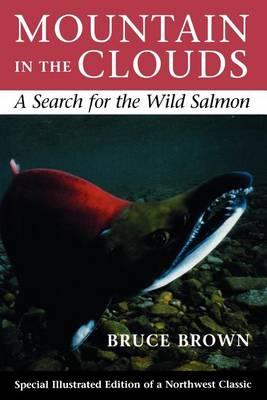
It is now more than ten years since Bruce Brown began the Olympic Peninsula wanderings that led him to write this powerful account of how greed, indifference and environmental mismanagement have threatened the survival of the wild Pacific salmon and, as a result, the region's ecology and its people. Acclaimed by critics who likened it to Coming Into the Country by John McPhee and Rachel Carson's Silent Spring, Mountain in the Clouds has become a classic of natural history. As the struggle to protect Northwest salmon runs and the urgency of the fight against environmental deterioration escalates, Mountain in the Clouds remains an important and illuminating story, as timely now as when it was first written.
Full Product Details
Author: Bruce Brown
Publisher: University of Washington Press
Imprint: University of Washington Press
Dimensions:
Width: 14.60cm
, Height: 1.80cm
, Length: 22.20cm
Weight: 0.363kg
ISBN: 9780295974750
ISBN 10: 0295974753
Pages: 252
Publication Date: 01 October 1995
Audience:
General/trade
,
Professional and scholarly
,
General
Format: Paperback
Publisher's Status: Active
Availability: In Print

This item will be ordered in for you from one of our suppliers. Upon receipt, we will promptly dispatch it out to you. For in store availability, please contact us.
Reviews
A powerful investigative report. * Los Angeles Times * Profound and moving. * The Washington Post * A beautifully done book on the destruction of the Olympic Peninsula's wild salmon runs through environmental degradation. * Kirkus Reviews * Bruce Brown's thoughtful study of the decline of the wild Pacific salmon shows that men conquered fish not with `ingenuity' but with brute force, ignorance and greed. Within a few generations of human settlement, farming, timbering, and commercial fishing had reduced the wild chum runs on most rivers to trickles, and the giant Chinook were no longer to be found. As he documented in the course of three years of research on the rivers of Washington State's Olympic Peninsula, the salmon are today dying out even in remote areas, their intricate ecology the victim of ocean trawlers, pollution from large logging concerns and the damming and diverting of rivers by power companies. . . . Neither sentimental nor simple, Mountain in the Clouds is a model of ecological history. * New York Times Book Review * Still in print almost 30 years later, the book is regarded as an environmental classic-sort of a 'Silent Springs' for the people of the big blue tarp. * Seattle Times *
"""Still in print almost 30 years later, the book is regarded as an environmental classic—sort of a 'Silent Springs' for the people of the big blue tarp."" ""Bruce Brown’s thoughtful study of the decline of the wild Pacific salmon shows that men conquered fish not with ‘ingenuity’ but with brute force, ignorance and greed. Within a few generations of human settlement, farming, timbering, and commercial fishing had reduced the wild chum runs on most rivers to trickles, and the giant Chinook were no longer to be found. As he documented in the course of three years of research on the rivers of Washington State’s Olympic Peninsula, the salmon are today dying out even in remote areas, their intricate ecology the victim of ocean trawlers, pollution from large logging concerns and the damming and diverting of rivers by power companies.... Neither sentimental nor simple, Mountain in the Clouds is a model of ecological history."" ""A beautifully done book on the destruction of the Olympic Peninsula’s wild salmon runs through environmental degradation."" ""Profound and moving."" ""A powerful investigative report."""
"""Still in print almost 30 years later, the book is regarded as an environmental classic—sort of a 'Silent Springs' for the people of the big blue tarp."" * Seattle Times * ""Bruce Brown’s thoughtful study of the decline of the wild Pacific salmon shows that men conquered fish not with ‘ingenuity’ but with brute force, ignorance and greed. Within a few generations of human settlement, farming, timbering, and commercial fishing had reduced the wild chum runs on most rivers to trickles, and the giant Chinook were no longer to be found. As he documented in the course of three years of research on the rivers of Washington State’s Olympic Peninsula, the salmon are today dying out even in remote areas, their intricate ecology the victim of ocean trawlers, pollution from large logging concerns and the damming and diverting of rivers by power companies. . . . Neither sentimental nor simple, Mountain in the Clouds is a model of ecological history."" * New York Times Book Review * ""A beautifully done book on the destruction of the Olympic Peninsula’s wild salmon runs through environmental degradation."" * Kirkus Reviews * ""Profound and moving."" * The Washington Post * ""A powerful investigative report."" * Los Angeles Times *"
A beautifully done book - on a subject that, conventionally presented, would rate a yawn from 99 percent of the reading public: the destruction of the Olympic Peninsula's wild salmon runs through environmental degradation (logging, dams, pollution) and, inseparably, the recourse to fish hatcheries as a remedy. The latter constitutes the ecological news, provides the salient political and economic insights, stirs the deepest apprehensions: are we replacing wildlife, here as elsewhere, with inferior substitutes? Hatcheries, Brown gradually discloses, were offered as an alternative to fish ladders, at dams, which would have enabled the wild salmon to reach their spawning grounds; but not only were hatcheries unable to replace the fish lost, hatchery salmon displaced wild salmon - through spreading disease, through direct competition for food, through ( most pernicious ) destruction, by interbreeding, of the genetic diversity intrinsic to the salmon's migratory existence and stream-by-stream adaptation. Meanwhile the Washington State Dept. of Fisheries' budget and power came to depend on building a hatchery system, not on protecting the wild salmon runs; and - a secondary theme - the interests of commercial fishermen, in mere quantity, supplanted the treaty-rights of the Peninsula Indians, in half the wild fish. To convey the loss, Brown proceeds stream-by-stream. On the Queets, he and two companions search for Chinook, largest of the Pacific salmon - and he discusses the impact of clearcut logging and offshore trolling. On the Elwha, where the Chinook were once the largest of all - the strength of the rapids, in one section, probably acted as a natural-selection mechanism - no Chinook are left. On the Humptulips and around Greys Harbor, logging and pulp-mill pollution leave dead fish, running into the millions ; now, Brown notes, Weyerhauser is moving to the Philippines. Two passages stand out as antithetical and complementary: a description, by flashlight, of pink salmon spawning on the Gray-wolf; and the concluding suggestion, with reference also to the Atlantic and wild English salmon, that industrial society extends and consolidates its control by creating scarcities that can only be met by entering the money economy. Comparison will be made (by others than the publisher) to John McPhee. Each of McPhee's books, however, chiefly whets one's appetite for the next. Brown, resting less on personalities (though key figures, including Dixie Ray Lee, are deftly pinioned) or prose-style (though he's a clean, unpretentiously expressive writer), conveys an immediate, equal concern for the fate of the wild salmon and the-reasons-why. (Kirkus Reviews)
Still in print almost 30 years later, the book is regarded as an environmental classic-sort of a 'Silent Springs' for the people of the big blue tarp. Seattle Times Bruce Brown's thoughtful study of the decline of the wild Pacific salmon shows that men conquered fish not with 'ingenuity' but with brute force, ignorance and greed. Within a few generations of human settlement, farming, timbering, and commercial fishing had reduced the wild chum runs on most rivers to trickles, and the giant Chinook were no longer to be found. As he documented in the course of three years of research on the rivers of Washington State's Olympic Peninsula, the salmon are today dying out even in remote areas, their intricate ecology the victim of ocean trawlers, pollution from large logging concerns and the damming and diverting of rivers by power companies... Neither sentimental nor simple, Mountain in the Clouds is a model of ecological history. New York Times Book Review A beautifully done book on the destruction of the Olympic Peninsula's wild salmon runs through environmental degradation. Kirkus Reviews Profound and moving. The Washington Post A powerful investigative report. Los Angeles Times