|
|
|||
|
||||
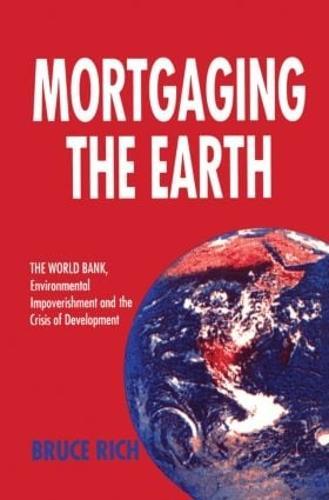
OverviewFull Product DetailsAuthor: Bruce RichPublisher: Taylor & Francis Ltd Imprint: Earthscan Ltd Dimensions: Width: 15.20cm , Height: 2.50cm , Length: 22.90cm Weight: 0.453kg ISBN: 9781853832215ISBN 10: 1853832219 Pages: 388 Publication Date: 01 May 1994 Audience: College/higher education , General/trade , Tertiary & Higher Education , General Format: Paperback Publisher's Status: Active Availability: In Print This item will be ordered in for you from one of our suppliers. Upon receipt, we will promptly dispatch it out to you. For in store availability, please contact us. Table of ContentsChapter 1 The Dwelling Place of the Angels; Chapter 2 Decade of Debacles; Chapter 3 Brave New World at Bretton Woods; Chapter 4 The Faustian Paradox of Robert McNamara; Chapter 5 Greens Lay Siege to the Crystal Palace; Chapter 6 The Emperor’s New Clothes; Chapter 7 The Castle of Contradictions; Chapter 8 From Descartes to Chico Mendes: A Brief History of Modernity as Development; Chapter 9 Who Shall Rule the World—and How?; Chapter 10 What on Earth Is to Be Done?;Reviewsas credible as it is shocking Los Angeles Times """as credible as it is shocking"" Los Angeles Times" ""as credible as it is shocking"" Los Angeles Times The international Bank for Reconstruction & Development (aka the World Bank) turns 50 in 1994. On the evidence of the damning, one-sided tract here, Environmental Defense Fund attorney Rich won't be invited to any parties that might be held. Drawing on a variety of sources (including documents leaked by insiders), the author delivers a harsh critique of the WB and virtually all its works. Since inception, he says, the multilateral institution has been party to a quietly destructive war against the diversity of humankind's cultures and our planet's biological inheritance. In aid of this apocalyptic thesis, Rich reviews bank-backed infrastructure enterprises in the Amazon rain forest, rural India, Thailand, and other Third World venues, which, he alleges, have not only wreaked ecological havoc but also displaced multitudes of indigenous peoples. At the end, the author likens the WB to Goethe's Faust, who (though blinded by a vengeful Care) continued to direct what he believed was a reclamation project but which proved to be his own grave. In probing why the WB became a raging bull in the Global Village's backcountry china shops, Rich cites anecdotal evidence of an arrogant, largely unaccountable bureaucracy that operates in compulsive secrecy and remains stubbornly dedicated to what he views as an arguable proposition - i.e., that economic growth is a panacea for most if not all of modern society's ills. As far as the author is concerned, however, the price of progress a la the WB is far too high, and he calls for radical reforms that will either make the institution more responsive to grassroots wishes or halt its funding altogether. At no point does Rich make a systematic effort to report on whether any earthly good has ever come from a World Bank loan - an omission that inevitably undermines the credibility of a heartfelt polemic informed by an abiding distrust of development capitalism and its putatively injurious consequences. (Kirkus Reviews) Author InformationBruce Rich Tab Content 6Author Website:Countries AvailableAll regions |
||||