Overview
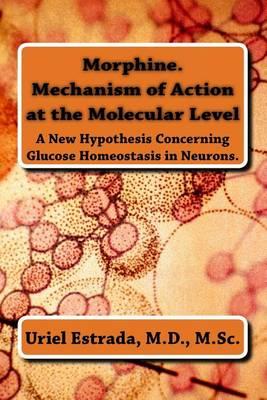
This book is about Morphine, a substance whose main effects are analgesic, but at the same time, causes addiction. Morphine has created an interest in finding new analgesics that do not produce dependence. In this research, the author proposes a new hypothesis. The book takes us through the history of the empirical use of opium of distant eras through the end of the XIX century. It emphasizes the principal pharmacological effects of opium from the standpoint of its acute use but also it describes the toxic effects in terms of chronic use: tolerance, physical dependence, and death from an overdose that results in respiratory arrest. It wasn't until 1804 when the principal ingredient was isolated: morphine and later other alkaloids from the same plant. The interest in finding an ideal analgesic that reduces pain and that doesn't cause addiction has been the motivation behind the research of morphine derivatives. Unfortunately, the intimate mechanism of the action of morphine hasn't been completely clarified, and it's a current active area of research. Experiments with Rhesus monkeys have been described, as well as intrathecal administration of small doses of morphine in mice. In addition there has been computer molecular modeling of morphine. In this book, while trying to find an explanation for the phenomena of tolerance, drug dependence, and the withdrawal syndrome, we discovered two things: First, the pharmacodynamics of morphine, that is the action at molecular level. Secondly, the uptake of glucose by neurons. Both of these discoveries lead to a revolutionary hypothesis. It is postulated that morphine at a molecular level interferes only in the transference of glucose in the interior of the neurons. Since neurons can't store glycogen, everything seems to indicate that there must be a natural agonist in the brain, a neuroinsulin like substance that regulates the flow of glucose to the neurons and whose molecular structure, even though it is unknown, is probably quite similar to the morphine 3D structure. This discovery is only the first step in finding the molecule of neuroinsulin but also to unravel the mechanisms of homeostasis of glucose in neurons.
Full Product Details
Author: Uriel Estrada
Publisher: Createspace Independent Publishing Platform
Imprint: Createspace Independent Publishing Platform
Dimensions:
Width: 15.20cm
, Height: 0.80cm
, Length: 22.90cm
Weight: 0.245kg
ISBN: 9781534787636
ISBN 10: 1534787631
Pages: 126
Publication Date: 20 June 2016
Audience:
General/trade
,
General
Format: Paperback
Publisher's Status: Active
Availability: Available To Order

We have confirmation that this item is in stock with the supplier. It will be ordered in for you and dispatched immediately.