Overview
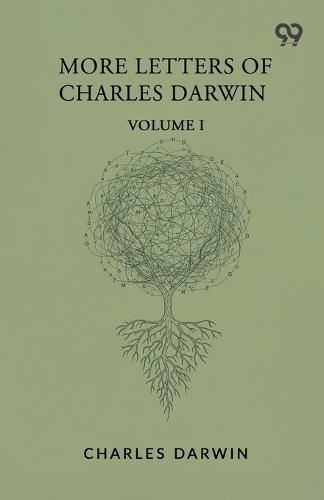
More letters of Charles Darwin Volume I offers a reflective look into a developing scientific mind through private correspondence that reveals personal growth, intellectual curiosity, and the gradual shaping of ideas that would later influence broader scientific thought. The collection opens with contextual notes explaining the purpose of gathering these documents and emphasizing the value of examining private reflections alongside professional observations. An early autobiographical section presents memories that shaped an emerging interest in the natural world, showing how early experiences nurtured a lifelong fascination with patterns, environments, and the quiet structure of living systems. The following letters trace an expanding engagement with natural history, capturing moments of uncertainty, disciplined study, and growing confidence in interpreting geological and biological questions. The writing blends personal detail with early analytical reasoning, illustrating how individual reflection and careful observation supported a developing scientific framework. Through these correspondences, the volume highlights the relationship between inner life and outward inquiry, offering an intimate perspective on how steady curiosity can mature into disciplined investigation and influential thought.
Full Product Details
Author: Charles Darwin
Publisher: Double 9 Books
Imprint: Double 9 Books
Dimensions:
Width: 14.00cm
, Height: 2.30cm
, Length: 21.60cm
Weight: 0.476kg
ISBN: 9789375551898
ISBN 10: 937555189
Pages: 414
Publication Date: 01 November 2025
Audience:
General/trade
,
General
Format: Paperback
Publisher's Status: Active
Availability: Available To Order

We have confirmation that this item is in stock with the supplier. It will be ordered in for you and dispatched immediately.
Author Information
Charles Robert Darwin was an English naturalist, geologist, and biologist whose work transformed the understanding of life on Earth. Born on February 12, 1809, in Shrewsbury, United Kingdom, to Robert Darwin and Susannah Wedgwood, he studied at Christ's College, Cambridge, where his early interest in natural history developed into a lifelong pursuit of scientific inquiry. His landmark research proposed that all species evolve over time through natural selection, a process by which organisms best adapted to their environments survive and reproduce. This idea, articulated in his major works, established a unifying theory for biology and profoundly influenced modern science and philosophy. Darwin's careful observation, experimentation, and documentation across geology, botany, and zoology demonstrated his commitment to empirical evidence. His contributions earned him honors such as the Copley Medal and the Royal Medal, while his ideas inspired generations of scientists and thinkers. He died on April 19, 1882, in Downe, United Kingdom, leaving a legacy that continues to shape evolutionary thought and the study of natural history.