Overview
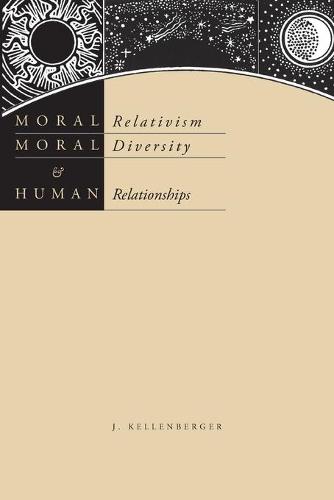
This work aims to clarify the debate between moral relativists and moral absolutists by showing what is right and what is wrong about each of these positions, by revealing how the phenomenon of moral diversity is connected with moral relativism, and by arguing for the importance of relationships between persons as key to reaching a satisfactory understanding of the issues involved in the debate.
Full Product Details
Author: James Kellenberger (California STate University at Northridge)
Publisher: Pennsylvania State University Press
Imprint: Pennsylvania State University Press
Dimensions:
Width: 15.20cm
, Height: 1.80cm
, Length: 22.90cm
Weight: 0.399kg
ISBN: 9780271022871
ISBN 10: 0271022876
Pages: 248
Publication Date: 15 June 2003
Audience:
College/higher education
,
Professional and scholarly
,
Undergraduate
,
Postgraduate, Research & Scholarly
Format: Paperback
Publisher's Status: Active
Availability: Out of stock

The supplier is temporarily out of stock of this item. It will be ordered for you on backorder and shipped when it becomes available.
Reviews
Kellenberger's book is thoughtful, evocative, well researched, and informative. He has managed to pull together a notable range of examples to illustrate his thesis that a proper understanding of person-person relationships can untangle differences between relativists and anti-relativists. . . . Examples include abortion, marital fidelity, the distribution of justice, famine relief, genital mutilation-all sensitive to such non-Western cultures as tribal Africa, Buddhism, and Hinduism. . . . This book should find its place in many courses in ethics, philosophy of social science, cultural theory, and other courses concerned with multicultural themes. -Michael Krausz, Bryn Mawr College This book is a development of Kellenberger's distinctive approach to morality that he has worked out in Relationship Morality. The two books are independent, but each deepens and complements the other. . . . One of the most interesting features of the book is Kellenberger's attempt to show how standard notions such as rights, obligations, and virtues are recast and defended from the point of view of relationship morality. This is needed because, if he is right, the existing moral absolutist accounts are unsatisfactory and the challenge issued by moral relativism is unmet. . . . Kellenberger goes far afield to consider the practices of religions, cultures, and ethnic groups that differ historically, socially, morally, and politically. This greatly strengthens his argument and makes what he has to say alive with palpable significance for anyone who is willing to think hard about moral matters. . . . The audience for the work extends far beyond moral philosophers. It will interest political theorists, anthropologists, theologians, and sociologists. It ranges across moral thought, religious reflection, feminism, and ethnography. And because it is written plainly and is rich with illustrations, it could be suitable as a text in advanced undergraduate and graduate classes. It is also accessible to a general audience, provided it is literate and is willing to think hard about moral issues. -John Kekes, SUNY-Albany
This book is a development of Kellenberger's distinctive approach to morality that he has worked out in Relationship Morality. The two books are independent, but each deepens and complements the other. . . . One of the most interesting features of the book is Kellenberger's attempt to show how standard notions such as rights, obligations, and virtues are recast and defended from the point of view of relationship morality. This is needed because, if he is right, the existing moral absolutist accounts are unsatisfactory and the challenge issued by moral relativism is unmet. . . . Kellenberger goes far afield to consider the practices of religions, cultures, and ethnic groups that differ historically, socially, morally, and politically. This greatly strengthens his argument and makes what he has to say alive with palpable significance for anyone who is willing to think hard about moral matters. . . . The audience for the work extends far beyond moral philosophers. It will interest political theorists, anthropologists, theologians, and sociologists. It ranges across moral thought, religious reflection, feminism, and ethnography. And because it is written plainly and is rich with illustrations, it could be suitable as a text in advanced undergraduate and graduate classes. It is also accessible to a general audience, provided it is literate and is willing to think hard about moral issues. --John Kekes, SUNY-Albany
Author Information
James Kellenberger is Professor of Philosophy at California State University. He is the author of several books, including Kierkegaard and Nietzsche: Faith and Eternal Acceptance (1997) and Relationship Morality (Penn State, 1995).