Overview
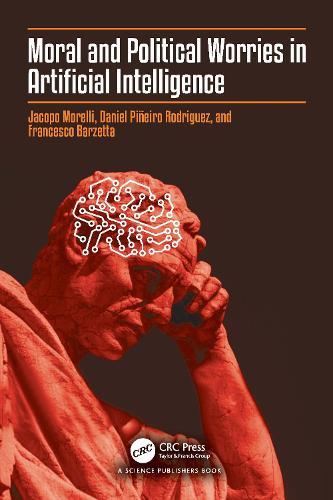
On the one hand AI is hailed as a driver of unprecedented progress, with the potential to alleviate poverty, expand access to education, and improve healthcare outcomes, and on the other, critics highlight risks such as bias, surveillance, erosion of accountability, and even the possibility of autonomous systems escaping human control. Some argue that current AI systems are far less “intelligent” than the label suggests, lacking consciousness or intentionality, and are therefore better understood as powerful but limited tools. Others emphasize the dangers of delegating critical decisions to opaque algorithms, especially in domains such as justice, warfare, or mental health. These divergent perspectives point to a shared recognition: AI cannot be addressed solely as a technical matter but must be evaluated within moral, legal, and political frameworks. In this sense, the key questions are normative: What duties and responsibilities should guide the creation and deployment of AI systems? How can risks such as discrimination, loss of privacy, or democratic erosion be mitigated? And what forms of governance are required to ensure accountability? This book takes up these challenges by examining AI through an interdisciplinary lens, highlighting its promises, its dangers, and the ethical, legal, and political structures necessary to use it responsibly.
Full Product Details
Author: Jacopo Morelli ,
Daniel Piñeiro Rodriguez ,
Francesco Barzetta
Publisher: Taylor & Francis Ltd
Imprint: CRC Press
Weight: 0.453kg
ISBN: 9781032817538
ISBN 10: 1032817534
Pages: 210
Publication Date: 19 May 2026
Audience:
College/higher education
,
Professional and scholarly
,
Postgraduate, Research & Scholarly
,
Professional & Vocational
Format: Hardback
Publisher's Status: Forthcoming
Availability: Not yet available

This item is yet to be released. You can pre-order this item and we will dispatch it to you upon its release.
Author Information
Jacopo Morelli received his PhD in Philosophy from the University of Modena and Reggio Emilia under Carla Bagnoli supervision, with a thesis titled “Moral and Political Constructivism in the Human Rights Debate.” He holds a BA from the University of Macerata and an MA from the University of Parma, with visiting periods at Goethe University, Sciences Po, Paris Cité, and University College Dublin. Daniel Piñeiro Rodriguez, PhD and LL.M. in Law, Pontifical Catholic University of Rio Grande do Sul (PUC-RS), Brazil.Federal Attorney, Office of the Attorney General of the Union (Advocacia-Geral da União – AGU), Brazil. Francesco Barzetta is a PhD student at the University of Klagenfurt, Austria, where he focuses on the concept of wisdom. Despite his background in Psychology, he cultivated IT knowledge to support his research work.