Overview
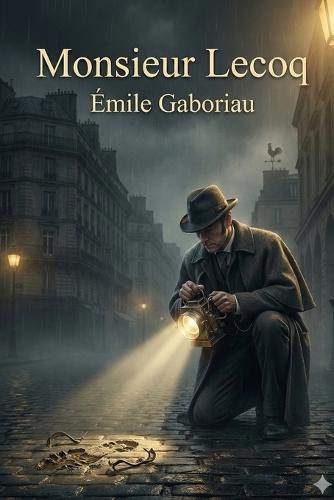
Monsieur Lecoq is a fictional detective created by Émile Gaboriau, a 19th-century French writer and journalist. Monsieur Lecoq is employed by the French Sûreté. The character is one of the pioneers of the genre and a major influence on Sherlock Holmes (who, in A Study in Scarlet, calls him ""a miserable bungler""), laying the groundwork for the methodical, scientifically minded detective. In French, ""Monsieur"" is ""Mister"" and his surname literally means ""The Rooster"". In the person of armchair detective Tabaret, nicknamed Père Tirauclair, (lit. Father Bringer of Light, or ""Old man Brings-to-light""), a title Lecoq himself will eventually inherit, Gaboriau also created an older mentor for Lecoq who, like Mycroft Holmes and Nero Wolfe, helps the hero solve particularly challenging puzzles while remaining largely inactive physically. In Tabaret's case, aid is dispensed from the comfort of his bed. Inspiration One inspiration for the character of Monsieur Lecoq came from a certain Eugène François Vidocq, a real life criminal who later became a policeman and eventually the first director of the Sûreté. Another influence was a character named Monsieur Lecoq, who appeared in Les Habits Noirs, written by Paul Féval, père who had been Gaboriau's employer in 1862. Honoré de Balzac introduced the notorious Vautrin, also inspired by Vidocq, in Le Père Goriot in 1834. Monsieur Lecoq is a fictional detective created by Émile Gaboriau, a 19th-century French writer and journalist. Monsieur Lecoq is employed by the French Sûreté. The character is one of the pioneers of the genre and a major influence on Sherlock Holmes (who, in A Study in Scarlet, calls him ""a miserable bungler""), laying the groundwork for the methodical, scientifically minded detective. In French, ""Monsieur"" is ""Mister"" and his surname literally means ""The Rooster"". In the person of armchair detective Tabaret, nicknamed Père Tirauclair, (lit. Father Bringer of Light, or ""Old man Brings-to-light""), a title Lecoq himself will eventually inherit, Gaboriau also created an older mentor for Lecoq who, like Mycroft Holmes and Nero Wolfe, helps the hero solve particularly challenging puzzles while remaining largely inactive physically. In Tabaret's case, aid is dispensed from the comfort of his bed. Inspiration One inspiration for the character of Monsieur Lecoq came from a certain Eugène François Vidocq, a real life criminal who later became a policeman and eventually the first director of the Sûreté. Another influence was a character named Monsieur Lecoq, who appeared in Les Habits Noirs, written by Paul Féval, père who had been Gaboriau's employer in 1862. Honoré de Balzac introduced the notorious Vautrin, also inspired by Vidocq, in Le Père Goriot in 1834.
Full Product Details
Author: Émile Gaboriau
Publisher: Les Prairies Numeriques
Imprint: Les Prairies Numeriques
Dimensions:
Width: 15.20cm
, Height: 5.60cm
, Length: 22.90cm
Weight: 1.284kg
ISBN: 9791043135484
Pages: 982
Publication Date: 22 February 2026
Audience:
General/trade
,
General
Format: Paperback
Publisher's Status: Active
Availability: Available To Order

We have confirmation that this item is in stock with the supplier. It will be ordered in for you and dispatched immediately.
Reviews
Monsieur Lecoq is a fictional detective created by Émile Gaboriau, a 19th-century French writer and journalist. Monsieur Lecoq is employed by the French Sûreté. The character is one of the pioneers of the genre and a major influence on Sherlock Holmes (who, in A Study in Scarlet, calls him ""a miserable bungler""), laying the groundwork for the methodical, scientifically minded detective. In French, ""Monsieur"" is ""Mister"" and his surname literally means ""The Rooster"". In the person of armchair detective Tabaret, nicknamed Père Tirauclair, (lit. Father Bringer of Light, or ""Old man Brings-to-light""), a title Lecoq himself will eventually inherit, Gaboriau also created an older mentor for Lecoq who, like Mycroft Holmes and Nero Wolfe, helps the hero solve particularly challenging puzzles while remaining largely inactive physically. In Tabaret's case, aid is dispensed from the comfort of his bed. Inspiration One inspiration for the character of Monsieur Lecoq came from a certain Eugène François Vidocq, a real life criminal who later became a policeman and eventually the first director of the Sûreté. Another influence was a character named Monsieur Lecoq, who appeared in Les Habits Noirs, written by Paul Féval, père who had been Gaboriau's employer in 1862. Honoré de Balzac introduced the notorious Vautrin, also inspired by Vidocq, in Le Père Goriot in 1834.