Overview
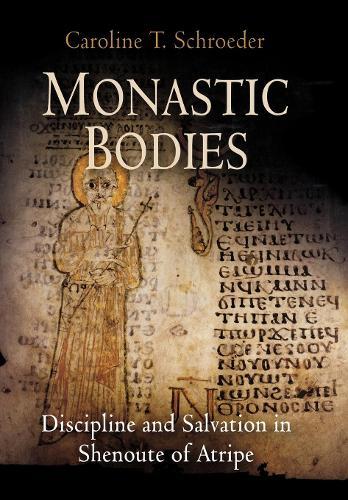
Shenoute of Atripe led the White Monastery, a community of several thousand male and female Coptic monks in Upper Egypt, between approximately 395 and 465 C.E. Shenoute's letters, sermons, and treatises-one of the most detailed bodies of writing to survive from any early monastery-provide an unparalleled resource for the study of early Christian monasticism and asceticism. In Monastic Bodies, Caroline Schroeder offers an in-depth examination of the asceticism practiced at the White Monastery using diverse sources, including monastic rules, theological treatises, sermons, and material culture. Schroeder details Shenoute's arduous disciplinary code and philosophical structure, including the belief that individual sin corrupted not only the individual body but the entire ""corporate body"" of the community. Thus the purity of the community ultimately depended upon the integrity of each individual monk. Shenoute's ascetic discourse focused on purity of the body, but he categorized as impure not only activities such as sex but any disobedience and other more general transgressions. Shenoute emphasized the important practices of discipline, or askesis, in achieving this purity. Contextualizing Shenoute within the wider debates about asceticism, sexuality, and heresy that characterized late antiquity, Schroeder compares his views on bodily discipline, monastic punishments, the resurrection of the body, the incarnation of Christ, and monastic authority with those of figures such as Cyril of Alexandria, Paulinus of Nola, and Pachomius.
Full Product Details
Author: Caroline T. Schroeder
Publisher: University of Pennsylvania Press
Imprint: University of Pennsylvania Press
Dimensions:
Width: 15.20cm
, Height: 1.70cm
, Length: 22.90cm
Weight: 0.518kg
ISBN: 9780812239904
ISBN 10: 0812239903
Pages: 248
Publication Date: 03 April 2007
Audience:
College/higher education
,
Tertiary & Higher Education
Format: Hardback
Publisher's Status: Active
Availability: In Print

This item will be ordered in for you from one of our suppliers. Upon receipt, we will promptly dispatch it out to you. For in store availability, please contact us.
Reviews
Caroline Schroeder presents the first analysis of the ascetic ideology of one of the most important figures in early Egyptian monasticism, Shenoute of Atripe. --David Brakke, Indiana University
Caroline Schroeder presents the first analysis of the ascetic ideology of one of the most important figures in early Egyptian monasticism, Shenoute of Atripe. -David Brakke, Indiana University This remarkable study focuses on the leadership style ... developed by Shenoute of Atripe, the third leader of the elaborate complexes for men and women monastics established in the mid-fourth century in Upper Egypt. -Journal of Religion
Author Information
Caroline T. Schroeder teaches at the University of the Pacific.