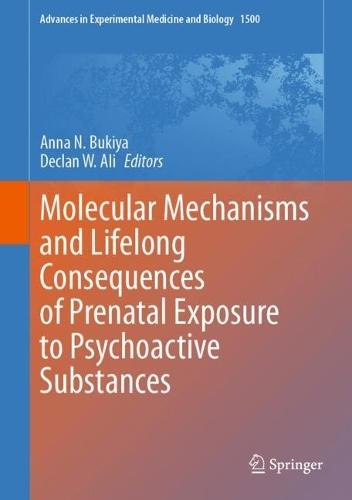
Full Product Details
Author: Anna N. Bukiya ,
Declan W. Ali
Publisher: Springer Nature Switzerland AG
Imprint: Springer Nature Switzerland AG
ISBN: 9783032127402
ISBN 10: 3032127408
Pages: 373
Publication Date: 03 January 2026
Audience:
Professional and scholarly
,
Professional & Vocational
Format: Hardback
Publisher's Status: Active
Availability: Not yet available

This item is yet to be released. You can pre-order this item and we will dispatch it to you upon its release.
Author Information
Dr. Anna N. Bukiya, PhD is Professor at the Department of Physiology, Addiction Science and Toxicology at the University of Tennessee Health Science Center. Dr. Bukiya’s laboratory is focusing on lipid modulation of ion channel function in excitable tissues and sensitivity to drugs of abuse. Dr. Bukiya’s work has been consistently funded by National Institutes of Health and private foundations. Dr. Bukiya has published 53 original research articles, authored or co-authored 10 reviews and 14 book chapters. Dr. Bukiya also co-edited three books and served as a sole editor on one book, all focused on the role of lipids in modulation of protein function during normal physiology and pathological conditions. Dr. Bukiya’s lab utilizes mouse and non-human primate models of prenatal alcohol exposure, computational modelling of lipid-protein interactions, biochemical and fluorescence microscopy-based quantification of cellular processes, as well as cerebral artery diameter monitoring approaches ex vivo and in vivo. Dr. Bukiya is a current member of several societies, including Research Society on Alcohol, International Drug Abuse Research Society, American Society for Pharmacology and Experimental Therapeutics, and Biophysical Society. Dr. Declan W. Ali, PhD, is a Full Professor and Dean at the University of Alberta, Faculty of Science. His research is multi-fold but largely focuses on developmental neurobiology, neurophysiology and cell biology. Dr. Ali’s investigations are primarily in zebrafish, where he provides expertise in patch-clamp electrophysiology. Dr. Ali’s current research focuses on the mechanisms that underlie synaptic development in the central and peripheral nervous systems. Early research focused on synaptic plasticity in the rodent hippocampus and specifically, the effects of tyrosine kinases in CA1 LTP, but over the last 25 years, he has made contributions identifying the mechanisms that underlie synapse formation and maturation, determining how the excitability properties of neurons and muscle fibers change during early development, and how this relates to animal behavior. Recent work has focused on the effects of alcohol and cannabinoids (THC, CBD and CBN) on neurodevelopment and pain/analgesia, showing that these compounds alter synaptic activity in the CNS and the peripheral nervous system when administered early in development, with effects (in some cases) that last into adulthood and the next generation of animals. Key collaborations have resulted in significant contributions in the field of cell biology and cancer research, particularly on the effects of tyrosine kinases and transient receptor potential channels. He has published 77 peer reviewed publications, 4 book chapters and has peer reviewed >200 grant applications (NSERC, NIH, NSF, NRC), >150 manuscripts. He has been invited to give >30 seminars and has sat on the Editorial Boards of 4 journals. Dr. Ali’s research is funded by Canadian federal and provincial funding agencies and he is a member several societies including the Society for Neuroscience, the Canadian Society for Neuroscience and the International Drug Abuse Research Society.