Overview
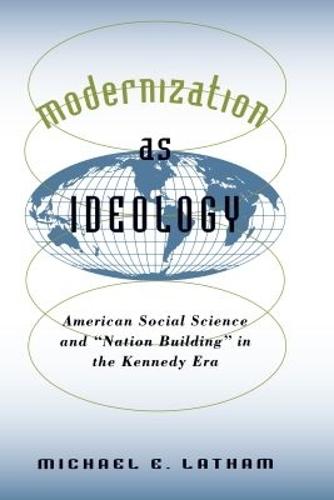
Providing new insight on the intellectual and cultural dimensions of the Cold War, Michael Latham reveals how social science theory helped shape American foreign policy during the Kennedy administration. He shows how, in the midst of America's protracted struggle to contain communism in the developing world, the concept of global modernization moved beyond its beginnings in academia to become a motivating ideology behind policy decisions. After tracing the rise of modernization theory in American social science, Latham analyzes the way its core assumptions influenced the Kennedy administration's Alliance for Progress with Latin America, the creation of the Peace Corps, and the strategic hamlet program in Vietnam. But as he demonstrates, modernizers went beyond insisting on the relevance of America's experience to the dilemmas faced by impoverished countries. Seeking to accelerate the movement of foreign societies toward a liberal, democratic, and capitalist modernity, Kennedy and his advisers also reiterated a much deeper sense of their own nation's vital strengths and essential benevolence. At the height of the Cold War, Latham argues, modernization recast older ideologies of Manifest Destiny and imperialism.
Full Product Details
Author: Michael E. Latham ,
John Lewis Gaddis
Publisher: The University of North Carolina Press
Imprint: The University of North Carolina Press
Edition: New edition
Dimensions:
Width: 15.50cm
, Height: 2.50cm
, Length: 23.40cm
Weight: 0.658kg
ISBN: 9780807825334
ISBN 10: 0807825336
Pages: 304
Publication Date: 31 May 2000
Audience:
College/higher education
,
Professional and scholarly
,
Undergraduate
,
Postgraduate, Research & Scholarly
Format: Hardback
Publisher's Status: Out of Print
Availability: Awaiting stock

Reviews
Latham provides a detailed, clear, and largely well-supported study of several important U.S. Cold War foreign policies. American Historical Review
Latham provides a detailed, clear, and largely well-supported study of several important U.S. Cold War foreign policies.<p> American Historical Review
This book should be widely read by students and scholars of history, political science, sociology, and policy analysis. Choice Latham provides a detailed, clear, and largely well-supported study of several important U.S. Cold War foreign policies. American Historical Review Elegant, precise, and copiously informative.Anders Stephanson, Columbia University Latham's is an important book that should find a wide audience among those interested in the history of the Cold War. International Affairs A particularly interesting study. Journal of American History Latham provides a detailed, clear, and largely well-supported study of several important U.S. Cold War foreign policies. American Historical Review This book should be widely read by students and scholars of history, political science, sociology, and policy analysis. Choice Elegant, precise, and copiously informative.Anders Stephanson, Columbia University
Author Information
Michael E. Latham is associate professor of history at Fordham University.