|
|
|||
|
||||
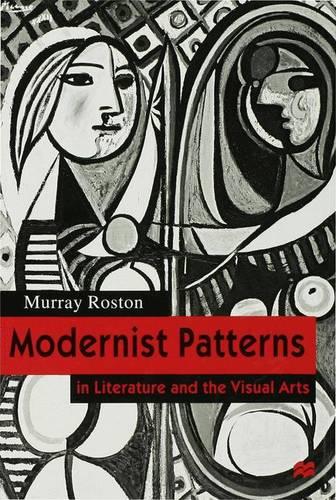
OverviewIn this study, the author explores how Conrad, T.S. Eliot, Woolf, Joyce, Faulkner, Hemingway, Huxley and others responded to the immediate challenges of their time, to the implications of Freudian psychology, molecular theory, relativist theory, and the general weakening of religious faith. Assuming that artists and writers, in coping with those problems, would develop techniques in many ways comparable, even where there was no direct contact, he positions modernist literature within the context of contemporary painting, architecture and sculpture, thereby providing some interesting insights into the nature of the literary works themselves. Full Product DetailsAuthor: M. RostonPublisher: Palgrave Macmillan Imprint: Palgrave Macmillan Dimensions: Width: 14.00cm , Height: 2.60cm , Length: 21.60cm Weight: 0.525kg ISBN: 9780333681701ISBN 10: 0333681703 Pages: 306 Publication Date: 07 December 1999 Audience: Professional and scholarly , Professional and scholarly , Professional & Vocational , Postgraduate, Research & Scholarly Format: Hardback Publisher's Status: Active Availability: In Print This item will be ordered in for you from one of our suppliers. Upon receipt, we will promptly dispatch it out to you. For in store availability, please contact us. Table of ContentsAcknowledgments List of illustrations Introduction Conrad's Stylistic 'Mistiness' T.S.Eliot and the Secularists Huxley's Counterpoint Minimalism and the Hemingway Hero Woolf, Joyce, and Artistic Neurosis The Twentieth-century Dyad Palpable and Mute Notes Bibliography IndexReviewsAuthor InformationMURRAY ROSTON is Professor of English at Bar Ilan University, Israel. He also holds a permanent appointment as Adjunct Professor of English at the University of California at Los Angeles (UCLA), where he teaches frequently. Tab Content 6Author Website:Countries AvailableAll regions |
||||