|
|
|||
|
||||
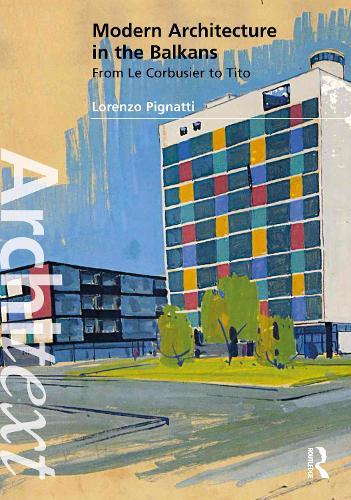
OverviewThis book is an attempt to comprehend the reasons for modernity in the Balkans, beginning with the famous Journey to the East undertaken by Charles-Édouard Jeanneret in 1911; a journey during which the future Le Corbusier was the first to appreciate the originality of the region’s architecture. However, the modernity that developed after the Second World War would not have existed without the figure of Josip Broz Tito. With political and cultural acumen, this partisan and charismatic leader of Yugoslavia promoted a process of “socialist modernisation” that looked both east and west, while holding fast to a faith in a political ideology interpreted with freedom and originality. Le Corbusier and Tito are therefore the two central figures of this book. While there is no direct relationship between them, this book presents a series of intersecting relations, beginning with the interpretation of Yugoslavia’s cities and architecture, to trace a path that gives this region an unquestionably central position in the international architectural panorama of the twentieth century. Full Product DetailsAuthor: Lorenzo PignattiPublisher: Taylor & Francis Ltd Imprint: Routledge ISBN: 9781041138839ISBN 10: 1041138830 Pages: 242 Publication Date: 22 January 2026 Audience: College/higher education , Professional and scholarly , Tertiary & Higher Education , Professional & Vocational Format: Paperback Publisher's Status: Forthcoming Availability: Not yet available This item is yet to be released. You can pre-order this item and we will dispatch it to you upon its release. Table of ContentsReviewsAuthor InformationLorenzo Pignatti (1954) has been Professor of Architectural and Urban Design at the Department of Architecture - Università G. d'Annunzio – Pescara (Italy) until 2024, where he acted as Director of the Department of Architecture from 2020 to 2023 and Course Coordinator from 2015 to 2020. He carries out studies and research on the Adriatic and Balkan region. He has promoted numerous international exchange initiatives, organized conferences and workshops in various countries, and published numerous publications and essays on these themes. He is also Professor Emeritus of the University of Waterloo (Canada), where he was for many years the director of the Rome Programme. He has always been an investigator of various phenomena related to the development of modernity and has reinterpreted them both in theoretical research and in design. He was a founding partner of the Ottone Pignatti Architetti (Rome) which concentrated its work on urban regeneration and the design of public spaces. Tab Content 6Author Website:Countries AvailableAll regions |
||||