Overview
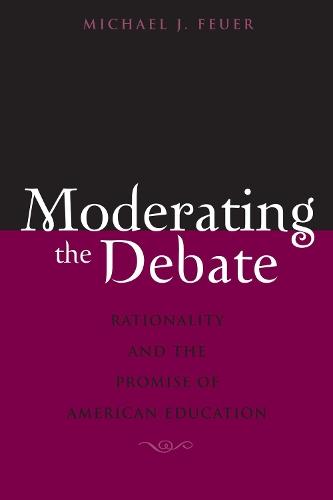
This eloquent book examines the complex—and often problematic—relations between education research, policy, and practice, and proposes ways to improve those relationships in the interest of meaningful education reform. Based on the Burton and Inglis Lectures, which Michael Feuer delivered at the Harvard Graduate School of Education in 2004 and 2005, the book begins with an examination of how recent developments in cognitive science have fundamentally changed the way we understand human decisionmaking and rational judgment. It then proceeds to a consideration of how the lessons of cognitive science might inform a more rational—and reasonable—approach to education research, policy, and reform. Moving deftly and with great insight through the worlds of education research and policymaking, Feuer offers practical solutions to the impasses and disconnections that have chronically thwarted workable, sustained education reform.
Full Product Details
Author: Michael J. Feuer
Publisher: Harvard Educational Publishing Group
Imprint: Harvard Educational Publishing Group
Weight: 0.204kg
ISBN: 9781891792694
ISBN 10: 1891792695
Pages: 152
Publication Date: 30 January 2006
Audience:
Professional and scholarly
,
Professional & Vocational
Format: Paperback
Publisher's Status: Active
Availability: To order

Stock availability from the supplier is unknown. We will order it for you and ship this item to you once it is received by us.
Reviews
These insightful, well-written, and often witty essays bring the light of cognitive science and careful rationality to the dark tunnel of education policy. With Feuer s expert and thoroughly reasonable guidance, the journey through that tunnel is more than worth it. Marshall S. Smith, Education Program Director, The William and Flora Hewlett Foundation Michael Feuer draws on the teachings of cognitive psychology and behavioral economics and on his deep experience in applying science to educational problems to build a timely and persuasive case for an incremental approach to education reform. Michael McPherson, President, The Spencer Foundation Feuer offers and innovative blend of cognitive science, behavioral economics, and organization theory and winds up with a brilliant reappraisal of the promise and pitfalls of education policy. This book needs to be read by educators, social scientists, and anyone concerned with the future of schools and schooling. Richard C. Atkinson, President Emeritus, University of California Michael Feuer s argument is one that should be engaged by all who study and teach education. This is a must-read for faculty, students, policymakers, and practitioners alike. Ellen Condliffe Lagemann, Charles Warren Professor of the History of American Education, Harvard Graduate School of Education Feuer s concise and elegant account of the complexity and limits of educational policy and scientific educational research lead to cautionary recommendations for policymakers and researchers alike; members of both groups should read this book. Moderating the Debate deserves a place alongside Lawrence Cremin s Popular Education and Its Discontents as a signal contribution to the national dialogue on educational reform. Robert M. Hauser, Vilas Research Professor of Sociology, University of Wisconsin-Madison
Michael Feuer s argument is one that should be engaged by all who study and teach education. This is a must-read for faculty, students, policymakers, and practitioners alike. Ellen Condliffe Lagemann, Charles Warren Professor of the History of American Education, Harvard Graduate School of Education Michael Feuer draws on the teachings of cognitive psychology and behavioral economics and on his deep experience in applying science to educational problems to build a timely and persuasive case for an incremental approach to education reform. Michael McPherson, President, The Spencer Foundation Feuer s concise and elegant account of the complexity and limits of educational policy and scientific educational research lead to cautionary recommendations for policymakers and researchers alike; members of both groups should read this book. Moderating the Debate deserves a place alongside Lawrence Cremin s Popular Education and Its Discontents as a signal contribution to the national dialogue on educational reform. Robert M. Hauser, Vilas Research Professor of Sociology, University of Wisconsin-Madison Feuer offers and innovative blend of cognitive science, behavioral economics, and organization theory and winds up with a brilliant reappraisal of the promise and pitfalls of education policy. This book needs to be read by educators, social scientists, and anyone concerned with the future of schools and schooling. Richard C. Atkinson, President Emeritus, University of California These insightful, well-written, and often witty essays bring the light of cognitive science and careful rationality to the dark tunnel of education policy. With Feuer s expert and thoroughly reasonable guidance, the journey through that tunnel is more than worth it. Marshall S. Smith, Education Program Director, The William and Flora Hewlett Foundation
Feuer s concise and elegant account of the complexity and limits of educational policy and scientific educational research lead to cautionary recommendations for policymakers and researchers alike; members of both groups should read this book. Moderating the Debate deserves a place alongside Lawrence Cremin s Popular Education and Its Discontents as a signal contribution to the national dialogue on educational reform. Robert M. Hauser, Vilas Research Professor of Sociology, University of Wisconsin-Madison
Author Information
Michael J. Feuer is the dean of the Graduate School of Education and Human Development at The George Washington University and president of the National Academy of Education.