Overview
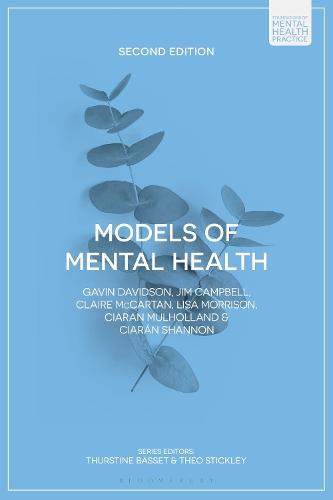
A comprehensive understanding of the different theoretical models in mental health is essential when working with people with mental health difficulties. Brought together by a multidisciplinary team, this book presents a critical overview of the key theoretical perspectives that underpin mental health practice, examining both traditional and contemporary schools of thought. Offering an accessible foundation for expanding your knowledge, the authors argue that no single theory provides a complete framework for practice on its own, highlighting how each theory has contributions, strengths and limitations. New to this edition: Two brand new chapters exploring intersectional and environmental perspectives Expanded coverage of LGBTQIA+ and trauma-informed models, featuring two new authors with expertise in trauma-informed, recovery-focused approaches and evidence reviewing Greater focus on service-user led knowledge and experience Supported by a range of exercises and case studies, this book remains an essential resource for anyone studying or practising in the field of mental health.
Full Product Details
Author: Gavin Davidson (Queen's University Belfast, UK) ,
Jim Campbell (University College Dublin, Ireland) ,
Dr Claire McCartan (Queen's University Belfast, UK) ,
Lisa Morrison (Lisa Morrison Training and Consultancy)
Publisher: Bloomsbury Publishing PLC
Imprint: Bloomsbury Academic
Edition: 2nd edition
Dimensions:
Width: 15.60cm
, Height: 2.50cm
, Length: 23.40cm
Weight: 0.454kg
ISBN: 9781350477643
ISBN 10: 1350477648
Pages: 264
Publication Date: 19 February 2026
Audience:
College/higher education
,
Tertiary & Higher Education
Format: Hardback
Publisher's Status: Forthcoming
Availability: Manufactured on demand

Reviews
I like the clear layout of this book and its balance. The mix of authors backgrounds and specialisms has undoubtedly contributed to this. I found it helpful to me as a lecturer in the preparation of my course materials. As a topic, models are sometimes glossed over or you find textbooks cover only the bio/social/psych models and avoid the subtleties and complexities inherent in this topic. This book doesn’t avoid the abstract or the complexities of the field and encourages students to embrace the grey areas and avoid reductionist approaches to understanding. I particularly appreciated the systemic approach and the use of exercises/questions and case studies. For this edition: Increase cross cultural aspects. Consider why models are important…their implications for the area of policy development and resource allocation, law and politics. Update throughout to include contemporary research where appropriate and address why models of mental health are increasing in number. * Lori Stevenson, Lecturer in Psychology, Glasgow Caledonian University, UK * Clear, straightforward objectives, sound argument, well sourced and referenced Comprehensive overview of diverse perspectives. Effective interweaving of ideas and practices across history. Multi-disciplinary authorship enables detailed overviews of the various different perspective. Strong articulation of current priorities. I don’t think the book has specific weaknesses. It strikes just about the right balance between being accessible to beginners while retaining academic strengths. It does, however, risk becoming dated. All of the topics covered are fast moving so to retain currency the book would benefit from a ’spring clean’. * Mark Hardy, Senior Lecturer in Social Work, University of York, UK * It's an excellent book. Good use of language and case studies. Poses questions at times to get the reader to think critically. For this edition, use more case studies within chapter link to support guidance i.e. things students might wish to consider. Transgender awareness/issues within the medical model could prove interesting discussion. * Mark Edwards, Lecturer in Mental Health Nursing, University of Central Lancashire, UK * Concise. Attractive. Not intimidating in size and length. Bio-medical, psychological and social perspectives all (key lenses) covered. Supporting exercises and case studies are appreciated by students in a text. A whole section on spirituality is uncommon, bold and exciting – it is missing from many texts but is increasingly an aspect of integration of whole self (service user and practitioner) in practice that students ask about. Some really clear and helpful figures and tables. For a new edition: include much more expanded and nuanced chapters on what is currently chapter 4 ‘Service user-led perspectives’. I would problematize a biomedical emphasis. I wouldn’t use the word Psychiatry, if meaning mental health. I would move away from ‘perspectives’ framings – as though it is just a viewpoint or optional lens; e.g. I would highlight Service user leadership and expertise. I would have sections on Diversity, Intersectionality, Youth, Aged, LGBTIQA+ and Trauma-informed models. I would not only elevate Service user knowledges, including Mad Studies, but would also elevate Family carer expertise and Relational models, the silencing of these voices while relying on (women’s) unpaid work (so Feminist theory). * Melissa Petrakis, Associate Professor of Social Work Monash University, AUS *
Author Information
Gavin Davidson is a Professor of Social Care and Praxis Chair at Queen’s University Belfast, UK. Jim Campbell is Emeritus Full Professor of Social Work at University College Dublin, Ireland. Claire McCartan is a Senior Researcher with the Regional Trauma Network in the Northern Health and Social Care Trust and an Honorary Senior Lecturer at Queen’s University Belfast, UK. Lisa Morrison is an Independent Mental Health Trainer and Consultant, Belfast, UK. Ciaran Mulholland is a Consultant Psychiatrist in the Northern Health and Social Care Trust, a Senior Lecturer in Medical Education and Psychiatry at Queen’s University Belfast and an Honorary Professor at Ulster University, UK. Ciarán Shannon is a Consultant Clinical Psychologist and Director of the IMPACT Research Centre in the Northern Health and Social Care Trust, an Honorary Professor at Queen’s University Belfast and a Visiting Professor at Ulster University, UK.