Overview
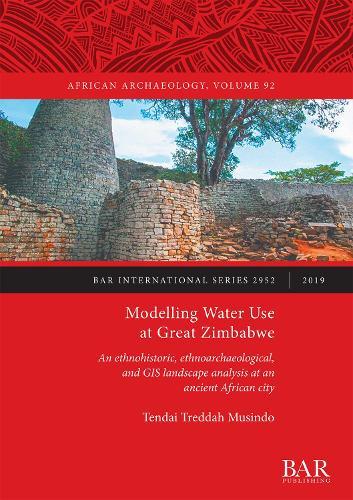
This book combines GIS aided landscape analysis with an examination of both historical and ethnoarchaeological data to provide new insights on the link between water sources and the built environment at Great Zimbabwe. The book interrogates the centrality of water in shaping spatial and social processes at an ancient capital. In addition, the author examines the different methods used by the residents of Great Zimbabwe to manage water sources and to transport water from sources to the domestic area and the implications of such methods to the use of space. It also examines the ways in which water sources influenced social formation and use of space at the ancient city of Great Zimbabwe.The author has managed to expertly strike a balance between deploying GIS tools and historical and ethnoarchaeological data to model the effect of water on the spatial and social processes at Great Zimbabwe.
Full Product Details
Author: Tendai Treddah Musindo
Publisher: BAR Publishing
Imprint: BAR Publishing
Weight: 0.542kg
ISBN: 9781407353975
ISBN 10: 1407353977
Pages: 136
Publication Date: 30 September 2019
Audience:
Professional and scholarly
,
Professional & Vocational
Format: Paperback
Publisher's Status: Active
Availability: Available To Order

We have confirmation that this item is in stock with the supplier. It will be ordered in for you and dispatched immediately.
Reviews
'This is a well-conceived and executed study of real originality for the region of Great Zimbabwe. . The two most original contributions are the research on all aspects of water as it relates to the Great Zimbabwe landscape, both historical and ethnographic; and the GIS analysis of the area, which tackles the potential availability and cultural management of water in the context of the period of the settlement's occupation. It's a welcome contribution to understanding the day-to-day management of water by the settlement's occupants, and sheds some light on the possibility of social and cultural control over such a crucial resource.' Prof. Adria LaViolette, University of Virginia
'This is a well-conceived and executed study of real originality for the region of Great Zimbabwe. . The two most original contributions are the research on all aspects of water as it relates to the Great Zimbabwe landscape, both historical and ethnographic; and the GIS analysis of the area, which tackles the potential availability and cultural management of water in the context of the period of the settlement's occupation. It's a welcome contribution to understanding the day-to-day management of water by the settlement's occupants, and sheds some light on the possibility of social and cultural control over such a crucial resource.' Prof. Adria LaViolette, University of Virginia
'This is a well-conceived and executed study of real originality for the region of Great Zimbabwe. . The two most original contributions are the research on all aspects of water as it relates to the Great Zimbabwe landscape, both historical and ethnographic; and the GIS analysis of the area, which tackles the potential availability and cultural management of water in the context of the period of the settlement's occupation. It's a welcome contribution to understanding the day-to-day management of water by the settlement's occupants, and sheds some light on the possibility of social and cultural control over such a crucial resource.' Prof. Adria LaViolette, University of Virginia
Author Information
Tendai Treddah Musindo is an Archaeology lecturer at Great Zimbabwe University, Zimbabwe. She is a holder of a DPhil in Archaeology (University of Pretoria), MSc GIS and Spatial Analysis in Archaeology (UCL), BA Honours degree in Archaeology and a BA General degree (University of Zimbabwe). She is a former Curator of Archaeology at the Great Zimbabwe World Heritage site. Her interests include spatial studies in archaeology and heritage management and the centrality of water at archaeological settlements.