Overview
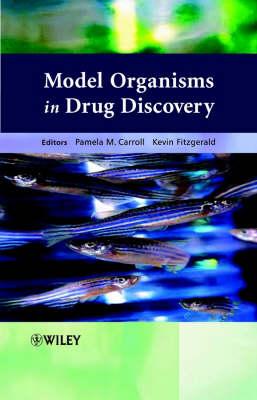
Fruit flies are ""little people with wings"" goes the saying in the scientific community, ever since the completion of the Human Genome Project and its revelations about the similarity amongst the genomes of different organisms. It is humbling that most signalling pathways which ""define"" humans are conserved in Drosophila, the common fruit fly. Feed a fruit fly caffeine and it has trouble falling asleep; feed it antihistamines and it cannot stay awake. A C. elegans worm placed on the antidepressant flouxetine has increased serotonin levels in its tiny brain. Yeast treated with chemotherapeutics stop their cell division. Removal of a single gene from a mouse or zebrafish can cause the animals to develop Alzheimer’s disease or heart disease. These organisms are utilized as surrogates to investigate the function and design of complex human biological systems. Advances in bioinformatics, proteomics, automation technologies and their application to model organism systems now occur on an industrial scale. The integration of model systems into the drug discovery process, the speed of the tools, and the in vivo validation data that these models can provide, will clearly help definition of disease biology and high-quality target validation. Enhanced target selection will lead to the more efficacious and less toxic therapeutic compounds of the future. Leading experts in the field provide detailed accounts of model organism research that have impacted on specific therapeutic areas and they examine state-of-the-art applications of model systems, describing real life applications and their possible impact in the future. This book will be of interest to geneticists, bioinformaticians, pharmacologists, molecular biologists and people working in the pharmaceutical industry, particularly genomics.
Full Product Details
Author: Pamela M. Carroll (Applied Genomics, Pharmaceutical Research Institute, Bristol-Myers Squibb, Princeton, NJ, USA) ,
Kevin Fitzgerald (Applied Genomics, Pharmaceutical Research Institute, Bristol-Myers Squibb, Princeton, NJ, USA)
Publisher: John Wiley & Sons Inc
Imprint: John Wiley & Sons Inc
Dimensions:
Width: 17.00cm
, Height: 2.20cm
, Length: 25.10cm
Weight: 0.680kg
ISBN: 9780470848937
ISBN 10: 0470848936
Pages: 288
Publication Date: 14 October 2003
Audience:
Professional and scholarly
,
Professional & Vocational
Format: Hardback
Publisher's Status: Active
Availability: Out of stock

The supplier is temporarily out of stock of this item. It will be ordered for you on backorder and shipped when it becomes available.
Reviews
...an invaluable resource for an researcher in the academic or private sector...essential for any graduate level course... (Drug Discovery Today, Vol 9(7), April 2004) ...summarised the major organisms of use in this area together with their relative strengths and weaknesses... (British Society of Cell Biology Newsletter, Summer 2004)
Author Information
Pamela M. Carroll is the editor of Model Organisms in Drug Discovery, published by Wiley. Kevin Fitzgerald is the editor of Model Organisms in Drug Discovery, published by Wiley.