Overview
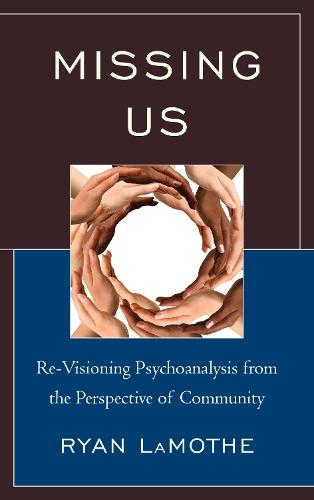
In Missing Us: Re-Visioning Psychoanalysis from the Perspective of Community, Ryan LaMothe questions the ways in which psychoanalytic and psychodynamic theorists and clinicians have historically relied principally on a two-person psychology to understand psychosocial development and practice. While this has many benefits, two-person perspectives often overlook a central need and struggle in human life, namely community. The concept of community and its cognate communion expand and deepen psychoanalytic theories of development, as well as reframe, in part, psychoanalytic concepts, processes, and aims. In Missing Us, LaMothe, relying on the Scottish philosopher John Macmurray, carefully defines the concept of community, being sure to differentiate it from the notions of sociality and intersubjectivity. Using this definition and the concept of person, LaMothe reframes potential space, transference, and motivation. Given this unique perspective, LaMothe addresses the strengths, limitations, and challenges of psychoanalysis as a therapeutic ritual.
Full Product Details
Author: Ryan LaMothe
Publisher: Jason Aronson Publishers
Imprint: Jason Aronson Publishers
Dimensions:
Width: 16.20cm
, Height: 2.20cm
, Length: 23.80cm
Weight: 0.449kg
ISBN: 9780765708809
ISBN 10: 0765708809
Pages: 220
Publication Date: 09 May 2013
Audience:
Professional and scholarly
,
Professional & Vocational
Format: Hardback
Publisher's Status: Active
Availability: In Print

This item will be ordered in for you from one of our suppliers. Upon receipt, we will promptly dispatch it out to you. For in store availability, please contact us.
Reviews
LaMothe also wrote Heresies of the Heart: Developing Emotional Wisdom (2009), Becoming Alive: Psychoanalysis and Vitality (2005), and Revitalizing Faith through Pastoral Counseling (2001), along with journal articles on a range of psychoanalytic themes. Among those articles are ""Freud's Envy of Religious Experience,"" ""Political Humiliation, Object Use,"" and ""Psychological Changes in the Life of Malcolm X."" In this volume, he intends to add to psychoanalytic anthropology. He draws often from the works of Ronald Fairbairn, Ian Suttie, and Donald Winnicott, and from philosopher John Macmurray. LaMothe asserts that analysis should include assessment of the parts played by economics, politics, and social domains on the person's community. Highly readable concrete characterizations of his therapy with particular patients-in-community bring theory to life. Chapter titles adequately represent coverage: ""Psychoanalysis and Community,"" ""Persons-in-Community,"" ""Being Alive Together: Potential Space, Transitional Objects, and Persons-in-Community,"" ""Communion of Everyday Life: Motivation, the Unconscious, and the Struggle of and for Community,"" ""Transference Love in Light of Communion and Community,"" and ""Psychoanalysis and Community: Strengths, Limitations, and Challenges."" Of interest to the psychoanalytic community. Summing Up: Recommended. Professionals. * CHOICE * “In this superbly written book, Ryan LaMothe draws attention to a reality which Sigmund Freud took for granted both personally and professionally: our profound need for a community in which we experience a deep sense of identity and interpersonal safety. LaMothe’s penetrating discussions of the writings of philosopher John Macmurray and psychoanalyst D.W. Winnicott on intersubjectivity and the person-in-community articulate an understanding which churches and other religious societies would do well to exemplify—especially in an age when the needs of individuals for community have become particularly acute. I especially appreciated the fact that the author presents himself as one who experiences such communities in his own life. Thus, he is not an idealistic visionary but a hopeful realist who longs for others to know what he has known.” -- Donald Capps “Ryan LaMothe offers a compelling, integrative perspective in his book Missing Us. As our culture embraces a hyper-connected social media mentality, LaMothe helps to reshape our thinking about psychoanalytic concepts of the past and the aims of therapy in the future.” -- Michael L. Stern, PhD, psychologist and family business advisor
LaMothe also wrote Heresies of the Heart: Developing Emotional Wisdom (2009), Becoming Alive: Psychoanalysis and Vitality (2005), and Revitalizing Faith through Pastoral Counseling (2001), along with journal articles on a range of psychoanalytic themes. Among those articles are Freud's Envy of Religious Experience, Political Humiliation, Object Use, and Psychological Changes in the Life of Malcolm X. In this volume, he intends to add to psychoanalytic anthropology. He draws often from the works of Ronald Fairbairn, Ian Suttie, and Donald Winnicott, and from philosopher John Macmurray. LaMothe asserts that analysis should include assessment of the parts played by economics, politics, and social domains on the person's community. Highly readable concrete characterizations of his therapy with particular patients-in-community bring theory to life. Chapter titles adequately represent coverage: Psychoanalysis and Community, Persons-in-Community, Being Alive Together: Potential Space, Transitional Objects, and Persons-in-Community, Communion of Everyday Life: Motivation, the Unconscious, and the Struggle of and for Community, Transference Love in Light of Communion and Community, and Psychoanalysis and Community: Strengths, Limitations, and Challenges. Of interest to the psychoanalytic community. Summing Up: Recommended. Professionals. CHOICE In this superbly written book, Ryan LaMothe draws attention to a reality which Sigmund Freud took for granted both personally and professionally: our profound need for a community in which we experience a deep sense of identity and interpersonal safety. LaMothe's penetrating discussions of the writings of philosopher John Macmurray and psychoanalyst D.W. Winnicott on intersubjectivity and the person-in-community articulate an understanding which churches and other religious societies would do well to exemplify-especially in an age when the needs of individuals for community have become particularly acute. I especially appreciated the fact that the author presents himself as one who experiences such communities in his own life. Thus, he is not an idealistic visionary but a hopeful realist who longs for others to know what he has known. -- Donald Capps, PhD, Princeton Theological Seminary, emeritus Ryan LaMothe offers a compelling, integrative perspective in his book Missing Us: Psychoanalysis and Community. As our culture embraces a hyper-connected social media mentality, LaMothe helps to reshape our thinking about psychoanalytic concepts of the past and the aims of therapy in the future. -- Michael L. Stern, PhD, Psychologist and Family Business Advisor
In this superbly written book, Ryan LaMothe draws attention to a reality which Sigmund Freud took for granted both personally and professionally: our profound need for a community in which we experience a deep sense of identity and interpersonal safety. LaMothe's penetrating discussions of the writings of philosopher John Macmurray and psychoanalyst D.W. Winnicott on intersubjectivity and the person-in-community articulate an understanding which churches and other religious societies would do well to exemplify-especially in an age when the needs of individuals for community have become particularly acute. I especially appreciated the fact that the author presents himself as one who experiences such communities in his own life. Thus, he is not an idealistic visionary but a hopeful realist who longs for others to know what he has known. -- Donald Capps, PhD, Princeton Theological Seminary, emeritus Ryan LaMothe offers a compelling, integrative perspective in his book Missing Us: Psychoanalysis and Community. As our culture embraces a hyper-connected social media mentality, LaMothe helps to reshape our thinking about psychoanalytic concepts of the past and the aims of therapy in the future. -- Michael L. Stern, PhD, Psychologist and Family Business Advisor
Author Information
Ryan LaMothe, PhD, is a professor of pastoral counseling at Saint Meinrad Seminary and School of Theology. Author of numerous articles on religion and psychoanalysis, LaMothe has also written three books, including Being Alive: Psychoanalysis and Vitality.