Overview
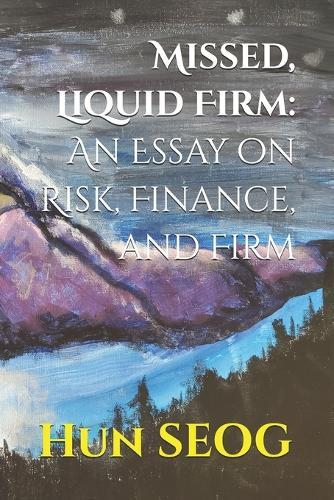
This book is a metaphorical, essay-style exploration intended to question and reflect on the fundamental assumptions and principles underlying economics and business studies. The motivation for writing the book is, on one hand, the recognition of a lack of logical consistency and historical perspective in economics, and on the other hand, the metaphorical rhetoric surrounding corporations. The central themes of this book include risk, money, and trade-the core components of capitalism-as well as the institutions that embody them, such as insurance, markets, firms, and finance. It also examines major crises like the 2008 financial crisis and the COVID-19 pandemic. To uncover the mythological and magical dimensions of capitalism, the book continually engages with anthropology, philosophy, and sociology. It intersects with economics and finance while drawing on the ideas of Mauss, Polanyi, Foucault, Deleuze, Marx, Weber, and others. Additionally, firms and finance can be understood through the forms of matter-gas, liquid, and solid. These metaphors already pervade our language, shaping how we conceptualize economic forces. These matters transform, move, interact, and even collide, echoing the forgotten alchemy of the Middle Ages in a modern context. While capitalism can be partially explained through science and rational calculation, its deeper essence can only be grasped through the lenses of myth, ritual, and alchemy. Some key arguments of the book are as follows. (i) Risk, finance, and firms can be understood through the three states of matter-gas, liquid, and solid, respectively. The firm is a solid, surrounded by liquid and oriented toward gas, in the sense that it strives to extract monetary profit (liquid) from risk (gas). It serves as a battleground where solids, liquids, and gases collide, manifesting in corporate governance, corporate finance, and ESG. (ii) The insurance market symbolizes capitalism because it trades insurance-its spirit rooted in solidarity and gift-giving, which, by nature, is not tradable. Moreover, the insurance market aligns with Foucault's modern episteme, as its classification of risk parallels the episteme of identity and difference. (iii) The information revolution can be seen as an insurance revolution, as it extends the logic of classification and discrimination-the privilege enjoyed by the insurance market-across the entire economic and industrial landscape. (iv) Capitalism may not have emerged without the prohibition of usury, unlike the conventional belief. With the ban on interest and a stroke of historical contingency, risk was unshackled, forming a crucial pillar of capitalism. Capitalism became possible when risk and time, once separated in finance and insurance, converged again. This explains why capitalism arose in Europe rather than in Asia or the Islamic world, where risk and time were never distinctly separated. (v) Modern finance can be described as a magical ritual. Like insurance, finance too is a language and a symbol. Just as language entails speech acts, finance, as the exchange of money, involves ""money acts."" Finance goes beyond simple exchanges of money, commanding actions from the parties involved. Projecting the forces of power, greed, or hope between the parties, finance becomes a surface where these forces collide, while also serving as a promise, a command, or a warning. It is this high performativity of money that underlies modern finance's ability to become a space of simulacra.
Full Product Details
Author: Hun Seog
Publisher: Tonekey
Imprint: Tonekey
Dimensions:
Width: 15.20cm
, Height: 1.50cm
, Length: 22.90cm
Weight: 0.386kg
ISBN: 9798994654514
Pages: 288
Publication Date: 21 January 2026
Audience:
General/trade
,
General
Format: Paperback
Publisher's Status: Active
Availability: Available To Order

We have confirmation that this item is in stock with the supplier. It will be ordered in for you and dispatched immediately.