Overview
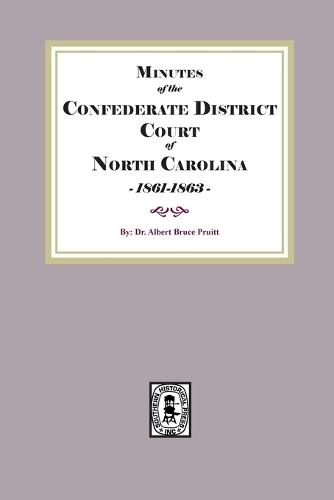
By: Dr. A.B. Pruitt, Pub. 2014, reprinted 2026, 384 pages, Index, soft cover, ISBN #978-1-63914-763-2. This book contains information from the recorded minutes of Confederate Court of North Carolina District Court of Cape Fear and Pamilico which were later move to Wilmington and Goldsboro. The judicial power of the Confederate government was vested by article 3 of the provisional constitution in a supreme court and system of district courts. No inhabitant of the Confederate States could be sued outside his own district. Civil suits were limited to $5,000 excluding costs, which moved many cases to state courts. Admiralty cases were limited to waters navigable by vessels of 100 tons or more. Most of the business of district courts was garnishment and sequestration. If a confederate citizen owed a person or company in the United States, a garnishment case was brought by the Confederate government. Sequestration happened when the Confederate government took possession of property in the Confederacy that belonged to citizens of the United States. The minute books contain names of people appointed judge, district attorney, clerk, and receiver. It was the job of the receiver to obtain names of people who owe citizens or companies in the United States. A case mentions those debts, but only rarely the names of the people who are partners in the companies. In later sections of the minutes, the amounts collected by receivers are mentioned. The interest rate on debts owed to people in New York was 7% in most cases. The interest rate on debts owed to people in other states was 6% in most cases. The great majority of cases involved debts owed. But there were also land owned by citizens of the United States (land was sold at auction), amounts related to settlements of estates (deceased lived in North Carolina, but heirs lived in United States), and medicines (which were sold at auction). Admiralty cases mention name of captured vessel and name of vessel that did the capturing. Later the vessel was usually assigned to the state of North Carolina, according to the minutes. The cargo would be sold, but there are no details about the items sold. The proceeds of cargo sale were usually divided between the state and the crew of capturing crew. From the sale the largest share went to the captain, and smaller amounts went to other crewmen, without mention of their ranks. The Index mentions approximately 6,000 individuals.
Full Product Details
Author: Albert Bruce Pruitt
Publisher: Southern Historical Press
Imprint: Southern Historical Press
Dimensions:
Width: 15.20cm
, Height: 2.20cm
, Length: 22.90cm
Weight: 0.513kg
ISBN: 9781639147632
ISBN 10: 1639147632
Pages: 386
Publication Date: 05 May 2026
Audience:
General/trade
,
General
Format: Paperback
Publisher's Status: Active
Availability: Available To Order

We have confirmation that this item is in stock with the supplier. It will be ordered in for you and dispatched immediately.