|
|
|||
|
||||
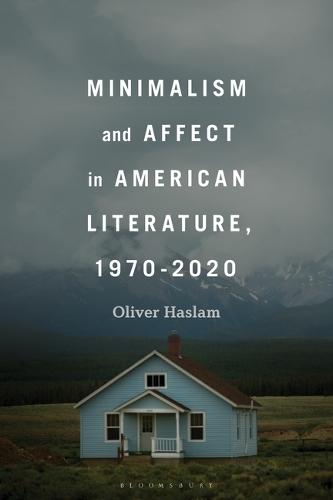
OverviewShortlisted for the BACLS Monograph Prize 2025 Theorizes the development of a minimalist mode in American fiction since 1970, frequently seen to interrogate US postmodernity. Minimalism and Affect in American Literature, 1970-2020 responds to existing studies of literary minimalism by pursuing three original and interrelated objectives. It provides a more inclusive and precise definition of minimalism that enables further inquiry into the mode. It also exposes the presence of minimalism beyond critical demarcations that attempt to limit the aesthetic to a particular school, medium, movement, form or decade. Finally, it argues that writers of American literary minimalism are uniquely privileged in their ability to formalize precarity and threatening cultural currents into the fragile construct that is ordinary life. Building upon theories of affect and the everyday, Minimalism and Affect in American Literature, 1970-2020 analyses minimalist aesthetics within the works of canonical minimalists alongside writers more frequently associated with other movements. Through readings of Ernest Hemingway, Joan Didion, Raymond Carver, Paul Auster and Don DeLillo, among others, and cultural phenomena ranging from sedation to telephony, this book exposes the persistence and political importance of minimalism within American literature from the 20th century into the 21st. Full Product DetailsAuthor: Professor or Dr. Oliver Haslam (Harlaxton College, University of Evansville, UK)Publisher: Bloomsbury Publishing Plc Imprint: Bloomsbury Academic Dimensions: Width: 15.20cm , Height: 2.80cm , Length: 22.90cm Weight: 0.454kg ISBN: 9798765109403Pages: 216 Publication Date: 30 April 2026 Audience: College/higher education , Professional and scholarly , Tertiary & Higher Education , Professional & Vocational Format: Paperback Publisher's Status: Forthcoming Availability: Manufactured on demand Table of ContentsAcknowledgements Introduction: Minimalism and Affect Canonical Literary Minimalism Expansive Definitions of Literary Minimalism Minimalist Art Affect and the Everyday Banal Poetics 1. Origins, Contexts and Ernest Hemingway’s Inefficient Minimalism Stylistic Origins Seriality and Death Loneliness The Crowd and the Periphery 2. Sedation and Exposure in Joan Didion’s Play It As It Lays The Sedation Aesthetic Charged Nothingness and Form Reification and Forgetting Exposing Nihilism 3. Telephonic Tonalities in the Stories of Raymond Carver Forceful Absence The Telephonic Everyday Gothic Minimalism The (Non-)Event of Telephony Affective Thresholds Barely Audible Minimalism 4. Blank Spaces: Paul Auster’s Environments of Erasure The Luxury of Minimalism Nowhere, New York Blind Ghosts Filling in the Blanks Ravening Nulls 5. Orbiting the Ordinary in Don DeLillo’s Fiction Silent Refrains The Hyper-Ordinary The Emptiness of the Event Blank Echoes Conclusion The Haunting of Stability Minimal Futures Bibliography IndexReviews""Haslam offers a timely and compelling analysis of the affective dimensions of literary minimalism. By situating important writers - Didion, Auster, DeLillo, and others - persuasively within the broader field of minimalism, he gives us a highly readable account of their value in understanding the precariousness of our contemporary moment, with all its affective extremes. This will be an indispensable text for understanding the ongoing relevance of literary minimalism."" --Marc Botha, Associate Professor of English, Durham University, UK Author InformationOliver Haslam is Assistant Professor of English Literature at the University of Evansville's Harlaxton College, UK. Tab Content 6Author Website:Countries AvailableAll regions |
||||