Overview
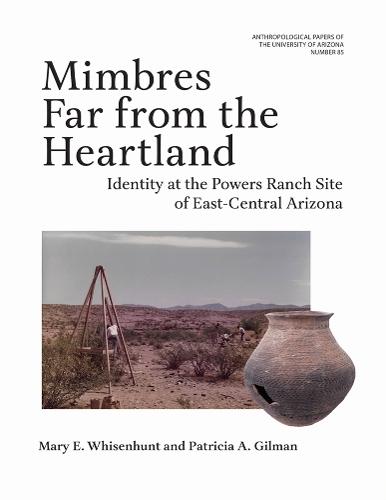
This new work offers a unique investigation into the complexities of Mimbres identity and social dynamics beyond the traditional Mimbres Valley heartland. Situated at the western edge of the Mimbres region, the Powers Ranch site represents the only professionally excavated Classic period settlement in Arizona’s Gila River Valley. Through excavation and analysis of architecture and a rich array of artifacts, including ceramic sherds, projectile points, and shell artifacts, the authors provide a detailed look at the lives of Mimbres people on the periphery. This work compares findings from Powers Ranch with those from neighboring sites in the Gila River Valley and further east in the Mimbres Valley, unraveling patterns of identity and affiliation that challenge previous understandings. The study is guided by three key research questions: the extent of affiliation between the community at the Powers Ranch site and Mimbres communities to the east, patterns that suggest Powers Ranch was a habitation and not a limited activity site, and whether the site was unique in comparison with Mimbres occupations situated to the south in the Gila River Valley. Contributions from scholars M. Steven Shackley, Martin H. Welker, and Arthur W. Vokes further enrich this volume, ensuring a comprehensive and authoritative exploration of the Powers Ranch site. Mimbres Far from the Heartland is an invaluable addition to Southwest archaeology, shedding light on how people constructed unique identities in edge communities and how these identities were expressed through material culture and social networks. Whisenhunt and Gilman’s work significantly advances our understanding of Mimbres communities, offering new insights into the social resilience and cultural affiliations of people living far from their cultural heartland.
Full Product Details
Author: Mary E. Whisenhunt ,
Patricia A. Gilman
Publisher: University of Arizona Press
Imprint: University of Arizona Press
Weight: 0.454kg
ISBN: 9780816554904
ISBN 10: 0816554900
Pages: 274
Publication Date: 19 August 2025
Audience:
Professional and scholarly
,
Professional & Vocational
Format: Paperback
Publisher's Status: Active
Availability: Available To Order

We have confirmation that this item is in stock with the supplier. It will be ordered in for you and dispatched immediately.
Reviews
“The Powers Ranch site is a fascinating context along the far western edge of the Mimbres region. This book provides an excellent overview of social life and social identity away from the heartland in this relatively understudied region. Studying Mimbres from the edges of the cultural pattern is likely to reveal new details of what it meant to participate in the Mimbres tradition in general.”—Matthew A. Peeples, author of Connected Communities: Networks, Identity, and Social Change in the Ancient Cibola World “Powers Ranch provides a fascinating contrast to the large villages most of us think of as ‘Mimbres.’ Whisenhunt and Gilman make a convincing case that this small hamlet located at the geographic edge of the Mimbres area was a full-time residence whose inhabitants had strong links to other Mimbres area communities and expressed those ties in their pottery, architecture, and other items despite the distances that separated them from their Mimbres-affiliated neighbors.”—Karen Gust Schollmeyer, University of Arizona
""The Powers Ranch site is a fascinating context along the far western edge of the Mimbres region. This book provides an excellent overview of social life and social identity away from the heartland in this relatively understudied region. Studying Mimbres from the edges of the cultural pattern is likely to reveal new details of what it meant to participate in the Mimbres tradition in general.""--Matthew A. Peeples, author of Connected Communities: Networks, Identity, and Social Change in the Ancient Cibola World ""Powers Ranch provides a fascinating contrast to the large villages most of us think of as 'Mimbres.' Whisenhunt and Gilman make a convincing case that this small hamlet located at the geographic edge of the Mimbres area was a full-time residence whose inhabitants had strong links to other Mimbres area communities and expressed those ties in their pottery, architecture, and other items despite the distances that separated them from their Mimbres-affiliated neighbors.""--Karen Gust Schollmeyer, University of Arizona
Author Information
Mary Whisenhunt received her doctorate in anthropology from the University of Texas at San Antonio in 2020, conducting her fieldwork in southeast Arizona. Her research focuses on the social resilience of precontact Indigenous people on the western boundary of the Mimbres region. Patricia A. Gilman has done archaeological research in the Mimbres region for more than fifty years, retiring from the Department of Anthropology at the University of Oklahoma. She has authored or co-authored more than thirty-five refereed publications.