Overview
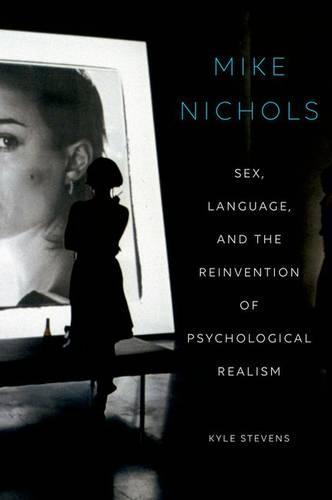
With iconic movies like Who's Afraid of Virginia Woolf?, The Graduate, and Carnal Knowledge, Mike Nichols was the most prominent American director during the cultural upheavals of the 1960s. Mike Nichols: Sex, Language, and the Reinvention of Psychological Realism argues that he overhauled the style of psychological realism, and, in doing so, continues to shape the legacies of Hollywood cinema. It also reveals that misreadings of his films were central to foundational debates at the emergence of Cinema Studies as a discipline, inviting new reflections on critical dogma.Focusing on Nichols' classic movies, as well as later films such as Silkwood, The Birdcage, and Angels in America, Kyle Stevens demonstrates that Nichols' realism lies not in the plausibility of his characters but in their inherent mystery. By attending to the puzzling words and silences, breaths and laughter, that comprise these characters, Stevens uncovers new insights into the subversive potential of a range of cinematic elements, and reveals how Nichols' satirical oeuvre, and Hollywood itself, participated in several of the nation's most urgent social, political, and philosophical advances.
Full Product Details
Author: Kyle Stevens (Florence Levy Kay Fellow in Film Studies and the Digital Humanities, Florence Levy Kay Fellow in Film Studies and the Digital Humanities, Brandeis University)
Publisher: Oxford University Press Inc
Imprint: Oxford University Press Inc
Dimensions:
Width: 23.10cm
, Height: 1.50cm
, Length: 15.50cm
Weight: 0.399kg
ISBN: 9780199375813
ISBN 10: 019937581
Pages: 272
Publication Date: 24 September 2015
Audience:
General/trade
,
General
Format: Paperback
Publisher's Status: Active
Availability: Manufactured on demand

We will order this item for you from a manufactured on demand supplier.
Reviews
Employing innovative conceptual models attuned to the complexities of psychological realism, language and dialogic silence, and 'chameleon' acting styles, Stevens argues incisively and convincingly for a full reassessment of Nichols' achievement and of the way critic/scholars designate cinematic auteurs. Absolutely engaging and beautifully written, Mike Nichols is intriguing every step of the way. --Timothy Corrigan, author of The Essay Film: From Montaigne, After Marker This is not just a study of Nichols--although it surely ranks as an appreciative and nuanced assessment of the late director's career. Using Nichols' films as a fulcrum, Stevens rethinks some of the central assumptions of narrative fiction film, namely its theatrical and expressive functions and roots. --Amy Villarejo, author of Ethereal Queer: Television, Historicity, Desire
this clear, elegant analysis does justice to the great director ... For all of Stevens's command of theory, his great gift is his close analyses of individual shots, phrases, and moments from Nichols's work. M. Yacowar, CHOICE
Author Information
Kyle Stevens is Visiting Assistant Professor of Cinema Studies and English at Colby College.