|
|
|||
|
||||
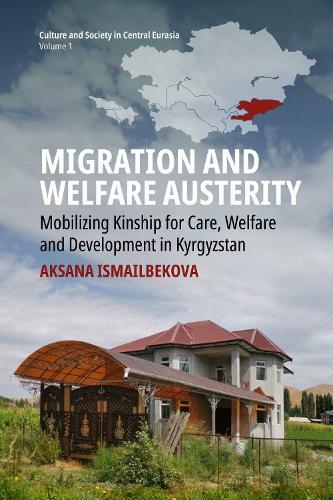
OverviewAfter the collapse of the Soviet Union, residents of Alma, a village in Kyrgyzstan, were faced with many challenges. Economic crisis and the elimination of welfare support forced an entire generation to become labour migrants in Russia. Those ‘left behind’ were sustained by migrants’ remittances and charitable activities, but at a cost. As villagers built upon existing kinship structures to create new practices of mutual aid on the lines of Islamic teaching, they suffered from the ‘dark side of kinship.’ This book shares experiences of people in Alma and its Moscow-based diaspora and how they created a ‘moral economy of migration’ that became territorialised as kindship was de-territorialised. Full Product DetailsAuthor: Aksana IsmailbekovaPublisher: Berghahn Books Imprint: Berghahn Books Volume: 1 ISBN: 9781836954347ISBN 10: 1836954344 Pages: 284 Publication Date: 01 March 2026 Audience: Professional and scholarly , Professional & Vocational Format: Hardback Publisher's Status: Active Availability: In Print This item will be ordered in for you from one of our suppliers. Upon receipt, we will promptly dispatch it out to you. For in store availability, please contact us. Table of ContentsAcknowledgements Introduction Chapter 1. The Central Asian Family in Historical Context: The Bright Side and the Dark Side of Kinship Chapter 2. Silent Voices and a Lack of Parental Authority: The Dark Side of Kinship Chapter 3. Dark Side of Kinship and Uncertain Marriages: Shame, Temporary Nike and Divorce Chapter 4. Performance and Competition: House Building and Migrants’ Care of Elderly Parents Chapter 5. Almagrad: The Mobilization of Translocal Lineage-Based Community in Moscow Chapter 6. ‘Doing Good Aid’ Within Translocal Lineages Chapter 7. Silence, Performance: International Migration, Internal Migration and Village-Level Infrastructural Development Conclusion: The Bright Side and the Dark Side of Kinship References IndexReviews""What makes this book particularly appealing is its ability to present both a fresh perspective on the everyday lives of migrants and a broader view of kinship in Soviet and post-Soviet contexts. The author skillfully and convincingly weaves together local, Russian, Western, and Soviet perspectives."" - Sherzod Eraliev, Lund University “What makes this book particularly appealing is its ability to present both a fresh perspective on the everyday lives of migrants and a broader view of kinship in Soviet and post-Soviet contexts. The author skillfully and convincingly weaves together local, Russian, Western, and Soviet perspectives.” • Sherzod Eraliev, Lund University Author InformationAksana Ismailbekova is Senior Research Fellow at the Leibniz-Zentrum Moderner Orient in Berlin, Germany. Her research focuses on the importance of gender, kinship and religion in negotiating socioeconomic change. She is the author of the book Blood Ties and the Native Sons: Poetics of Patronage in Kyrgyzstan (Indian University Press, 2017), and the co-editor of Surviving Everyday Life: The Security Capes of Threatened People in Central Asia (Bristol University Press, 2020). Tab Content 6Author Website:Countries AvailableAll regions |
||||