Overview
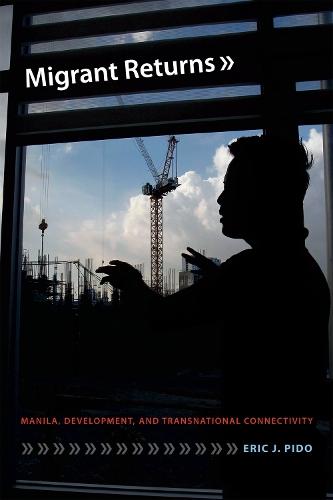
In Migrant Returns Eric J. Pido examines the complicated relationship among the Philippine economy, Manila's urban development, and balikbayans-Filipino migrants visiting or returning to their homeland-to reconceptualize migration as a process of connectivity. Focusing on the experiences of balikbayans returning to Manila from California, Pido shows how Philippine economic and labor policies have created an economy reliant upon property speculation, financial remittances, and the affective labor of Filipinos living abroad. As the initial generation of post-1965 Filipino migrants begin to age, they are encouraged to retire in their homeland through various state-sponsored incentives. Yet, once they arrive, balikbayans often find themselves in the paradoxical position of being neither foreign nor local. They must reconcile their memories of their Filipino upbringing with American conceptions of security, sociality, modernity, and class as their homecoming comes into collision with the Philippines' deep economic and social inequality. Tracing the complexity of balikbayan migration, Pido shows that rather than being a unidirectional event marking the end of a journey, migration is a multidirectional and continuous process that results in ambivalence, anxiety, relief, and difficulty.
Full Product Details
Author: Eric J. Pido
Publisher: Duke University Press
Imprint: Duke University Press
Weight: 0.318kg
ISBN: 9780822363699
ISBN 10: 0822363690
Pages: 232
Publication Date: 16 June 2017
Audience:
Professional and scholarly
,
Professional & Vocational
Format: Paperback
Publisher's Status: Active
Availability: In Print

This item will be ordered in for you from one of our suppliers. Upon receipt, we will promptly dispatch it out to you. For in store availability, please contact us.
Reviews
A rich ethnographic account of homing. . . . Migrant Returns is a paradigmatic illumination of the multiple landscapes-personal, familial, social, and cultural-created by re/settlement, representation, and ultimately return that are emblematic of any relocation ideology. . . . By articulating the multiple logics of global economies and local social geographies, [Pido] has given us a nuanced ethnographic plunge into the multidirectional complexities and paradoxical positions of the current global diasporic moment. -- Anastasia Christou * American Ethnologist * Dense and carefully argued ... Migrant Returns captures the multiple dimensions associated with return migration and serves as a valuable resource for those interested in transnationalism, globalization, and migration scholarship. -- Armand Gutierrez * International Migration Review * An insightful and timely account of Filipino Americans and their newfound role as key players in the Philippines' bourgeoning retirement and real estate industries. -- Paul Nadal * Journal of Asian American Studies *
An insightful and timely account of Filipino Americans and their newfound role as key players in the Philippines' bourgeoning retirement and real estate industries. -- Paul Nadal * Journal of Asian American Studies * Dense and carefully argued ... Migrant Returns captures the multiple dimensions associated with return migration and serves as a valuable resource for those interested in transnationalism, globalization, and migration scholarship. -- Armand Gutierrez * International Migration Review * A rich ethnographic account of homing. . . . Migrant Returns is a paradigmatic illumination of the multiple landscapes-personal, familial, social, and cultural-created by re/settlement, representation, and ultimately return that are emblematic of any relocation ideology. . . . By articulating the multiple logics of global economies and local social geographies, [Pido] has given us a nuanced ethnographic plunge into the multidirectional complexities and paradoxical positions of the current global diasporic moment. -- Anastasia Christou * American Ethnologist *
<i>Migrant Returns</i> is an important book, and especially timely given its analysis of our current global moment, the contemporary Philippines, and the history of migrations between the United States and the Philippines. It could easily become a standard reference for the history of neoliberal migrancy in the early twenty-first century. --Vicente Rafael, author of Motherless Tongues: The Insurgency of Language amid Wars of Translation
Author Information
Eric J. Pido is Assistant Professor of Asian American Studies at San Francisco State University.