Overview
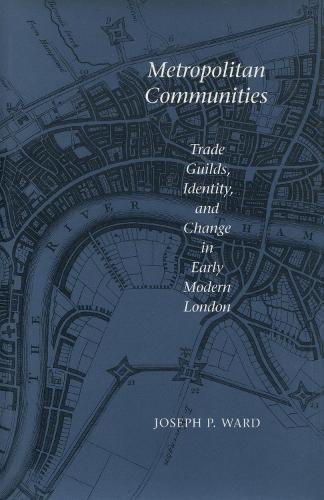
Many long-held assumptions of historians and literary critics are sharply challenged in this interpretation of the cultural consequences of social, economic, and political change in early modern London. During the sixteenth and seventeenth centuries, greater London's population nearly quintupled, surpassing 500,000 before 1700, making it Europe s largest metropolis. Contemporaries often complained that the many problems accompanying this urban development were the result of immigrants flocking to the rapidly expanding suburbs around the City of London. Such complaints assumed that immigrants chose to live outside the City in order to avoid the economic oversight of its trade guilds. Sharing such assumptions, many scholars have found an inherent conflict between residents of the traditional, orderly City and those of the relatively licentious suburbs. According to their view, this conflict encouraged both the decline of the guilds and the appearance of new forms of representation in Renaissance literature, notably in the plays staged in suburban theatres. The author offers an alternative to this view of London's expansion.
Full Product Details
Author: Joseph P. Ward
Publisher: Stanford University Press
Imprint: Stanford University Press
Edition: New edition
Dimensions:
Width: 15.20cm
, Height: 1.90cm
, Length: 22.90cm
Weight: 0.499kg
ISBN: 9780804729178
ISBN 10: 0804729174
Pages: 216
Publication Date: 01 September 1997
Audience:
College/higher education
,
Professional and scholarly
,
Undergraduate
,
Postgraduate, Research & Scholarly
Format: Hardback
Publisher's Status: Active
Availability: In Print

This item will be ordered in for you from one of our suppliers. Upon receipt, we will promptly dispatch it out to you. For in store availability, please contact us.
Reviews
This important and useful work takes a topic--early modern London--that is of considerable significance in the fields of social, economic, cultural, and urban history, as well as Renaissance drama and Shakespeare studies. It makes a new and interesting contribution to the present lively discussion of such issues as social cohesion, identity, and perceptions of the changing metropolis using the hitherto under-exploited records of the sixteenth- and seventeenth-century trade guilds. --Vanessa Harding,University of London
'This important and useful work takes a topic - early modern London - that is of considerable significance in the fields of social, economic, cultural, and urban history, as well as Renaissance drama and Shakespeare studies. It makes a new and interesting contribution to the present lively discussion of such issues as social cohesion, identity, and perceptions of the changing me tropolis using the hitherto under-exploited records of the sixteenth- and seventeenth-century trade guilds.' Vanessa Harding, University of London
This important and useful work takes a topic - early modern London - that is of considerable significance in the fields of social, economic, cultural, and urban history, as well as Renaissance drama and Shakespeare studies. It makes a new and interesting contribution to the present lively discussion of such issues as social cohesion, identity, and perceptions of the changing metropolis using the hitherto under-exploited records of the sixteenth- and seventeenth-century trade guilds. - Vanessa Harding,University of London
Author Information
Joseph P. Ward is Assistant Professor of History at Wayne State University.