Overview
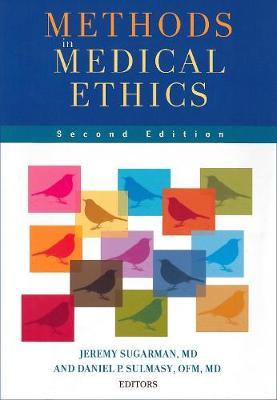
Medical ethics draws upon methods from a wide array of disciplines, including anthropology, economics, epidemiology, health services research, history, law, medicine, nursing, philosophy, psychology, sociology, and theology. In this book, which systematically examines, critiques, and challenges some of these disciplines and their methods in light of their influence on medical ethics, scholars present particular methods that have played significant roles in the field. The methods addressed include philosophy, religion and theology, professional codes, law, casuistry, history, qualitative research, ethnography, quantitavive surveys, experimental methods, and economics and decision science. Reviewing each, they provide descriptions of techniques, critiques, and notes on resources and training. Physician-assisted suicide and euthanasia are used as an illustration of the richness of multidisciplinary work applied to individual issues. Similarly, genetic testing is used as an example of how multiple descriptive methods may privilege certain findings. Methods in Medical Ethics aims to provide a resource for scholars, teachers, editors, and students in any of the disciplines that have contributed to the field. As a textbook and reference for graduate students and scholars in medical ethics, it offers an understanding of the complexities of both moral questions and their answers.
Full Product Details
Author: Jeremy Sugarman ,
Daniel P. Sulmasy ,
Daniel P. Sulmasy ,
Jeremy Sugarman
Publisher: Georgetown University Press
Imprint: Georgetown University Press
Dimensions:
Width: 15.20cm
, Height: 2.10cm
, Length: 22.90cm
Weight: 0.567kg
ISBN: 9780878408733
ISBN 10: 0878408738
Pages: 328
Publication Date: 16 June 2001
Audience:
Professional and scholarly
,
Professional and scholarly
,
Professional & Vocational
,
Postgraduate, Research & Scholarly
Replaced By: 9781589017016
Format: Paperback
Publisher's Status: Out of Print
Availability: Out of stock

Reviews
Encourages something more than multidisciplinary approaches; [the authors] offer a vision of actual interdisciplinary discourse. -- Health Progress An important contribution to the field. -- JAMA (Journal of the American Medical Association) An important contribution to the field...a useful resource for those embarking upon projects in medical ethics. -- Theoretical Medicine and Bioethics Sugarman and Sulmasy have provided those responsible for health care decisions an important tool for future deliberations. -- Theological Studies [A] valuable resource for scholars, students, instructors, and clinicians...a useful tool in the classroom as well as a medium for scholarship and life long learning. -- Medicine, Health Care and Philosophy This book offers one of the most comprehensive examinations to date of the descriptive and normative factors that enter into consideration when one is dealing with the sometimes confounding issues that have an impact on everyday clinical decision making... Methods in Medical Ethics may be a valuable resource for scholars, teachers, and students of biomedical ethics. But it could serve, as well, as a reliable and comprehensive reference for physicians and other health care workers wishing to expand their view and their understanding of the important principles that guide clinical decision making in a complex health care environment. -- New Jersey Medicine
Author Information
Jeremy Sugarman, MD, is a professor of medicine and philosophy and the director of the Center for the Study of Medical Ethics and Humanities at Duke University. He is the editor of Ethics in Primary Care and coeditor of Beyond Consent: Seeking Justice in Research. Daniel P. Sulmasy, OFM, MD, is the inaugural Clinton-Kilbride Professor of Medicine and Medical Ethics, Professor of Divinity, and Associate Director of the MacLean Center for Clinical Medical Ethics at the University of Chicago. He is the author of The Healer's Calling: A Spirituality for Physicians and Other Health Care Professionals.