Overview
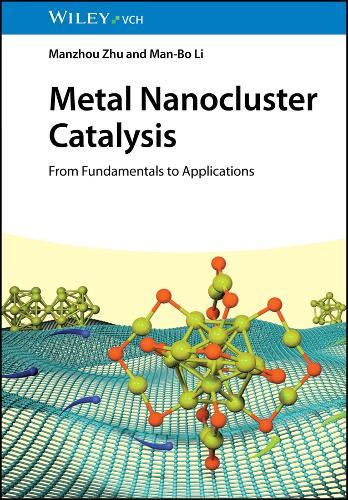
Provides insights into the structure, mechanisms, and applications of metal nanocluster catalysis Metal nanoclusters are rapidly emerging as a distinct class of catalysts with unique properties that bridge the gap between molecular and nanoparticle systems. Their ultra-small size, atomically precise structures, and diverse metal–metal and metal–ligand interactions give rise to catalytic behaviors that combine the best attributes of both homogeneous and heterogeneous catalysts. Nanoclusters demonstrate exceptional activity, selectivity, and recyclability, making them highly promising for applications across green chemistry and sustainable energy research. Metal Nanocluster Catalysis: From Fundamentals to Applications provides a timely and thorough examination of this rapidly expanding field. Organized into twelve chapters, the book systematically introduces the three major classes of nanocluster catalysts—in-situ generated, supported, and ligand-protected systems—covering their formation, structural features, and mechanistic pathways. Beyond conventional catalytic transformations such as oxidation and borylation, the book highlights the growing role of nanoclusters in photo-, electro-, and enzyme-catalysis, where their exceptional energy and electron transfer capabilities open new avenues for organic transformations. Integrating theoretical frameworks and emerging practical strategies in a single volume, Metal Nanocluster Catalysis: Explores applications in hydrogenation, oxidation, borylation, and cross-coupling reactions Discusses practical aspects of industrial catalysis, including recyclability and scale-up Provides insight into recyclability and large-scale applications in industrial catalysis Addresses the challenges and opportunities that define future research directions Includes commentary on current challenges and future research opportunities Metal Nanocluster Catalysis: From Fundamentals to Applications is ideal for advanced undergraduates, graduate students, and researchers in catalysis, inorganic chemistry, chemical engineering, and materials science. It is well-suited for courses such as Advanced Catalysis, Nanomaterials in Chemistry, and Sustainable Energy Chemistry within degree programs in chemistry, chemical engineering, and materials science.
Full Product Details
Author: Manzhou Zhu (Anhui University, China) ,
Man-Bo Li (Anhui University, China)
Publisher: Wiley-VCH Verlag GmbH
Imprint: Blackwell Verlag GmbH
ISBN: 9783527355266
ISBN 10: 352735526
Pages: 352
Publication Date: 22 April 2026
Audience:
Professional and scholarly
,
Professional & Vocational
Format: Hardback
Publisher's Status: Forthcoming
Availability: Awaiting stock

Author Information
Manzhou Zhu is the Changjiang Chair Professor of Chemistry at Anhui University, China. He is a Fellow of the Royal Society of Chemistry and Associate Editor of Nanoscale and Nanoscale Advances. He earned his PhD from the University of Science and Technology of China (USTC) in 2000 and completed postdoctoral research at USTC and Carnegie Mellon University. His research focuses on atomically precise nanoclusters, structure–property correlations, and catalytic applications. Man-Bo Li is a Professor at the Institutes of Physical Science and Information Technology, Anhui University, China. He received his PhD from USTC, followed by postdoctoral research at the Chinese Academy of Sciences, KAUST, and Stockholm University. A recipient of the Thieme Chemistry Journals Award, his research centers on atomically precise metal nanocluster catalysis and its applications.