Overview
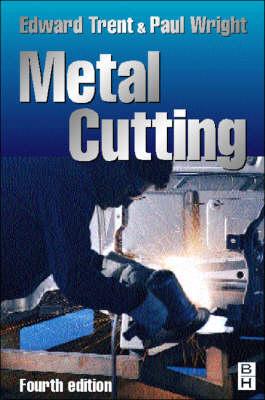
Metal cutting is an essential process throughout engineering design and manufacturing industries. To increase efficiency and reduce costs, it is necessary to improve understanding of the metal cutting process. This book presents a comprehensive treatment of the subject that focuses on the features of the behavior of tool and work materials that influence the efficiency of metal cutting operations. The fourth edition of this acclaimed book has been expanded and revised to include significant changes and additions to metal cutting theory, and to cover developments in tool materials and industrial practice. In particular, improvements in the understanding of the generation of heat and distribution of temperature in the cutting tool are described; a discussion of the structure, properties, and performance of newly developed ceramic tool materials and tool coatings is presented; new information of the machinability of alloys is given; and the introduction of calcium deoxidized steels and their improved machinability are assessed. Additionally, a material selection and design-based approach is expanded upon to improve industrial relevance. Metal Cutting provides invaluable information for those engaged in machining, toolmaking, and related engineering activities, and it serves as a useful introduction to the subject for students of metallurgy and engineering.
Full Product Details
Author: Paul K. Wright (Professor of Mechanical Engineering and Co-chairman of the Management of Technology Program at the University of California/Berkeley School of Engineering, USA) ,
Edward M. Trent, Ph. D., D. Met. in Metallurgy at Sheffield University. (Former Lecturer, Industrial Metallurgy Department, Birmingham University, UK)
Publisher: Elsevier Science & Technology
Imprint: Butterworth-Heinemann Ltd
Edition: 4th edition
Dimensions:
Width: 19.50cm
, Height: 2.50cm
, Length: 25.20cm
Weight: 0.980kg
ISBN: 9780750670692
ISBN 10: 075067069
Pages: 464
Publication Date: 19 January 2000
Audience:
Professional and scholarly
,
Professional & Vocational
Replaced By: 9780323991551
Format: Hardback
Publisher's Status: Active
Availability: In Print

This item will be ordered in for you from one of our suppliers. Upon receipt, we will promptly dispatch it out to you. For in store availability, please contact us.
Reviews
"""This book should be in the reference library of every engineer involved in metal cutting in any capacity, and it seems to be the textbook of choice for teaching the subject. It is destined to become the standard against which any other book on the subject of metal cutting will be measured!...wonderfully thorough, well organized, readable and well illustrated text or professional reference book."" --Robert W. Messler, Jr., Professor/Materials Sciece & Engineering"
This book should be in the reference library of every engineer involved in metal cutting in any capacity, and it seems to be the textbook of choice for teaching the subject. It is destined to become the standard against which any other book on the subject of metal cutting will be measured!...wonderfully thorough, well organized, readable and well illustrated text or professional reference book. -Robert W. Messler, Jr., Professor/Materials Sciece & Engineering
Author Information
Professor Wright is prominent in the field, heads a prestigious department, and has very good industry contacts with Boeing Corp. and Ford. He is the nominated 'successor' of coauthor Edward Trent, whose book is a classic in the field.Wright, who was born in England and now resides in Berkeley, Calif., is professor of mechanical engineering and co-chairman of the Management of Technology Program at the University of California/Berkeley School of Engineering.He has written numerous articles for journals, conferences, and symposiums, as well as coauthored ""Manufacturing Intelligence,"" with D.A. Bourne. In addition, he serves as a consultant and is involved in many professional organizations. Edward Moor Trent was born in England and was the first to describe the diffusion wear mechanisms in tungsten-carbide-cobalt cutting tools. This work was the foundation for new grades of carbide for cutting steels, and subsequently for the development of coated cutting tools. Trent was a prominent lecturer in the Industrial Metallurgy Dept. at Birmingham University and was awarded the ""Hadfield Medal"" by the Iron and Steel Institute in recognition of his contributions to metallurgy. His accomplishments are highly regarded among professionals in the field today. Founding author of this book.