Overview
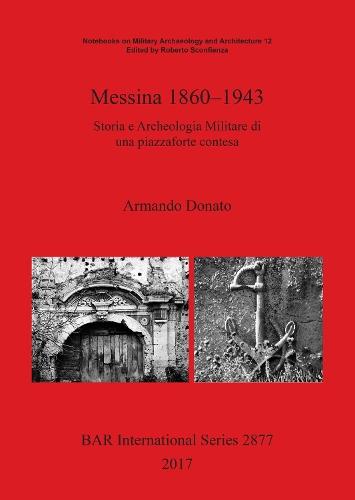
Nel Maggio e settembre 1860 iniziò la campagna di conquista del regno delle Due Sicilie a cura degli eserciti Garibaldino e Piemontese. Garibaldi conquistò Messina dopo due mesi mentre le fortificazioni Borboniche furono assediate dall'esercito Piemontese. L'assedio terminò nel marzo 1861, quando le artiglierie piemontesi costrinsero il nemico alla resa incondizionata. Il regno delle Due Sicilie divenne parte del regno d'Italia il 17 marzo 1861. La campagna angloamericana in Sicilia (Husky) fu la più imponente operazione anfibia della seconda guerra mondiale, riguardo le diviosni sbarcate il primo giorno e la lunghezza del fronte di sbarco. Il 9-10 luglio 1943 sbarcarono due divisioni con il principale obiettivo di conquistare Messina e intrappolare il nemico nell'isola, il quale si era ritirato verso lo Stretto di Messina fortificandolo e sviluppando i sistemi difensivi e di trasporo. Il 16-17 agosto le truppe Alleate conquistarono Messina mentre il nemico stava sbarcando sulla penisola italiana con una grande quantità di uomini, equipaggiamento e materiali, utili a continuare la guerra in Italia. In May and September 1860 the campaign to conquer the Kingdom of the Two Sicilies by Garibaldi's army and the Piedmontese army began. Garibaldi reached Messina after two months, while the siege of Bourbon garrisons was undertaken by the Piedmontese army. The siege ended in March 1861, when the Piedmontese artillery forced the enemy to surrender unconditionally. The Kingdom of Two Sicilies became part of the Kingdom of Italy on 17 March 1861. The Anglo-American campaign in Sicily (Husky) was the most impressive amphibious operation of World War II, in terms of the number of divisions landed on the first day and the length of the landing front. On 9-10 July 1943, two armies landed with the main objective of reaching Messina and trapping the enemy on the island, who, as they retreated towards the Strait of Messina, strengthened and improved their defence and transportation systems. On 16-17 August, the Allied troops reached Messina; meanwhile the enemy was landing on the Italian peninsula with a great number of men, together with equipment and other materials that would be used to continue the war in Italy.
Full Product Details
Author: Armando Donato
Publisher: BAR Publishing
Imprint: BAR Publishing
Weight: 0.566kg
ISBN: 9781407316284
ISBN 10: 1407316281
Pages: 142
Publication Date: 30 November 2017
Audience:
Professional and scholarly
,
Professional & Vocational
Format: Paperback
Publisher's Status: Active
Availability: Available To Order

We have confirmation that this item is in stock with the supplier. It will be ordered in for you and dispatched immediately.
Language: Italian
Reviews
'A work of absolute interest.' Dr Virgilio Ilari, Italian Society of Military History 'Provides a good amount of little-known, otherwise difficult to find sources that can be used for future studies around the world. . Anyone in the world who wants to study one of the events analysed by Donato will surely have to study this volume.' Dr Marco Merlo, University of Turin
'A work of absolute interest.' Dr Virgilio Ilari, Italian Society of Military History 'Provides a good amount of little-known, otherwise difficult to find sources that can be used for future studies around the world. . Anyone in the world who wants to study one of the events analysed by Donato will surely have to study this volume.' Dr Marco Merlo, University of Turin
Author Information
Armando Donato was born in Messina (Italy). After completing high school and military service in the Italian Army, he graduated with a degree in Business Management and Economics and Tourism. He is a teacher of Economics, Law and Culture in the field of Tourism, and a researcher and writer on Military History and Archaeology, with a particular focus on research and discoveries in battlefields and other sites with historical and military importance. The primary topics of his publications are Italian fortifications, battles, weapons and uniforms 'then and now', and other topics relating to the period from the seventeenth to the twentieth century. Armando Donato è nato a messina (Italia). Dopo aver completato la scuola superiore e il servizio militare nell'Esercito Italiano, ha ottenuto un diploma di specializzazione in Business Management and Economics and Tourism. E' docente di Economia, Legge e Cultura generale nell'ambito del Turismo, nonché ricercatore e saggista di Storia e Archeologia Militare, con un'attenzione particolare a ricerche e scoperte riguardanti i campi di battaglia e altri generi di siti rilevanti quanto all'aspetto storico-militare. Le materie principali delle sue pubblicazioni comprendono le fortificazioni italiane, battaglie, armamenti, uniformi e altre tematiche militari fra il XVII e il XX secolo.