|
|
|||
|
||||
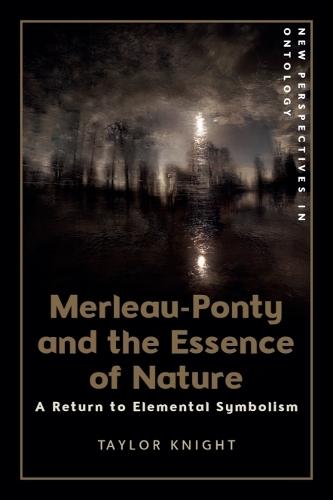
OverviewTaylor Knight reveals the way in which phenomenology initiates a return to ontology construed through a dialectical relationship between being and element. Within phenomenology's return to the elemental, Merleau-Ponty's late philosophy is a key locus, opening critical paths forward into an ontology for the ecological age. With reference to his phenomenological forebears - Heidegger, Husserl, Levinas - his non-phenomenological influences - Bachelard, Schelling, Freud - and his dialogue with Greek thought - Heraclitus, Plato, Aristotle Knight shows what is authentically new in Merleau-Ponty's late ontology. Full Product DetailsAuthor: Taylor Knight (Independent Scholar)Publisher: Edinburgh University Press Imprint: Edinburgh University Press ISBN: 9781399529907ISBN 10: 1399529900 Pages: 248 Publication Date: 28 February 2026 Audience: Professional and scholarly , Professional & Vocational Format: Paperback Publisher's Status: Active Availability: Not yet available This item is yet to be released. You can pre-order this item and we will dispatch it to you upon its release. Table of ContentsForeword by Emmanuel Falque Introduction: The Return to the Element The Powers of Becoming: Early Greek Thought and Contemporary Biology in Merleau-Ponty’s Elemental Ontology The Correlation of Sensation: From Act to Power The Elemental Bond: Surpassing Phenomenological Atomism Cosmogonic Elementals in Phenomenology: From Husserl and Heidegger to Levinas and Merleau-Ponty The Savagery of the Symbol: The Barbarian Principle and Elemental Negation Symbolics of the Flesh: From Tautegory to Chiasm What the Sea Left Behind: The Element as the Unconscious ConclusionReviewsA truly creative extension of Merleau-Ponty's unfinished ontology.--Isaac Frisby, Durham University ""International Journal of Philosophical Studies"" Knight works against the grain both of readings of Merleau-Ponty as a forerunner of Derrida or Foucault, and of the idea that many of his claims are strongly implicit already in the work of Husserl. Merleau-Ponty is instead situated in a line from Plato through some speculative idealism, as a philosopher turning endlessly around the knot of phenomenality and what it occludes.--Jeffrey Bloechl, Arthur J. Fitzgibbons Professor, and Chair of the Department of Philosophy, Boston College Author InformationTaylor Knight is an Independent Scholar who holds a DPhil in Theology from the University of Oxford and a PhD in Philosophy from the Institut Catholique de Paris. He has published on twentieth-century French philosophy and on the Renaissance philosopher Nicholas of Cusa. He has journal articles in Neue Zeitschrift für Systematische Theologie et Religionsphilosophie and Sophia. Tab Content 6Author Website:Countries AvailableAll regions |
||||