Overview
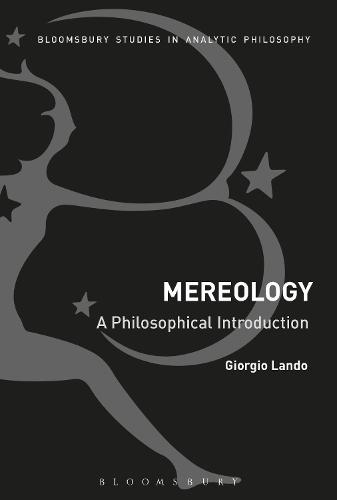
Parthood and composition are everywhere. The leg of a table is part of the table, the word ""Christmas"" is part of the sentence ""I wish you a merry Christmas"", the 13th century is part of the Middle Ages. The Netherlands, Belgium, and Luxembourg compose Benelux, the body of a deer is composed of a huge number of cells, the Middle Ages are composed of the Early Middle Ages, High Middle Ages, and Late Middle Ages. Is there really a general theory covering every instance of parthood and composition? Is classical mereology this general theory? Are its seemingly counter-intuitive features serious defects? Mereology: A Philosophical Introduction addresses the multifaceted and lively philosophical debates surrounding these questions, and defends the idea that classical mereology is indeed the general and exhaustive theory of parthood and composition in the domain of concrete entities. Several examples of parthood and composition, involving entities of different kinds, are scrutinised in depth. Incidentally, mereology is shown to interact in a surprising way with metaontology. Presenting a well-organized and comprehensive discussion of parthood and related notions, Mereology: A Philosophical Introduction contributes to a better understanding of a subject central to contemporary metaphysics.
Full Product Details
Author: Dr Giorgio Lando (University of L'Aquila, Italy)
Publisher: Bloomsbury Publishing PLC
Imprint: Bloomsbury Academic
Weight: 0.516kg
ISBN: 9781472583666
ISBN 10: 1472583663
Pages: 248
Publication Date: 29 June 2017
Audience:
College/higher education
,
Tertiary & Higher Education
Format: Hardback
Publisher's Status: Active
Availability: Manufactured on demand

We will order this item for you from a manufactured on demand supplier.
Reviews
This is simply a superb book in metaphysics. It is the first thorough, fully-fledged book-length discussion, development and defense of Mereological Monism, roughly the view that classical extensional mereology is the general, and exhaustive theory of parthood and composition (and cognate notions). Lando offers a clear characterization of what Mereological Monism is and what it is not and suggests a new overall methodology for it. The latter is both highly valuable in itself and pivotal in providing new epistemological arguments to the point that Mereological Monism is a metaphysically desirable thesis that outweighs its costs. He sets forth an impressive defense of its basic tenets and carefully considers potential objections and shortcomings. Both friends and foes of Mereological Monism will have to address the arguments in this book for the foreseeable future. -- Claudio Calosi, Post-doctoral Fellow for Philosophy, University of Neuchatel, Switzerland
This is simply a superb book in metaphysics. It is the first thorough, fully-fledged book-length discussion, development and defense of Mereological Monism, roughly the view that classical extensional mereology is the general, and exhaustive theory of parthood and composition (and cognate notions). Lando offers a clear characterization of what Mereological Monism is and what it is not and suggests a new overall methodology for it. The latter is both highly valuable in itself and pivotal in providing new epistemological arguments to the point that Mereological Monism is a metaphysically desirable thesis that outweighs its costs. He sets forth an impressive defense of its basic tenets and carefully considers potential objections and shortcomings. Both friends and foes of Mereological Monism will have to address the arguments in this book for the foreseeable future. -- Claudio Calosi, Post-doctoral Fellow for Philosophy, University of Neuchatel, Switzerland
Author Information
Giorgio Lando is a Junior Professor at the University of L'Aquila, Italy. Some of his works are published in Erkenntnis, The Monist, and Synthese.