Overview
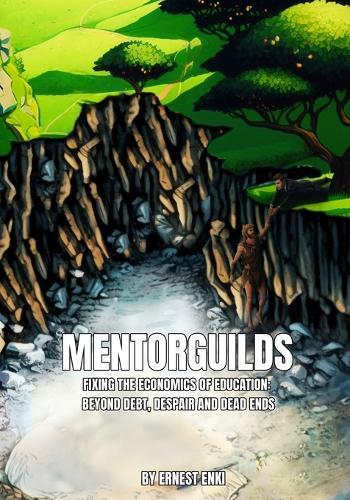
Automation is reshaping the economy at unprecedented speed. Entire categories of jobs are disappearing. New roles are emerging just as quickly - but the demand deeper technical skills, constant retraining, and resilience in the face of change. Yet traditional education remains slow, expensive, and misaligned. Students pay upfront with tuition, debt, years of lost income, and public subsidies - long before anyone knows whether their degree will translate into a durable career. Institutions are rewarded for enrolment and prestige. Graduates are left to navigate automation, layoffs, financial traps, and career pivots on their own. The result is a widening gap between the skills that traditional education provides and what modern life needs. This book proposes a different model. What if education was not a one-off event - but a long-term partnership? What if educators only succeeded when their graduates did? What if training included not only work skills - the abilities markets reward - but also life skills: financial literacy, mental resilience, self-care, and the practical tools needed to function at your best in a rapidly changing world? Welcome to the concept of MentorGuilds. MentorGuilds are long-term education partnerships designed around shared outcomes: Payment happens only when a student (mentee) earns income using the specialized skills provided. There is no debt, not fixed repayment schedule, no interest, and no obligation if income never materializes. Mentors share both upside and downside with their mentees. Open, standardized data makes outcomes (income and work hours) transparent and comparable. Unlike Income Share Agreements or Income-Contingent Loans, MentorGuilds are not financial products layered onto traditional education. They are institutions built around aligned incentives from the ground up. They do not profit from enrolment volume or debt servicing. They earn only when their mentees build real, sustained earning power in the marketplace. MentorGuilds can fund tuition, provide stipends, intervene during times of crisis, offer ongoing career navigation, and remain engaged through industry and economic shifts. They are designed to evolve as personal circumstances, careers and industries evolve. This book explores: Why traditional education struggles with cost and incentive alignment Why most alternative financing models fail to fix education's structural problems How MentorGuilds differ fundamentally from Income Share Agreements or Income-Contingent Loans How unprecedently strict transparency and governance requirements can prevent abuse How MentorGuilds can become the tip of the spear in innovation around education And how this model could redefine the boundary between education and life MentorGuilds are not presented as a guaranteed solution. They are an institutional hypothesis - one designed to be tested, improved, and evaluated in public view. In a world where skills expire quickly and careers no longer follow straight lines, we need institutions that adapt as fast as the economy does. If education is to remain relevant in the age of automation, its incentives must change. This book is an invitation to rethink every aspect of education.
Full Product Details
Author: Ernest Enki
Publisher: Independently Published
Imprint: Independently Published
Dimensions:
Width: 17.80cm
, Height: 2.30cm
, Length: 25.40cm
Weight: 0.771kg
ISBN: 9798248068463
Pages: 448
Publication Date: 17 February 2026
Audience:
General/trade
,
General
Format: Paperback
Publisher's Status: Active
Availability: Available To Order

We have confirmation that this item is in stock with the supplier. It will be ordered in for you and dispatched immediately.